In the first weeks after the US-Israel war against Iran, something unusual was happening in Erbil’s car dealerships. Representatives of Iranian Kurdish factions were reportedly buying SUVs in bulk. Cadres were being recalled from Europe, Australia, and Canada. Movement intensified along the border. According to multiple sources, some factions were told to expect a ‘go’ order within 72 hours once the green light was provided by the US and Israel.
The plan, as conceived, followed a familiar script: air power from above, insurgency from below. Israel’s Benjamin Netanyahu had spent roughly an hour of his pre-war Washington meeting pressing Donald Trump on the idea that Iranian Kurdish groups, operating from bases in northern Iraq, could help tip the Iranian regime into collapse. Trump agreed. Limited US financial support was quietly extended for preparations. A larger weapons transfer was promised.
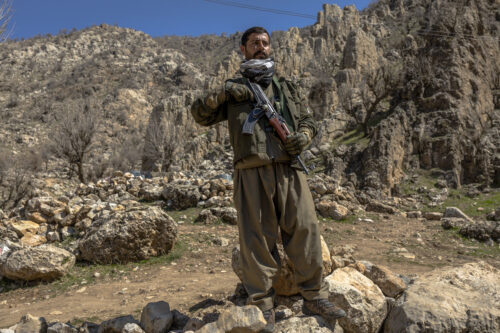
Photo by Younes Mohammad / Middle East Images / AFP via Getty Images
The Middle East Institute (MEI) is an independent, non-partisan, not-for-profit, educational organization. It does not engage in advocacy and its scholars’ opinions are their own. MEI welcomes financial donations, but retains sole editorial control over its work and its publications reflect only the authors’ views. For a listing of MEI donors, please click here.
The Mecca Alliance Meets the Red Sea – Saudi Arabia’s New Defense Pact Faces Its First Major Test