This text has been translated by AI and may contain errors.
Skip to Content

Afghanistan-Pakistan

Countries

The Mecca Joint Défense Agreement: A New Geometry of Middle Eastern Power?
  • Analysis
  • The Mecca Joint Défense Agreement: A New Geometry of Middle Eastern Power?

    On August 7, 2026, Saudi Arabia, Turkey, and Pakistan signed the Mecca Joint Défense Agreement, a collective-defense pact widely compared to NATO’s Article 5. This essay argues that the comparison is misleading. Mecca borrows NATO’s language of solidarity without yet possessing NATO’s institutional machinery, and the Houthi offensive against Saudi Arabia in September 2026 provided an early and revealing test of what the agreement actually means in practice. Neither Pakistan nor Turkey automatically entered the fight on Saudi Arabia’s behalf, and Washington, despite an initial reluctance to strike directly, remained indispensable through intelligence support and a major proposed F-35 sale. Drawing on realist alliance theory — Hans Morgenthau, Kenneth Waltz, Stephen Walt, Glenn Snyder, and Steven David — and on the precedent of the Central Treaty Organization (CENTO), the essay contends that the Middle East is not dividing into rival blocs but moving from hierarchy toward a looser, overlapping geometry of hedged partnerships, in which American exclusivity is eroding considerably faster than American primacy.

    The Mecca Alliance Meets the Red Sea – Saudi Arabia’s New Defense Pact Faces Its First Major Test
  • Commentary
  • The Mecca Alliance Meets the Red Sea – Saudi Arabia’s New Defense Pact Faces Its First Major Test

    When Saudi Arabia, Turkey and Pakistan agreed to a mutual defense pact in August, it was principally seen as a political commitment. The “Mecca alliance,” as it was dubbed, stipulated that an armed attack on one would be treated as an attack on all three, accompanied by deeper military cooperation.

    The Case for a Middle Course in Afghanistan
  • Commentary
  • The Case for a Middle Course in Afghanistan

    I was a teenage Afghan refugee in Pakistan’s tribal areas when the Twin Towers fell. Almost nobody around us understood the politics of what had happened, but we knew that something had changed for good. Afghanistan, which until then had been our private tragedy and our first exile from Taliban rule, had suddenly become the world’s concern, with the United States leading the response.

    The Latest

    Filter by
    1194 Results
    Reviewing the Middle East in 2019
    Middle East Institute
  • Podcast
  • Reviewing the Middle East in 2019

    In our annual year in review episode, MEI experts Paul Salem, Gonul Tol, Charles Lister, Alex Vatanka, Marvin Weinbaum, and Mirette Mabrouk sit with host Alistair Taylor to discuss the key events across the region in 2019, what surprised them, and where things stand as we head into 2020.

    December 19, 2019

    Kuala Lumpur summit: A challenge to Saudi leadership?
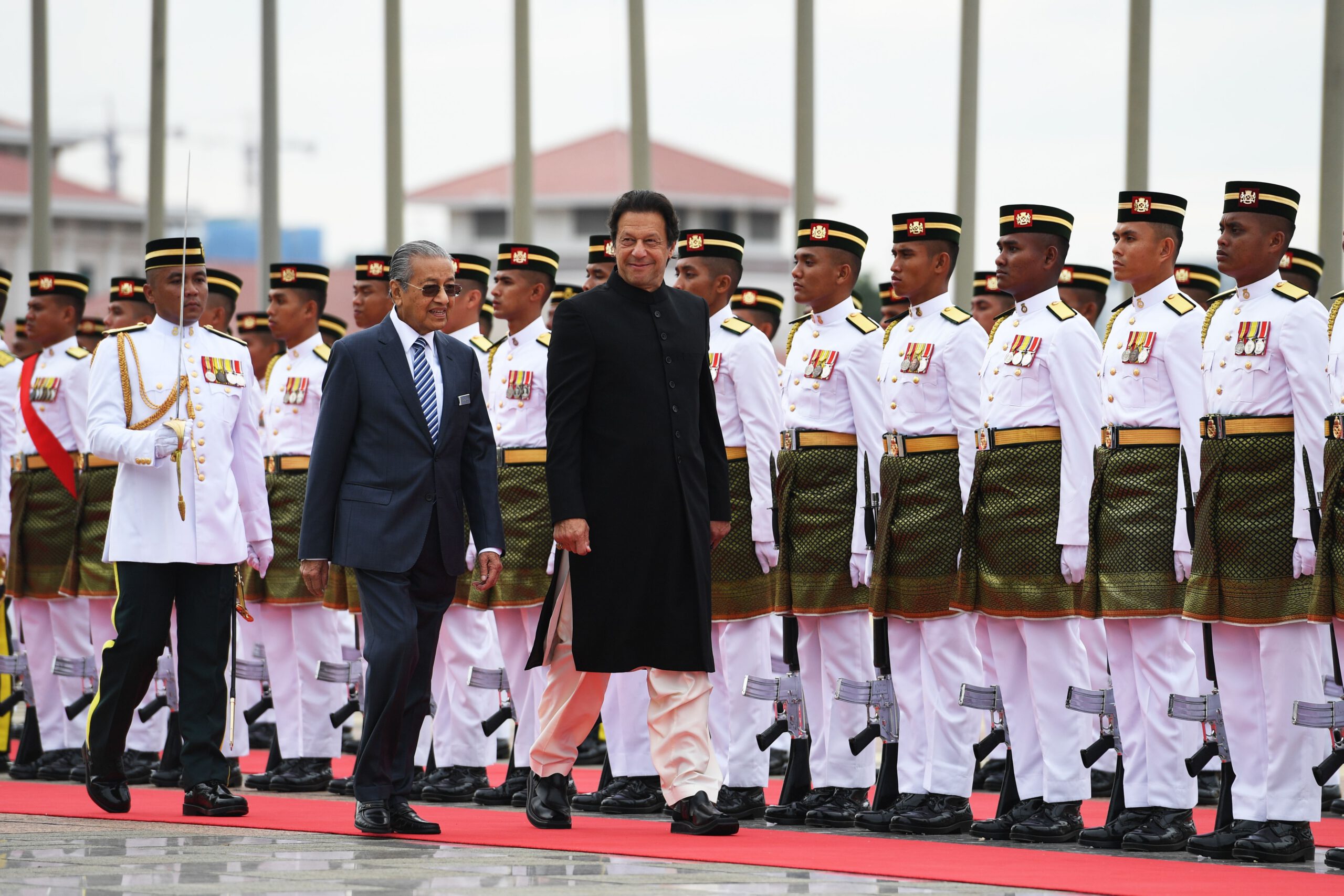
    Pakistan's Prime Minister Imran Khan (C) is accompanied by his Malaysian counterpart Mahathir Mohamad (L) as he reviews a guard of honour during a welcoming ceremony at the prime minister's office in Putrajaya on November 21, 2018. (Photo by Mohd RASFAN / AFP) (Photo credit should read MOHD RASFAN/AFP via Getty Images)
  • Analysis
  • Kuala Lumpur summit: A challenge to Saudi leadership?

    On Nov. 23, Malaysia’s prime minister, Mahathir Mohamad, announced that his country will stage an Islamic summit in Kuala Lumpur from Dec. 19-21. The event, on the theme of “The Role of Development in Achieving National Security,” will feature representatives from the host country as well as Indonesia, Pakistan, Qatar, and Turkey. Around 450 leaders, scholars, clerics, and thinkers from 52 countries will attend, along with Turkish President Recep Tayyip Erdoğan, Qatari Emir Sheikh Tamim bin Hamad al-Thani, Indonesian President Joko Widodo, and Pakistani Prime Minister Imran Khan.

    December 10, 2019

    Pakistan’s Gen. Bajwa gets an extension amid political drama
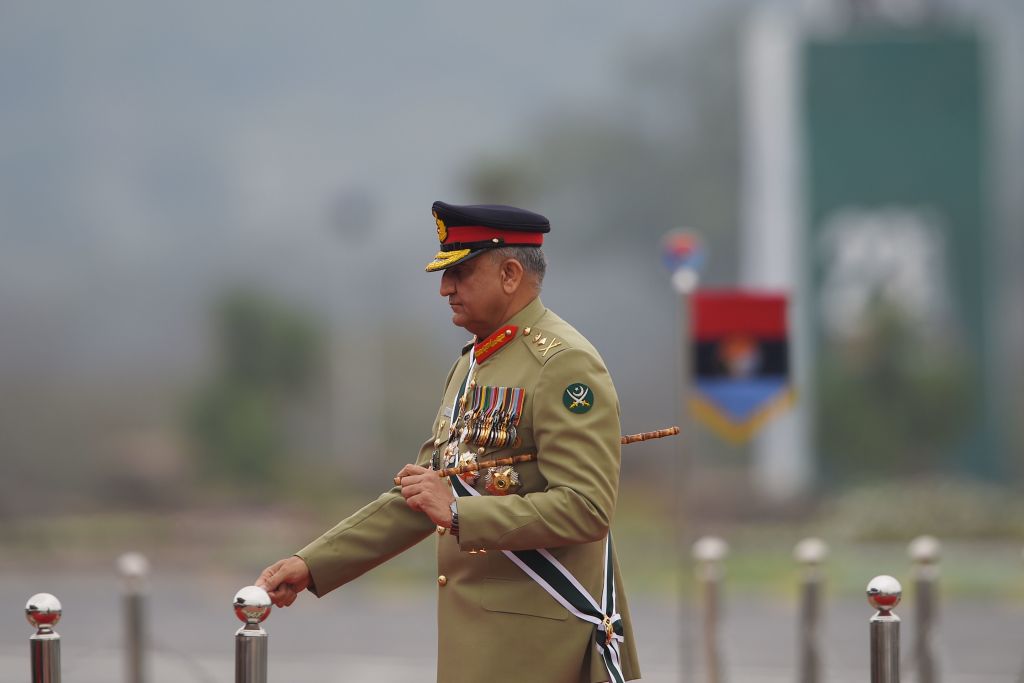
    Pakistan Army Chief General Qamar Javed Bajwa arrives to attend the Pakistan Day parade in Islamabad on March 23, 2019.
  • Analysis
  • Pakistan’s Gen. Bajwa gets an extension amid political drama

    Understanding a state and its society involves understanding how the state treats its military, its record of governance, and the relationship between the military and civilian politicians. By all accounts, Pakistan, a state founded in 1947 as a homeland for the Muslim population of British India, is a unique case where the military dominates all other institutions in both state and society. This was on clear display in the recent court battle over the extension of Army Chief of Staff Gen. Qamar Javed Bajwa’s tenure.

    December 6, 2019

    Gen. Votel on US Policy in Afghanistan
    Middle East Institute
  • Video
  • Gen. Votel on US Policy in Afghanistan

    Gen. (Ret.) Joseph Votel discusses the role of Afghanistan in US regional strategic interests, whether a peace deal is possible with the Taliban, and how important Pakistan is to achieving a sustainable political settlement.

    December 3, 2019

    The Caucasus and the Middle East
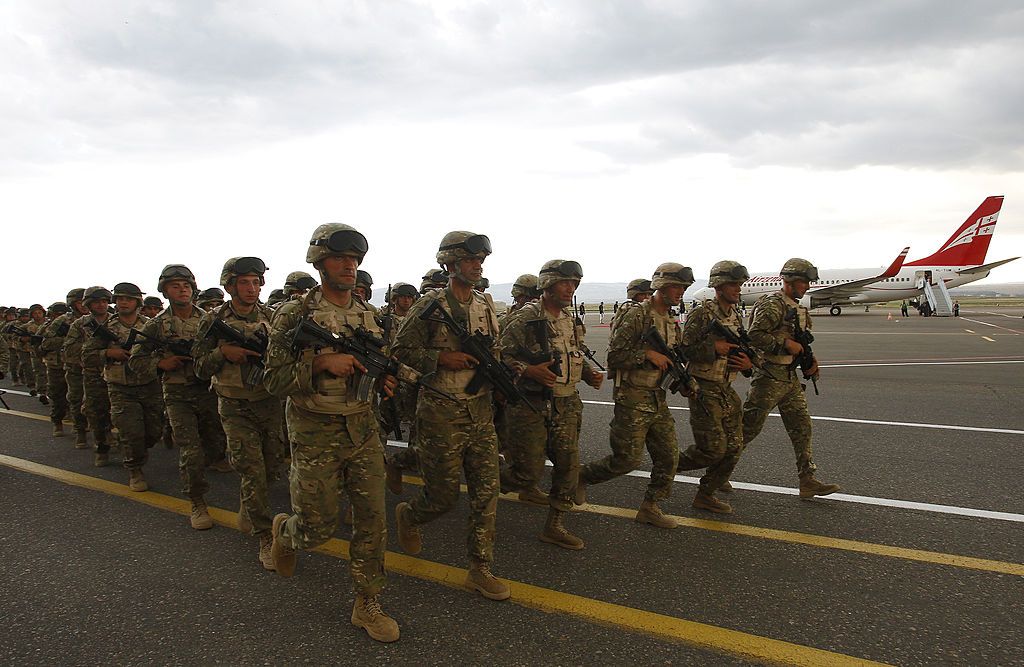
    Georgian soldiers run during a farewell ceremony before their departure to Afghanistan in Tbilisi, June 27, 2013.
  • Analysis
  • The Caucasus and the Middle East

    For years, politics and conflicts in the Middle East have spilled over into many other regions of the world. Refugee crises, terrorism, and political instability in the Middle East have impacted foreign and domestic policy and politics in North America and Europe, but the Caucasus is much closer and, therefore, a particularly important case for policymakers in Washington and Brussels.

    December 2, 2019

    US-Taliban talks are back on but little has changed
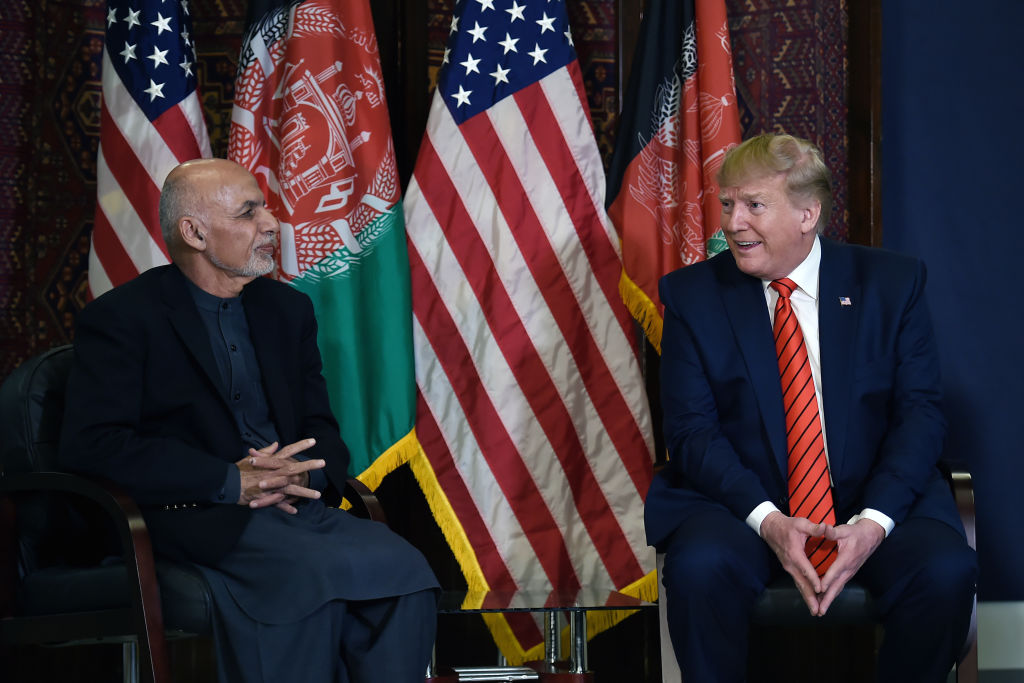
    US President Donald Trump holds a bilateral meeting with Afghan's President Ashraf Ghani at Bagram Air Field during a surprise Thanksgiving day visit, on November 28, 2019 in Afghanistan.
  • Commentary
  • US-Taliban talks are back on but little has changed

    President Donald Trump’s lightning fast roundtrip to Bagram airbase north of Kabul had its share of surprises. In addressing troops, he confirmed previous reports that talks are once again underway with the Taliban, but then went on to inject a ceasefire as a condition for a new agreement.

    A prisoner swap with the Taliban, but will it lead to anything?
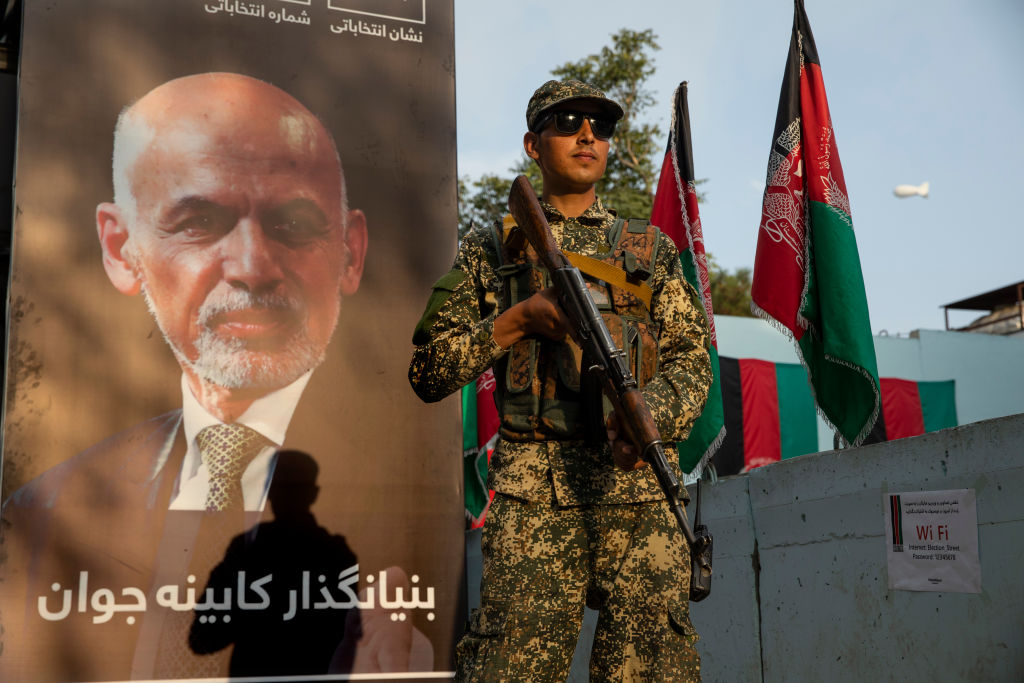
    Security stands guard at the Ghani headquarters on September 29, 2019 in Kabul, Afghanistan.
  • Commentary
  • A prisoner swap with the Taliban, but will it lead to anything?

    Last week saw the Taliban’s release of two kidnapped professors in exchange for the Kabul government’s freeing of three prized Taliban prisoners. While the swap may have been necessary on humanitarian grounds, it was unfortunate otherwise. Rather than defending the swap on its own merits, Kabul and Washington are hailing the exchange as a possible breakthrough following the collapse of the Doha agreement and the stalling of planned intra-Afghan discussions.

    Setting the Middle Corridor on track
    China Railway Express crosses Istanbul's sub-sea tunnel, Marmaray (the railway system linking the eastern and western sides of Istanbul from under the Marmara Sea) in Istanbul, Turkey on November 7, 2019. The first freight train from China crossed to Europe using Marmaray.
  • Analysis
  • Setting the Middle Corridor on track

    China’s Belt and Road Initiative (BRI) has been a powerful driver of the development of existing and new Eurasian rail routes. A web of competing and complementary rail lines has begun to form across the Eurasian landmass. Railway cargo service between China and Europe has fast become a compelling “middle option” — cheaper than air and faster than sea.

    Punching above their weight: Cyber lessons for small states
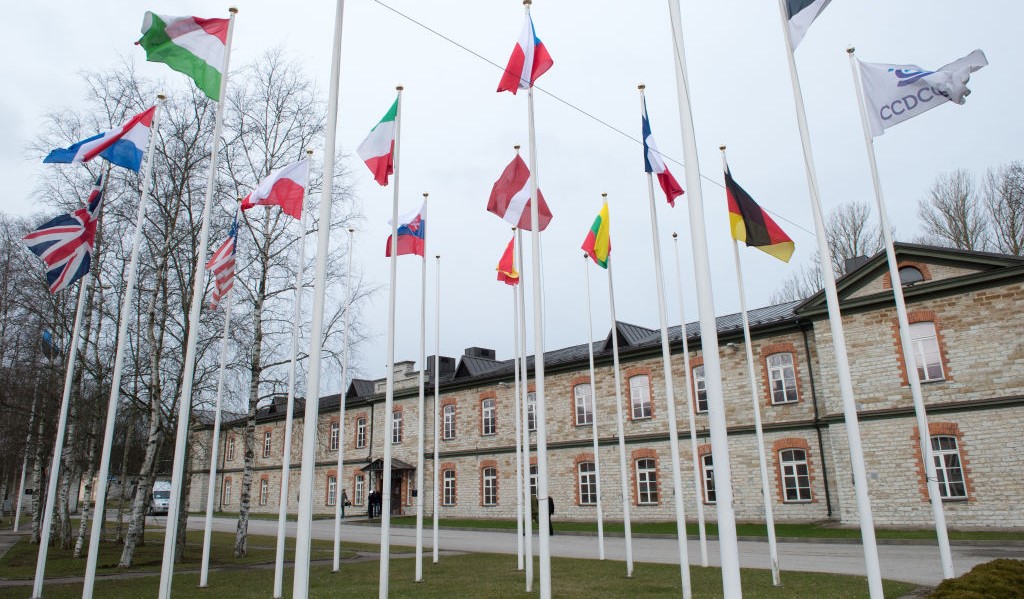
    The NATO Cooperative Cyber Defence Centre of Excellence (CoE) in Tallinn, Estonia, 14 April 2015.
  • Analysis
  • Punching above their weight: Cyber lessons for small states

    The role of cybersecurity in the future of geopolitics in the Middle East and the surrounding regions will have much to do with individual state and enterprise preparedness. With cyber threats a growing source of interstate tension, governments must take measures to increase national cyber preparedness that are tailored to their vulnerabilities and cyber ecosystems. Israel and Estonia are examples of states that prove this rule. Despite their relatively small size, both have demonstrated an exceptional capacity to deter or defend against cyber aggression from their much larger, more aggressive neighbors.

    November 18, 2019

    Balance in the Black Sea: The complex dynamic between Turkey, Russia, and NATO
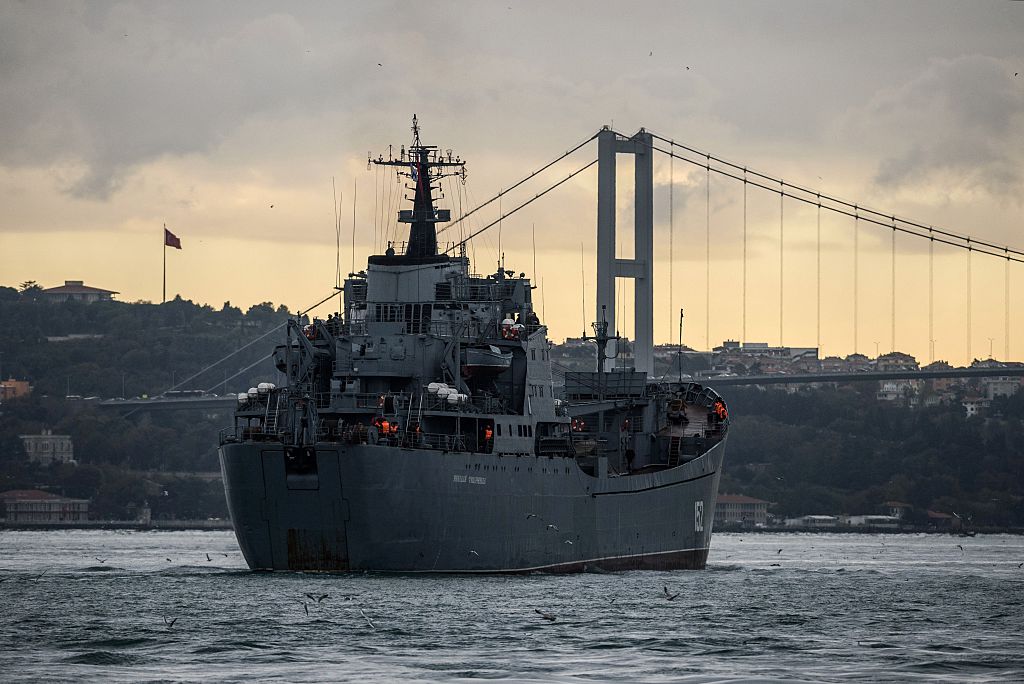
    Russian Tapir class landing warship BSF Nikolay Filchenkov 152 passes the Bosphorus Strait off Istanbul on October 18, 2016.
  • Analysis
  • Balance in the Black Sea: The complex dynamic between Turkey, Russia, and NATO

    Turkey’s relations with its Western allies are at an all-time low while its partnership with Russia is flourishing. Since Russia began delivery of its S-400 advanced aerial defense system in July, questions have abounded about Turkey’s future in the NATO alliance. Such concerns are not baseless. Turkey-Russia ties have never been closer. The two countries cooperate closely not only on energy and trade but also in the defense sector. But fears of a Turkish withdrawal from the alliance overlook the continued tension between Ankara and Moscow, which makes NATO an indispensable partner for Turkey.

    Pakistan’s anti-government protests put Khan in a bind
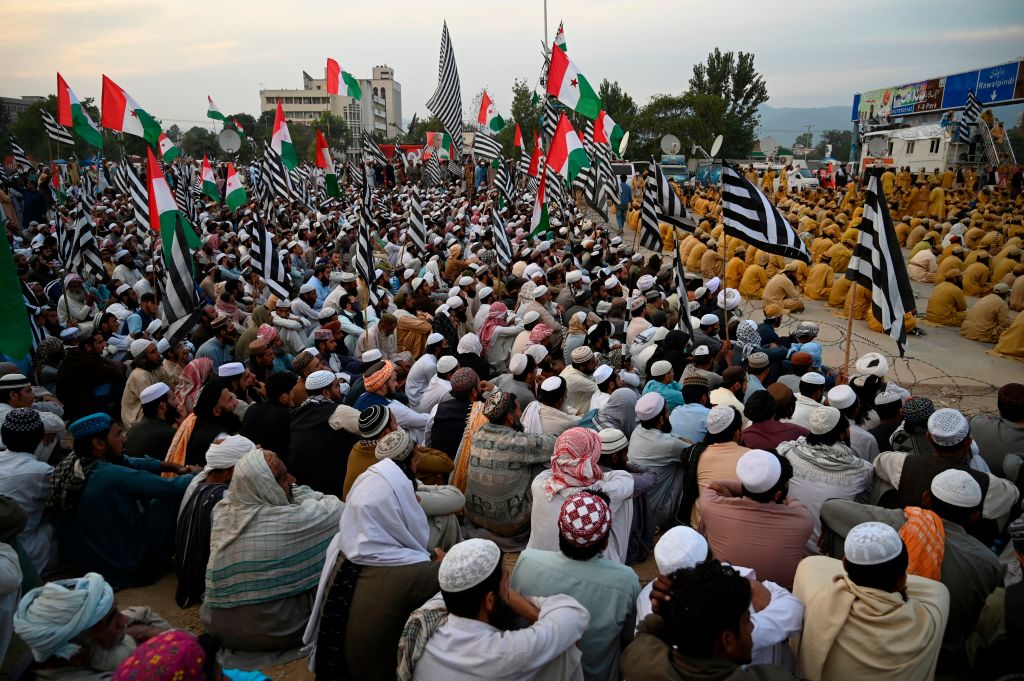
    Activists and supporters of Islamic political party Jamiat Ulema-e-Islam (JUI-F) attend an anti-government
  • Analysis
  • Pakistan’s anti-government protests put Khan in a bind

    Pakistan’s capital, Islamabad, has been paralyzed in recent days by supporters of Maulana Fazlur Rehman and his Jamiat-Ulema-e-Islam (JUI-F), a well-entrenched Islamist party. The protestors are seeking the resignation of the military-backed Prime Minister Imran Khan and fresh elections, and the demonstration has emerged as an existential problem for Khan.

    November 9, 2019

    The fall of the other wall
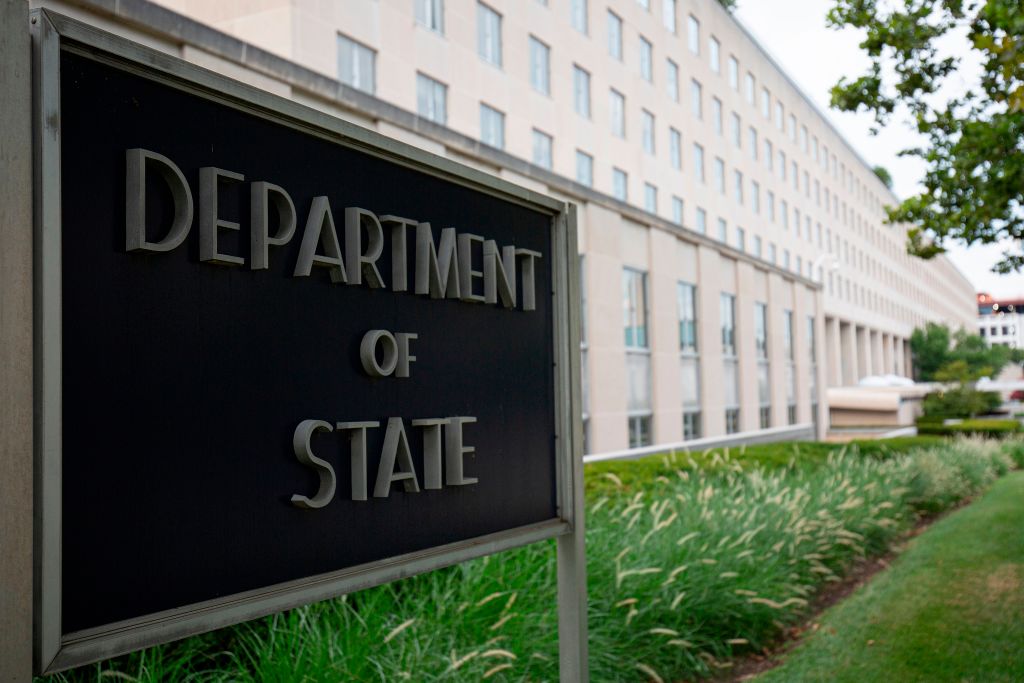
    The US Department of State building is seen in Washington, DC, on July 22, 2019.
  • Analysis
  • The fall of the other wall

    With the fall of the Berlin Wall 30 years ago, ties between Western and Eastern Europe were renewed. In the same period, another wall crumbled — between the Middle East and the former Soviet states. And yet, to this day, U.S. national security institutions continue to view these two regions through a Cold War lens, separating how they are handled. This approach needs to change; integrating research and policy toward the Middle East and the bordering states of the former Soviet Union would improve analytical understanding and help identify new policy options.

    Read the Middle East Journal

    The oldest peer-reviewed publication dedicated to the study of the modern Middle East, MEI’s flagship journal covers politics, society, and culture in the region.