This text has been translated by AI and may contain errors.
Skip to Content

Afghanistan-Pakistan

Countries

The Mecca Joint Défense Agreement: A New Geometry of Middle Eastern Power?
  • Analysis
  • The Mecca Joint Défense Agreement: A New Geometry of Middle Eastern Power?

    On August 7, 2026, Saudi Arabia, Turkey, and Pakistan signed the Mecca Joint Défense Agreement, a collective-defense pact widely compared to NATO’s Article 5. This essay argues that the comparison is misleading. Mecca borrows NATO’s language of solidarity without yet possessing NATO’s institutional machinery, and the Houthi offensive against Saudi Arabia in September 2026 provided an early and revealing test of what the agreement actually means in practice. Neither Pakistan nor Turkey automatically entered the fight on Saudi Arabia’s behalf, and Washington, despite an initial reluctance to strike directly, remained indispensable through intelligence support and a major proposed F-35 sale. Drawing on realist alliance theory — Hans Morgenthau, Kenneth Waltz, Stephen Walt, Glenn Snyder, and Steven David — and on the precedent of the Central Treaty Organization (CENTO), the essay contends that the Middle East is not dividing into rival blocs but moving from hierarchy toward a looser, overlapping geometry of hedged partnerships, in which American exclusivity is eroding considerably faster than American primacy.
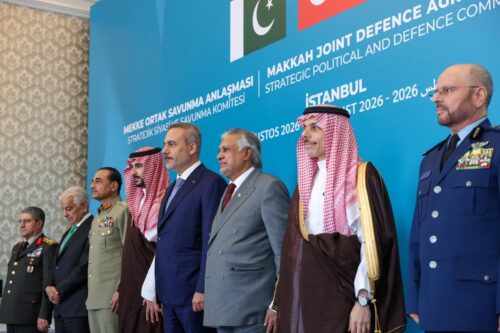
    The Mecca Alliance Meets the Red Sea – Saudi Arabia’s New Defense Pact Faces Its First Major Test
  • Commentary
  • The Mecca Alliance Meets the Red Sea – Saudi Arabia’s New Defense Pact Faces Its First Major Test

    When Saudi Arabia, Turkey and Pakistan agreed to a mutual defense pact in August, it was principally seen as a political commitment. The “Mecca alliance,” as it was dubbed, stipulated that an armed attack on one would be treated as an attack on all three, accompanied by deeper military cooperation.

    The Case for a Middle Course in Afghanistan
  • Commentary
  • The Case for a Middle Course in Afghanistan

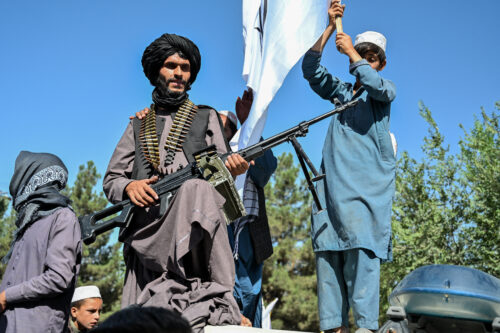
    I was a teenage Afghan refugee in Pakistan’s tribal areas when the Twin Towers fell. Almost nobody around us understood the politics of what had happened, but we knew that something had changed for good. Afghanistan, which until then had been our private tragedy and our first exile from Taliban rule, had suddenly become the world’s concern, with the United States leading the response.

    The Latest

    Filter by
    1194 Results
    Where Are U.S.-Pakistan Relations Headed?

    Where Are U.S.-Pakistan Relations Headed?

    October 11 – January 1, 1970, October 11 - 12:00 PM – 12:00 AM
    January 1 - 12:00 PM – 12:00 AM

    The Middle East Institute , 1319 18th Street NW, Washington, District of Columbia 20036

    The Kurdish Referendum
    Middle East Institute
  • Podcast
  • The Kurdish Referendum

    On September 25 Iraq’s Kurdish region pressed ahead with a controversial independence referendum. It had a high voter turnout of 73%, 93% of whom voted in favor of independence. The referendum is technically non-binding but it has sparked a political crisis with threats of action against the Kurdish region from its neighbors, Turkey and Iran, as well as Iraq’s central government. The United States also opposed the vote. MEI experts Randa Slim, Gonul Tol, and Ahmad Majidyar join host Paul Salem to discuss the implications of the vote and what happens next.

    October 5, 2017

    Erdogan Visits Iran as Tension Rises over Kurdish Vote | Monday Briefing
  • Analysis
  • Erdogan Visits Iran as Tension Rises over Kurdish Vote | Monday Briefing

    In this week’s Monday Briefing, MEI experts Alex Vatanka, Randa Slim, Marvin G. Weinbaum, Yousef Munayyer, and Gerald Feierstein provide analysis on recent and upcoming events including Turkish President Erdogan’s visit to Iran, Ayatollah Ali al-Sistani’s efforts to push for dialogue after the Kurdish independence referendum, the pending indictment of Nawaz Sharif in Pakistan, signs of progress in the reconcilliation attempt between Hamas and Fatah, and the Saudi king’s visit to Moscow.

    Kabul Calls on Tehran to Stop Sending Afghan Children to Syrian War
  • Analysis
  • Kabul Calls on Tehran to Stop Sending Afghan Children to Syrian War

    Afghanistan’s Foreign Ministry has called on the Iranian government to stop recruiting and sending Afghan refugees to fight in Syria, Afghan media and BBC Persian report. Ahmad Shekaib Mostaghni, the ministry’s spokesman, raised particular concern about Afghan children deployed by the Islamic Revolution Guards Corps (I.R.G.C.) to the Syrian battlefield.

    October 2, 2017

    Afghan, U.S. Officials Say Iran Arming Taliban
  • Analysis
  • Afghan, U.S. Officials Say Iran Arming Taliban

    Local officials in western Afghanistan say Iran and Pakistan continue to assist Taliban fighters to destabilize the region. “Pakistan and Iran support the Taliban. Residents have seen Pakistani and Iranian clerics bringing money to Taliban in Shindand [District,” alleged Abdul Ghani Noori, the head of Zer Koh District of Herat Province, bordering Iran. He claimed that between 200 and 400 Taliban militants are present in the district and called on Afghan security forces to launch an “extensive operation” against terrorists in the area.

    September 28, 2017

    Turkey Sees Expanding Role in Afghanistan
  • Analysis
  • Turkey Sees Expanding Role in Afghanistan

    It is increasingly clear that Turkey has been seeking to expand its role in the war-torn and conflict-ridden Afghanistan by making a concerted effort to step up diplomatic, developmental, and military engagements in the country. The scope and scale of Turkey’s interests in Afghanistan are an expression of the transformation of Turkish foreign policy in recent years.

    September 26, 2017

    Think West to Go West: Origins and Implications of India’s West Asia Policy Under Modi (Part I)
    Middle East Institute
  • Analysis
  • Think West to Go West: Origins and Implications of India’s West Asia Policy Under Modi (Part I)

    Prime Minister Modi’s 2015 visit to the U.A.E. and subsequent events have seen India’s view of the region undergo a fundamental shift. This essay, the first of two parts, shows how New Delhi has come to regard the Gulf more as a source of investment and less as a source of energy and visas; and has begun to take a more strategic and military view of the region.

    September 26, 2017

    Will Pakistan Reassess its Ties to Terror Groups after Trump Speech?
    Middle East Institute
  • Analysis
  • Will Pakistan Reassess its Ties to Terror Groups after Trump Speech?

    The major components of President Donald Trump’s much-awaited Afghanistan strategy are sufficient to give Pakistani strategists sleepless nights. The new plan will acknowledge Pakistan’s significant role in providing safe havens for terrorists; escalate war against the Afghan Taliban while denying it the ability to fight its way into positions of power; and enhance India’s role in stabilizing and developing Afghanistan. Moreover, the strategy does not provide deadlines for withdrawal of U.S. forces.

    September 12, 2017

    Iraqi Forces Turn Attention to Hawija | Monday Briefing
  • Analysis
  • Iraqi Forces Turn Attention to Hawija | Monday Briefing

    In this week’s Monday Briefing, MEI experts Paul Salem, Robert S. Ford, Alex Vatanka, and Bilal Y. Saab provide analysis on recent and upcoming events including the Iraqi military’s new operation to take back the town of Hawija from ISIS, the operation by the Syrian regime and U.S.-backed forces in Deir Ezzor, the Pakistani foreign minister’s visit to Iran, and the resumption of U.S. and Egyptian war games after being suspended since the 2011.

    Top Afghan Military Official: We Have Evidence Iran Provides Weapons to Taliban
  • Analysis
  • Top Afghan Military Official: We Have Evidence Iran Provides Weapons to Taliban

    The Chief of General Staff for the Afghanistan National Defense and Security Forces has said that the Kabul government has evidence that Iran is providing weapons and other military assets to the Taliban in western Afghanistan. In an interview with the BBC Persian, Lieutenant General Mohammad Sharif Yaftali added that President Ashraf Ghani discussed the issue with his Iranian counterpart Hassan Rouhani last month in Tehran but did not disclose details of the meeting.

    September 7, 2017

    Middle East Focus | September 1, 2017
    Middle East Institute
  • Analysis
  • Middle East Focus | September 1, 2017

    MEI experts Paul Salem, Will Wechsler, Marvin Weinbaum, and Ahmad Majidyar discuss current issues in Afghanistan and Pakistan, and U.S. policy and strategic interests in the region.

    September 1, 2017

    The Return of Al-Qaeda to Pakistan
  • Analysis
  • The Return of Al-Qaeda to Pakistan

    Al-Qaeda appears set to make a comeback in Pakistan, with battle-hardened militants returning from Syria and Iraq and eyeing for the resurrection of al-Qaeda in Pakistan.[i] A new terror group, Jamaat ul Ansar al-Shariah Pakistan, surfaced in June 2017, and is comprised of fighters who have returned from the Middle East.

    August 24, 2017

    Afghanistan: Trump Is Playing the Bush-Obama Game
  • Analysis
  • Afghanistan: Trump Is Playing the Bush-Obama Game

    Read the full article on The National Interest.

    Last night Donald J. Trump became the third consecutive U.S. president to ensure that his successor will also need to wage war in Afghanistan. This is justifiably frustrating to the American public, but unfortunately appropriate to the threats at hand.

    August 22, 2017

    Monday Briefing | Abbas Hoping for a Commitment from Kushner on MidEast Peace
  • Analysis
  • Monday Briefing | Abbas Hoping for a Commitment from Kushner on MidEast Peace

    In this week’s Monday Briefing, MEI experts Yousef Munayyer, Paul Salem, Ahmad Majidyar, Alex Vatanka, and Gonul Tol provide analysis on recent and upcoming events including the upcoming trip by the U.S. delegation headed by Jared Kushner to Israel/Palestine, Iraq’s anti-ISIS operation in Tal Afar, President Trump’s upcoming announcement on U.S. military strategy in Afghanistan, Iran’s efforts to find a role in China’s One Belt, One Road project, and Turkey’s rocky relations with Germany.

    August 21, 2017

    Read the Middle East Journal

    The oldest peer-reviewed publication dedicated to the study of the modern Middle East, MEI’s flagship journal covers politics, society, and culture in the region.