This text has been translated by AI and may contain errors.
Skip to Content

Afghanistan-Pakistan

Countries

The Mecca Joint Défense Agreement: A New Geometry of Middle Eastern Power?
  • Analysis
  • The Mecca Joint Défense Agreement: A New Geometry of Middle Eastern Power?

    On August 7, 2026, Saudi Arabia, Turkey, and Pakistan signed the Mecca Joint Défense Agreement, a collective-defense pact widely compared to NATO’s Article 5. This essay argues that the comparison is misleading. Mecca borrows NATO’s language of solidarity without yet possessing NATO’s institutional machinery, and the Houthi offensive against Saudi Arabia in September 2026 provided an early and revealing test of what the agreement actually means in practice. Neither Pakistan nor Turkey automatically entered the fight on Saudi Arabia’s behalf, and Washington, despite an initial reluctance to strike directly, remained indispensable through intelligence support and a major proposed F-35 sale. Drawing on realist alliance theory — Hans Morgenthau, Kenneth Waltz, Stephen Walt, Glenn Snyder, and Steven David — and on the precedent of the Central Treaty Organization (CENTO), the essay contends that the Middle East is not dividing into rival blocs but moving from hierarchy toward a looser, overlapping geometry of hedged partnerships, in which American exclusivity is eroding considerably faster than American primacy.

    The Mecca Alliance Meets the Red Sea – Saudi Arabia’s New Defense Pact Faces Its First Major Test
  • Commentary
  • The Mecca Alliance Meets the Red Sea – Saudi Arabia’s New Defense Pact Faces Its First Major Test

    When Saudi Arabia, Turkey and Pakistan agreed to a mutual defense pact in August, it was principally seen as a political commitment. The “Mecca alliance,” as it was dubbed, stipulated that an armed attack on one would be treated as an attack on all three, accompanied by deeper military cooperation.

    The Case for a Middle Course in Afghanistan
  • Commentary
  • The Case for a Middle Course in Afghanistan

    I was a teenage Afghan refugee in Pakistan’s tribal areas when the Twin Towers fell. Almost nobody around us understood the politics of what had happened, but we knew that something had changed for good. Afghanistan, which until then had been our private tragedy and our first exile from Taliban rule, had suddenly become the world’s concern, with the United States leading the response.

    The Latest

    Filter by
    1194 Results
    Iran’s Taliban Gamble in Afghanistan
  • Analysis
  • Iran’s Taliban Gamble in Afghanistan

    Accusations are mounting that Iran is ramping up its engagement with the Taliban in Afghanistan. Like a lot of Iran’s murky foreign policy, it is difficult to separate the wheat from the chaff. The three questions that need to be answered to clear up the murky relationship between Iran and the Taliban are: why the change in Iran’s policy; when did this policy change occur; and what is the level of support afforded to the Taliban?

    Unlikeliest of Allies

    May 17, 2017

    The India-U.A.E. Strategic Partnership in Regional Context: A Zero-Sum Game?
    Middle East Institute
  • Analysis
  • The India-U.A.E. Strategic Partnership in Regional Context: A Zero-Sum Game?

    Since the government of Narendra Modi took office in 2014, India and the U.A.E. have moved relatively quickly to consolidate their existing ties and to explore new areas of cooperation. During this time, they have elevated the relationship to a comprehensive strategic partnership, with the expressed intention of extending their cooperation to the security and defense spheres. This essay discusses these recent developments, with particular attention to the role of Pakistan as a constraining factor in India-U.A.E. relations going forward.

    May 16, 2017

    Pakistan Protests Top Iranian Military Official’s Cross-Border Attack Warning
  • Analysis
  • Pakistan Protests Top Iranian Military Official’s Cross-Border Attack Warning

    Tension between Iran and Pakistan over the latest killing of 10 Iranian border guards continues to escalate despite an agreement between leaders of the two countries last week to jointly tackle cross-border issues.

    May 9, 2017

    Afghan Paper Accuses Tehran of “Double Game” as FM Zarif Visits Kabul
  • Analysis
  • Afghan Paper Accuses Tehran of “Double Game” as FM Zarif Visits Kabul

    An editorial in Afghanistan’s largest daily Hasht-e Sobh accuses the Iranian government of “playing a double game” in Afghanistan. The article analyzes Iranian Foreign Minister Javad Zarif’s weekend visit to Kabul and warns that such diplomatic outreach would yield no results unless the Iranian government cuts ties with terrorist groups fighting in Afghanistan. “Iranian Foreign Minister Javad Zarif’s trip to Kabul was an opportunity for high-ranking officials of the national unity government to share Afghanistan’s legitimate concerns with him,” the paper stressed.

    May 8, 2017

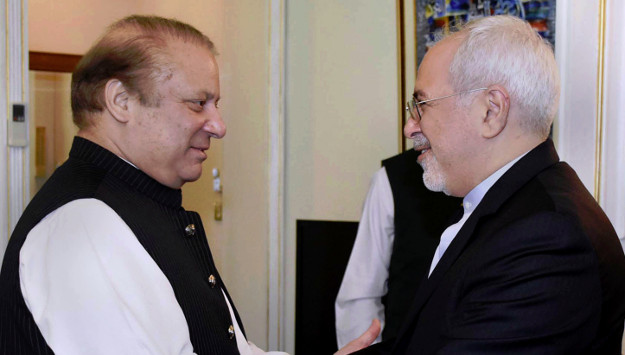
    Zarif Visits Pakistan for Security Talks after Gunmen Killed 10 Iranian Border Guards
  • Analysis
  • Zarif Visits Pakistan for Security Talks after Gunmen Killed 10 Iranian Border Guards

    Iran and Pakistan agreed Wednesday to work together to boost security along their shared border after Pakistan-based militants killed 10 Iranian border guards in the Iranian province of Sistan and Baluchestan last week. A militant group called Jaish al-Adl claimed responsibility for the attack.

    May 3, 2017

    Erdogan-Putin to meet in Sochi | Monday Briefing
  • Analysis
  • Erdogan-Putin to meet in Sochi | Monday Briefing

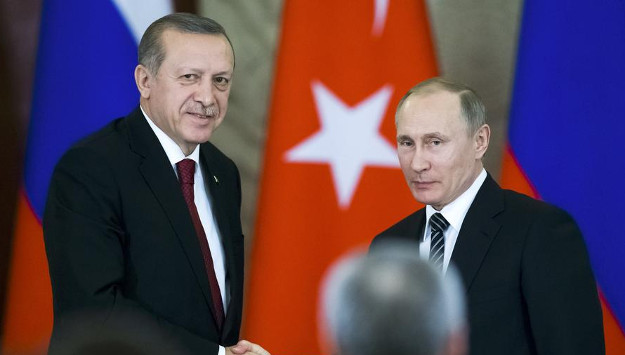
    In this week’s Monday Briefing, MEI experts Gonul Tol, Randa Slim, Alex Vatanka, Marvin G. Weinbaum, and Mabrouka M’Barek provide analysis on recent and upcoming events including Turkish President Erdogan’s upcoming meeting with Russian President Putin, the upcoming speech by Hezbollah Secretary General Nasrallah, the suprising popularity of Rouhani’s VP in the Iranian Presidential Race, the Taliban’s new Spring offensive, and protests in Tunisia over a government proposal to give amnesty to the country’s corrupt financial elite.

    Rouhani Calls on Islamabad to Prosecute Border Guards’ Killers to Save Ties with Tehran
  • Analysis
  • Rouhani Calls on Islamabad to Prosecute Border Guards’ Killers to Save Ties with Tehran

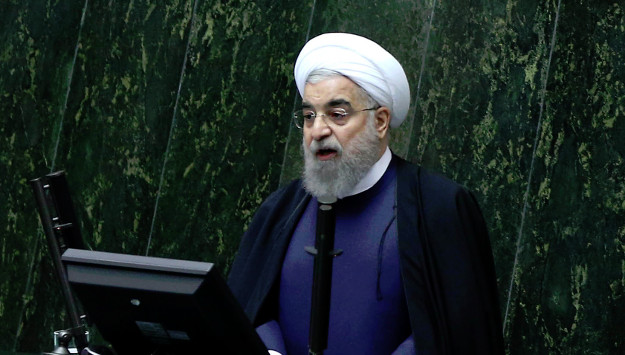
    Iran’s President Hassan Rouhani has sent a letter to Pakistani Prime Minister Nawaz Sharif, calling on Islamabad to prosecute perpetrators of an attack that killed 10 Iranian troops along the Iranian-Pakistani border on Wednesday. A militant group called Jaish al-Adl claimed responsibility for the attack. According to Iran’s Tasnim News Agency, Rouhani blamed the Pakistani government’s “inaction” and “lack of necessary measures” for repeated attacks originating from Pakistan against Iranian border guards.

    April 28, 2017

    Turkey's Erdogan Gets His Presidential Wish | Monday Briefing
  • Analysis
  • Turkey's Erdogan Gets His Presidential Wish | Monday Briefing

    In this week’s Monday Briefing, MEI experts Gonul Tol, Gerald Feierstein, Alex Vatanka, and Marvin G. Weinbaum provide analysis on recent and upcoming events including the victory of Turkish President Erdogan’s “Yes” constitutional referendum campaign to increase his powers, Secretary of Defense Mattis’ trip to the Middle East, the entry of 1,600 candidates for the upcoming Iranian presidential elections, and the alarming violence in Pakistan against accused “blasphemers”.

    Islamist Terrorism in Pakistan: New Alignments, New Tactics
  • Analysis
  • Islamist Terrorism in Pakistan: New Alignments, New Tactics

    Much has been written on the evolution of Islamist terrorism in Pakistan, the role of military dictatorships in nurturing Islamist terrorist groups, and Islamist parties and proselytizing groups working hand in glove with terrorists. Al-Qaeda and the Afghan Taliban were born in Pakistan, in addition to the country’s own long list of local terrorist groups such as the multi-faceted Tehreek-e-Taliban Pakistan (T.T.P.). Pakistan is now going through a new phase of Islamist militancy, with new alignments and the adoption of new tactics by jihadists.

    April 12, 2017

    ‘Linking West’ in ‘Unsettled Times’: India-G.C.C. Trade Relations
    Middle East Institute
  • Analysis
  • ‘Linking West’ in ‘Unsettled Times’: India-G.C.C. Trade Relations

    Economic and trade relations have been the most dynamic and significant component of the fundamental changes that have taken place in India’s relations with the Gulf Cooperation Council (G.C.C.) countries since the early 1990s. As a consequence, the Gulf has become of vital strategic importance for India in terms of energy security, trade, investment, and remittances. This essay discusses the contours of India’s trade relations with the G.C.C. countries, including the contributions they have made to India’s economic ascent and the scope for their further development.

    Afghan, Iranian Officials Spar over Tehran’s Support for Taliban
  • Analysis
  • Afghan, Iranian Officials Spar over Tehran’s Support for Taliban

    The Iranian and Afghan delegations to the 136th assembly of the Inter-Parliamentary Union have had acrimonious exchanges over Tehran’s support for the Taliban, the Iranian media reports.

    April 5, 2017

    India-Israel at 25: Defense Ties
    Middle East Institute
  • Analysis
  • India-Israel at 25: Defense Ties

    India has become Israel’s largest arms export market in the world over the last decade (replacing China); and Israel has become one of India’s largest arms supplier. Why did India develop a strong military partnership with a country it had ignored for 42 years? What can explain the development of defense ties in spite of limited political leadership involvement over the past decade? Finally, what are the prospects for defense relations as India grows to become one of the world’s largest defense importer? This essay answers these questions by providing an account of the evolution of Indo-Israeli defense cooperation over the past 25 years.

    April 4, 2017

    US-Pakistan Counterterrorism Needs a New Focus
  • Analysis
  • US-Pakistan Counterterrorism Needs a New Focus

    You can read the full article at The Diplomat.

    While the U.S. and Pakistani counterterrorism efforts have degraded al-Qaeda and the Pakistani Taliban in the Federally Administered Tribal Areas (FATA), sectarian violence across the country continues unabated and threatens to further destabilize Pakistan and the broader region.

    April 4, 2017

    Pakistani General's Role in Saudi-Led Coalition Troubles Iran
  • Analysis
  • Pakistani General's Role in Saudi-Led Coalition Troubles Iran

    The Iranian government has said it has “reservations” about the appointment of Pakistan’s former army chief, retired Gen. Raheel Sharif, as the head of the Saudi-led coalition.

    April 4, 2017

    Read the Middle East Journal

    The oldest peer-reviewed publication dedicated to the study of the modern Middle East, MEI’s flagship journal covers politics, society, and culture in the region.