تمت ترجمة هذا النص بواسطة الذكاء الاصطناعي وقد يحتوي على أخطاء.
تخطي إلى المحتوى

أفغانستان وباكستان

The Mecca Joint Défense Agreement: A New Geometry of Middle Eastern Power?
  • التحليل
  • The Mecca Joint Défense Agreement: A New Geometry of Middle Eastern Power?

    On August 7, 2026, Saudi Arabia, Turkey, and Pakistan signed the Mecca Joint Défense Agreement, a collective-defense pact widely compared to NATO’s Article 5. This essay argues that the comparison is misleading. Mecca borrows NATO’s language of solidarity without yet possessing NATO’s institutional machinery, and the Houthi offensive against Saudi Arabia in September 2026 provided an early and revealing test of what the agreement actually means in practice. Neither Pakistan nor Turkey automatically entered the fight on Saudi Arabia’s behalf, and Washington, despite an initial reluctance to strike directly, remained indispensable through intelligence support and a major proposed F-35 sale. Drawing on realist alliance theory — Hans Morgenthau, Kenneth Waltz, Stephen Walt, Glenn Snyder, and Steven David — and on the precedent of the Central Treaty Organization (CENTO), the essay contends that the Middle East is not dividing into rival blocs but moving from hierarchy toward a looser, overlapping geometry of hedged partnerships, in which American exclusivity is eroding considerably faster than American primacy.

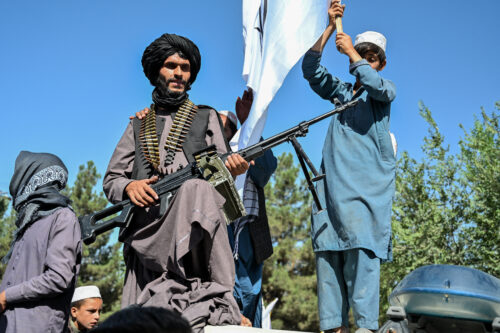
    The Mecca Alliance Meets the Red Sea – Saudi Arabia’s New Defense Pact Faces Its First Major Test
  • تعليق
  • The Mecca Alliance Meets the Red Sea – Saudi Arabia’s New Defense Pact Faces Its First Major Test

    When Saudi Arabia, Turkey and Pakistan agreed to a mutual defense pact in August, it was principally seen as a political commitment. The “Mecca alliance,” as it was dubbed, stipulated that an armed attack on one would be treated as an attack on all three, accompanied by deeper military cooperation.

    The Case for a Middle Course in Afghanistan
  • تعليق
  • The Case for a Middle Course in Afghanistan

    I was a teenage Afghan refugee in Pakistan’s tribal areas when the Twin Towers fell. Almost nobody around us understood the politics of what had happened, but we knew that something had changed for good. Afghanistan, which until then had been our private tragedy and our first exile from Taliban rule, had suddenly become the world’s concern, with the United States leading the response.

    الأخبار الأخيرة

    تصفية حسب
    1194 Results
    Women's Agency in Afghanistan: From Survivors to Agents of Change
    معهد الشرق الأوسط
  • التحليل
  • Women's Agency in Afghanistan: From Survivors to Agents of Change

    Originally posted December 2009

    Often, policy debates on the empowerment of women in Afghanistan are impaired by the historic backlashes against radical top-down reforms and women’s emancipation (e.g., unseating kings) or by the assumption that the male-dominated culture makes it nearly impossible to create space for the advancement of women’s rights. As a result, the effort to develop a cohesive strategy for enhancing women’s participation in the reconstruction agenda is hampered.

    April 23, 2012

    Local Perceptions of Rural Development Programs
    معهد الشرق الأوسط
  • التحليل
  • Local Perceptions of Rural Development Programs

    Originally posted December 2009

    The NGO people drive around in big white cars, live in our cities’ best houses and receive high salaries, though most of them would be jobless in their own country. They come here for two, three hours, and we tell them what they need to hear. They express empathy with our difficult situation, and then they get back into their air-conditioned four wheel drives and race off leaving us behind in a cloud of dust. Often they are never seen again.
    —Farmers in rural Kunduz Province, 2006

    April 20, 2012

    Rebuilding Afghanistan: Practical Measures for Improving the Economy
  • التحليل
  • Rebuilding Afghanistan: Practical Measures for Improving the Economy

    Originally posted December 2009 

    It is a difficult task to suggest a specific recipe for the improvement of the economy of any failed state. The case of Afghanistan presents even more challenges.

    The Magnitude of the Challenge

    April 20, 2012

    Political Leadership in Post-Taliban Afghanistan: The Critical Factor
    معهد الشرق الأوسط
  • التحليل
  • Political Leadership in Post-Taliban Afghanistan: The Critical Factor

    Originally posted December 2009

    A hasty, fluid, and poorly conceived process of creating leadership in a post-war situation mainly provides the space for rich and powerful — mostly corrupt — individuals to prevail because their roles, styles, and abilities overshadow concerns about their background, characteristics, homogeneity, and behavioral patterns.[1] Regrettably, such is the case in post-Taliban Afghanistan.

    April 20, 2012

    Perspectives on Democracy and Democratization in Afghanistan
    معهد الشرق الأوسط
  • التحليل
  • Perspectives on Democracy and Democratization in Afghanistan

    Originally posted December 2009

    In the post-2001 era, many assumptions have been made about the benefits of democracy in Afghanistan.[1] International assistance has focused on the re-establishment of representative democratic institutions, such as a presidential system, bicameral parliament, and provincial councils. However, little attention has been paid to Afghan perceptions of democracy. Indeed, far from unquestionable, the benefits of democracy are not universally acknowledged among Afghans.

    April 20, 2012

    اقرأ مجلة الشرق الأوسط

    أقدم مطبوعة محكمة مخصصة لدراسة الشرق الأوسط المعاصر، تغطي مجلة MEI الرائدة السياسة والمجتمع والثقافة في المنطقة.