Jordan’s Economy Weathers Iran War’s Shocks and Finds New Opportunities
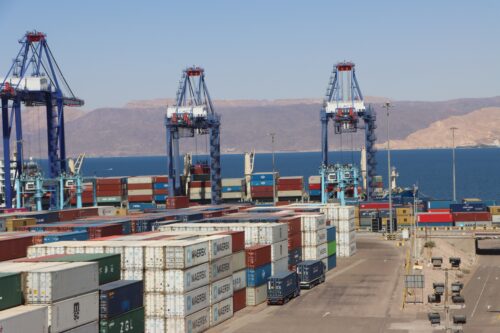
In the summer of 2003, King Abdullah II told Bloomberg Jordan sits “between Iraq and a hard place,” a play on words designed to describe the kingdom’s challenging environment to an American audience amid the US-led Iraq war to the east and the lingering Palestinian-Israeli conflict to the west. Jordan is grappling with a much “harder place” today.
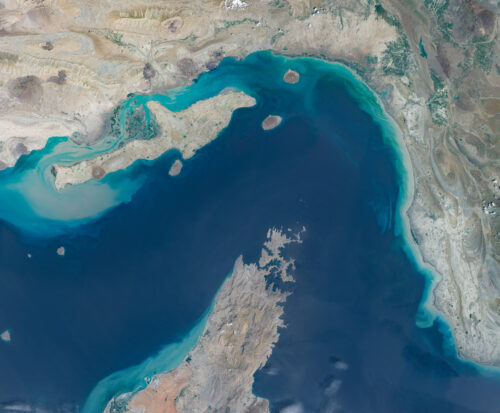
Proponents of the war with Iran have taken recent increases in crude-oil flows through the Strait of Hormuz as proof that the US strategy is finally working. President Trump is so confident in this that he recently rejected a seven-day plan, set forward by Iran’s foreign ministry, to end the war and open the strait. The United States is “winning tremendously,” Trump boasted.
The Mecca Alliance Meets the Red Sea – Saudi Arabia’s New Defense Pact Faces Its First Major Test
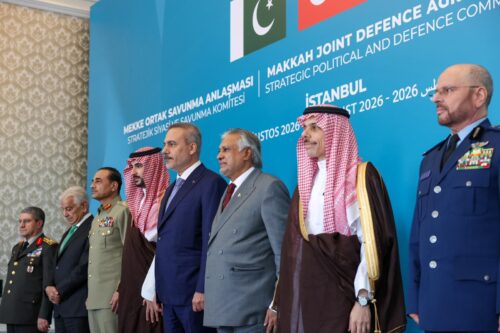
When Saudi Arabia, Turkey and Pakistan agreed to a mutual defense pact in August, it was principally seen as a political commitment. The “Mecca alliance,” as it was dubbed, stipulated that an armed attack on one would be treated as an attack on all three, accompanied by deeper military cooperation.
European governments initially reacted to Iran’s Islamic revolution by a careful testing of the ground with the new regime. But relations deteriorated quickly, as Iran accused some European countries of siding with Iraq in the Iran-Iraq War and Iranian agents killed Iranian opposition figures in European capitals.
Almost immediately after the triumph of the Islamic revolution, Ayatollah Khomeini and the new Iranian leadership turned against Saudi Arabia and its ruling family.
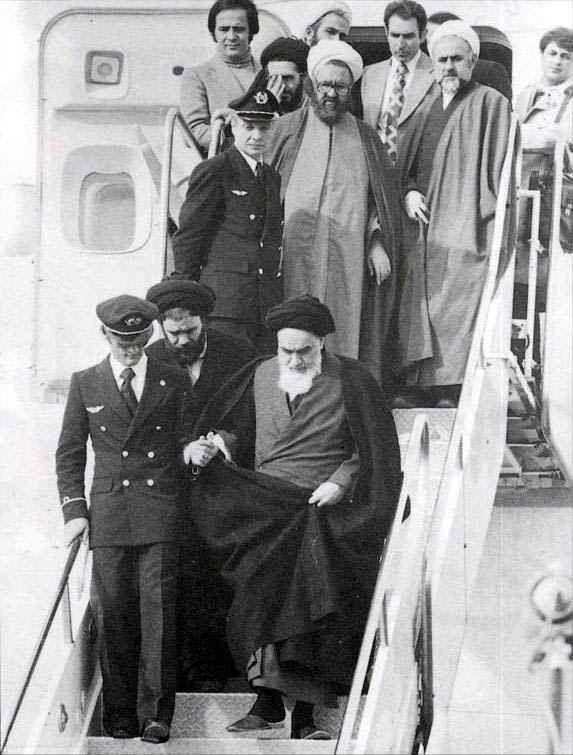
When Iran’s 1979 revolution took place, many Iranians predicted that relations between Iran and France would improve in an unprecedented way. Ayatollah Ruhollah Khomeini, the founder of the Islamic Republic, spent the last four months of his 14-year in exile in France. The revolutionaries in Tehran lauded French leaders for being hospitable toward their spiritual leader. They had no hatred of France, which lacked colonialist aspirations regarding Iran.
The Spectrum of Perceptions in Iran's Nuclear Issue
The relationship between Iran and the West has been marked by mutual mistrust and confrontation for the past 30 years. Iran’s nuclear standoff with Western countries is currently regarded as the main symbol of that confrontational relationship. Iran insists that its nuclear program is exclusively peaceful, while Western countries are suspicious of Tehran’s intentions. There are polarized and incompatible views about this complicated and multidimensional issue. The main source of incompatibility is that this issue is seen from different perspectives.
As one of the most important events of the past three decades in the Middle East, the Islamic Revolution not only has sustained itself, but the Islamic Republic which it spawned celebrated its 30th anniversary in February 2009.
The revolution of February 1979 was a revolt of the society against the state. In some of its basic characteristics, the revolution did not conform to the usual norms of Western revolutions, because the state did not represent just an ordinary dictatorship but an absolute and arbitrary system that lacked political legitimacy and a social base virtually across the whole of the society.
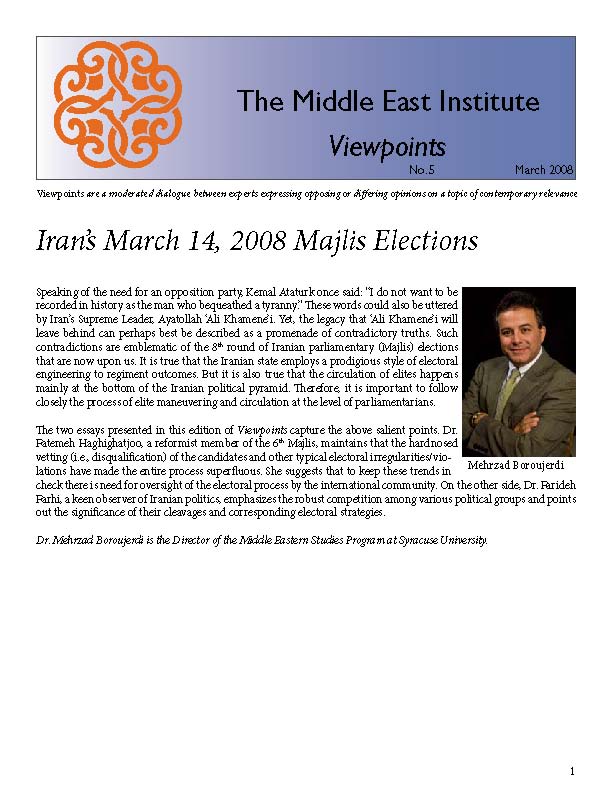
One of the strangest features of contemporary Iranian politics must surely be the reality that despite the concerted and successful effort to narrow the range of candidates allowed to run for various political offices, competition among individuals and groups has not only remained unabated, it has intensified. The elite jockeying that has taken place in the past few months, leading to the upcoming March 14 Majlis elections, is a good example of the competitive intensity that had come to characterize Iranian politics.
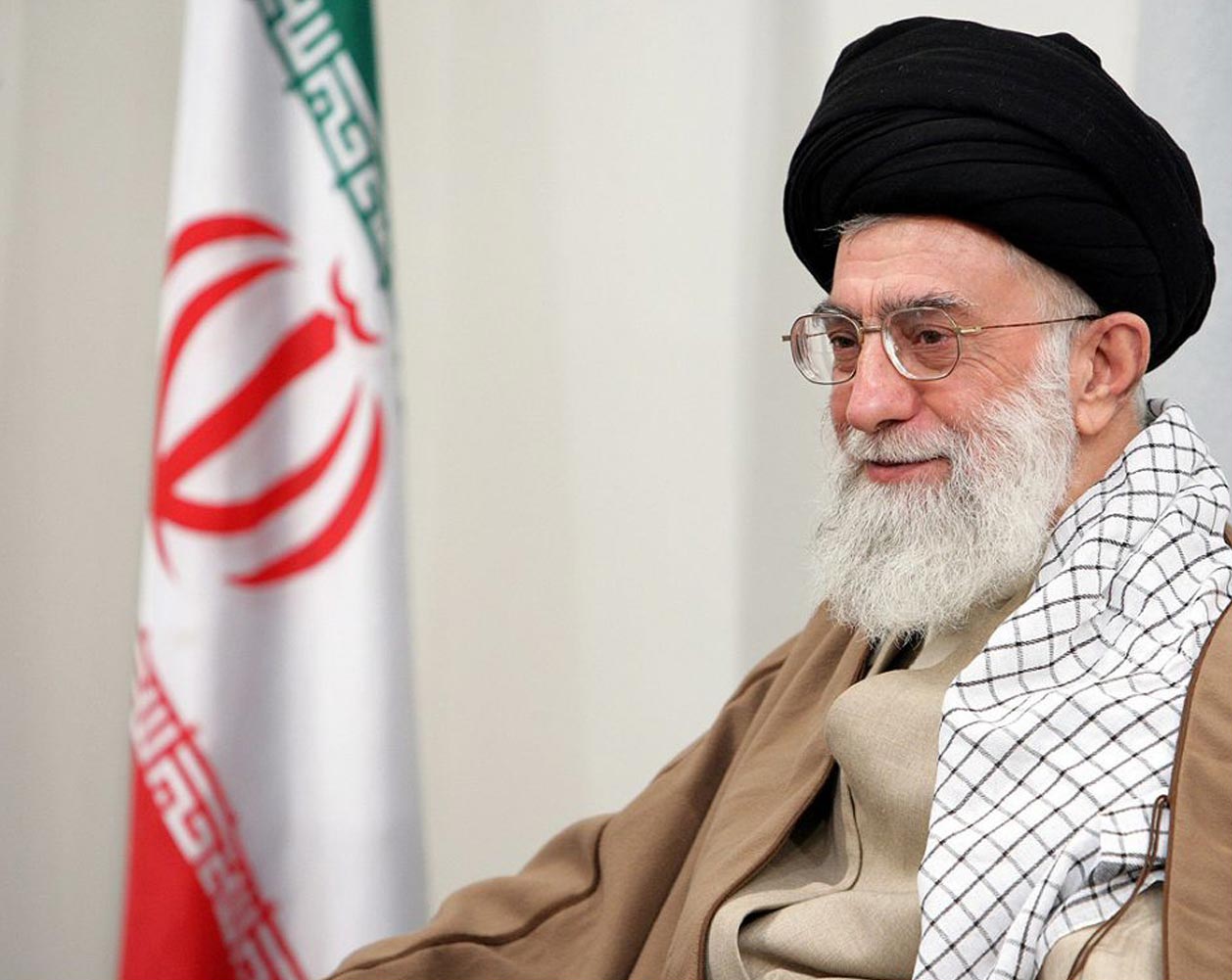
On January 3, 2008, Iran’s supreme leader, Ayatollah ‘Ali Khamene’i once again sought to remind domestic and foreign audiences about his stature in Tehran. Stating that “cutting off relations with the US” was one of the “principal policies” of the Iranian government, but that he would be the “first person to endorse these relations” if it benefited the Iranian people, Khamene’i secured news headlines.[1]
The oldest peer-reviewed publication dedicated to the study of the modern Middle East, MEI’s flagship journal covers politics, society, and culture in the region.