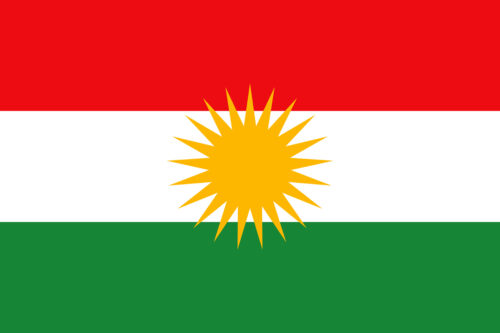
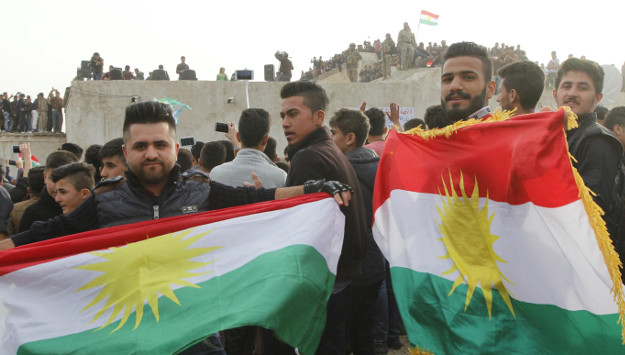
The Kurdistan Region of Iraq (KRI), also known as Iraqi Kurdistan, is a semi-autonomous region in northeastern Iraq with a population of approximately 6.5 million. The KRI’s contemporary politics are rooted in a century of Kurdish efforts to achieve self-rule.
Reflections on a Diplomatic Career in the Middle East: A Conversation With Ambassador Yael Lempert
Brian is joined by Amb. (ret.) Yael Lempert, Vice President for Outreach at MEI, to discuss her career in diplomacy and the importance of US diplomatic efforts abroad. She shares stories from postings across the Middle East in Baghdad, Cairo, Tripoli, Jerusalem, and Amman and examines how her personal and professional experiences shaped her approach to the work. Together, Brian and Yael discuss the realities of life in the Foreign Service, the core tenets of American diplomacy, and why it matters in today’s Middle East.
It has become a commonplace for Americans to describe our current war with Iran as stuck in a kind of limbo, neither full war nor real peace. We’re not the only ones. Iraq finds itself caught in a limbo of its own, between America and Iran, between the tolerable and the intolerable, between progress and relapse.
Tehran Sees Saudi Outreach to Iraqi Shiites as "New Project" to Roll Back Iran's Regional Influence
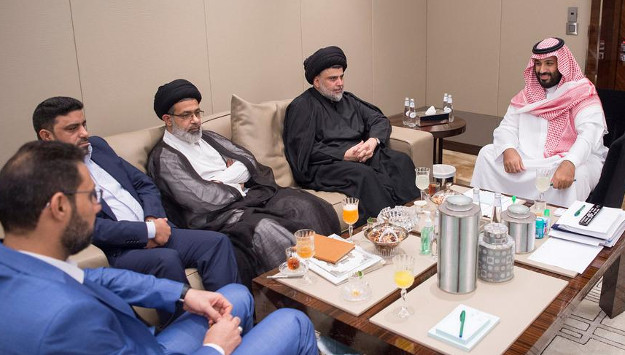
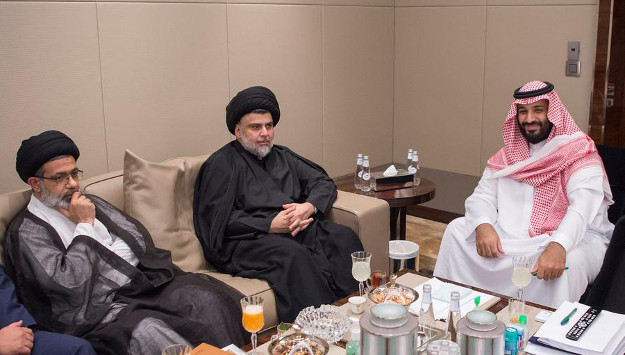
Iranian media outlets, analysts and politicians warn that Saudi Arabia and its regional allies are cultivating close ties with Muqtada al-Sadr and other Iraqi Shiite clerics and political leaders to roll back Iran’s influence in post-Islamic State Iraq and the broader region. While some suggest that Riyadh’s outreach to Iraqi Shiites is part of the kingdom’s efforts to defuse tension with Tehran, others see it as a plot to isolate Iran. At the center of this debate is al-Sadr, who recently visited Saudi Arabia and the United Arab Emirates and is scheduled to travel to Egypt soon.
Iran-Backed Iraqi Militia Group Vows to Fight with Hezbollah against Israel
Harakat al-Nujaba, an Iranian-supported Iraqi militia group, has announced that it will support the Lebanese Hezbollah in the fight against the “occupying Zionist regime” of Israel, Fars News Agency, which is affiliated with the Islamic Revolution Guards Corps (I.R.G.C.) reports.
P.M.F. Forces Reportedly Barred from Participating in Tal Afar Operation
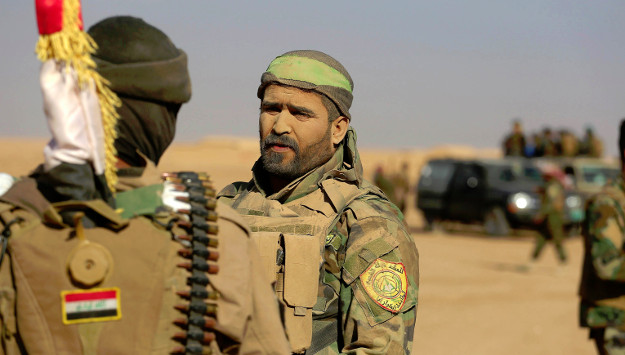
A commander of the Iraqi Popular Mobilization Forces (P.M.F.) has said that the United States, Turkey and the leadership of the Iraqi Kurdistan are pressuring the Baghdad government not to allow the paramilitary forces to participate in upcoming military operation to liberate the city of Tal Afar, Fars News Agency reported. Jawad al-Talibawi, a spokesman for the armed wing of Iranian-backed Asaib Ahl al-Haq, added that P.M.F. units have received “orders” forbidding them from taking part in the operation.
Tehran’s Iraqi Proxies and Looming Conflict with U.S.
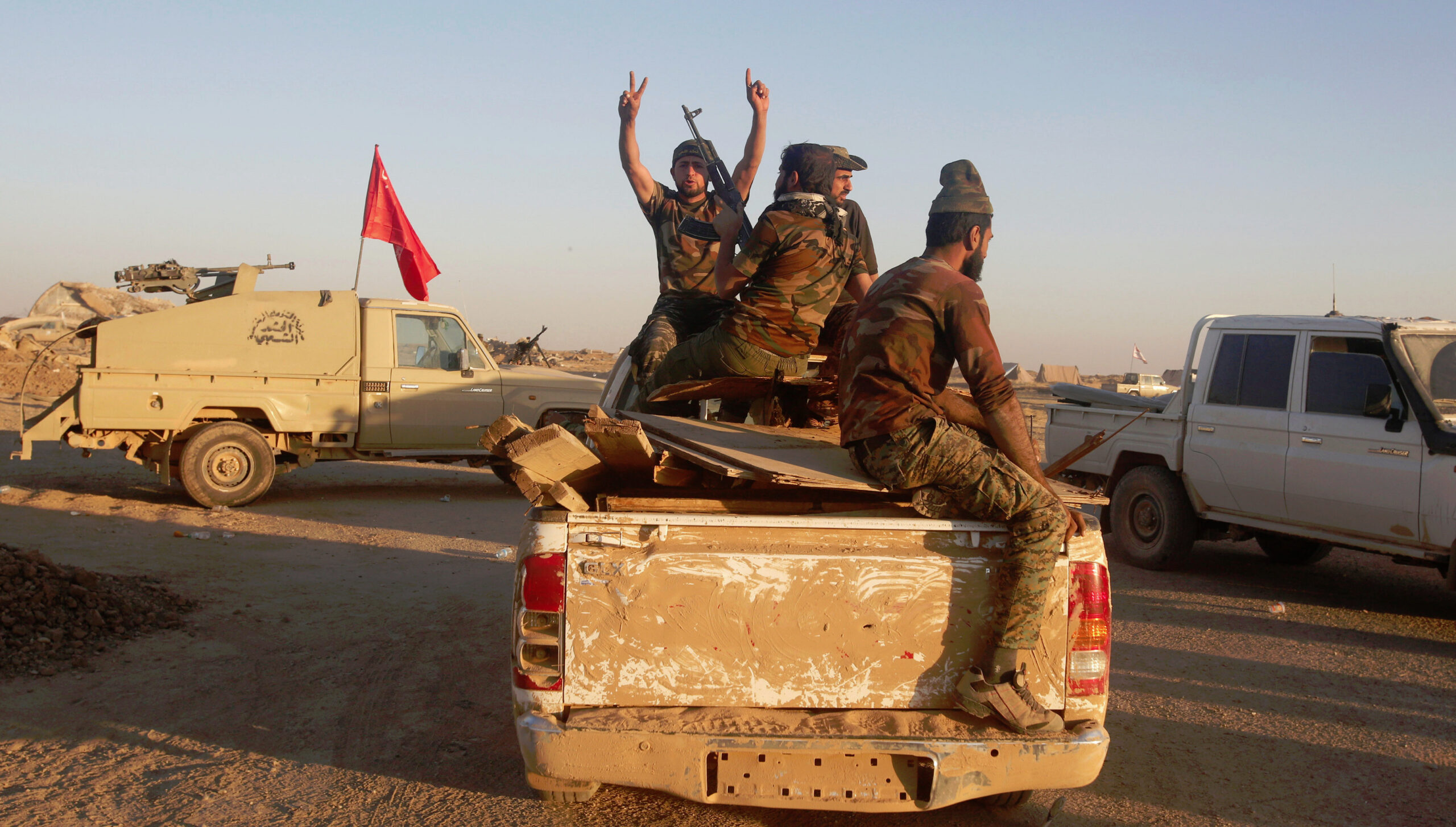
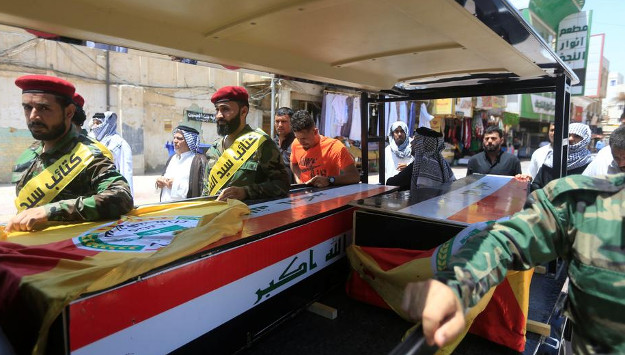
On Monday, the Islamic State claimed it had killed scores of Iraqi troops and captured one soldier in an ambush near the al-Tanf border-crossing along the Iraqi-Syrian border. Kata’ib Sayyid al-Shuhada (K.S.S.), an Iranian-backed unit of the Iraqi Popular Mobilization Forces (P.M.F.), however, blamed U.S. air strikes for its losses and vowed revenge.
Iraqi Paramilitary Forces to Participate in Tal Afar Operation despite Concerns
The spokesperson for the Iraqi Popular Mobilization Forces (P.M.F.) has announced that the paramilitary forces will participate in the upcoming military operation against the Islamic State in Tal Afar despite regional concerns, Iran’s Fars News Agency reported today. “In the operation to liberate Tal Afar, all Hashd al-Shaabi forces, the Iraqi army, the federal police and also counterterrorism and rapid-reaction forces will participate,” Ahmed al-Assadi was quoted as saying.
Iraqi Militia Leader Says Will Hold U.S. Responsible for Killing 40 Militiamen, 7 I.R.G.C. Officers
The commander of an Iranian-backed Iraqi paramilitary unit has accused the American troops of colluding with the Islamic State and killing dozens of Iraqi militiamen and Islamic Revolution Guards Corps (I.R.G.C.) officers along the Iraqi-Syrian border last night – a charge the U.S.-led coali
Iran-Allied Iraqi Militia Group Threatens Violence over Kurdistan Independence Plan
A senior official of Asa’ib Ahl al-Haq, an Iran-supported militia unit within Iraq’s Popular Mobilization Forces (P.M.F.), has threatened violence against the leadership of the Iraqi Kurdistan, according to Fars News Agency, which is affiliated with the Islamic Revolution Guards Corps (I.R.G.C.).
P.M.F. Spokesman: We’ll Not Be Disbanded, Will Remain Key Player in Iraq
The Popular Mobilization Forces – the Iraqi paramilitary forces also known by its Arabic name Hashd al-Shaabi – will not be disbanded after the fight against the Islamic State is over and will remain a key player in Iraq, the alliance’s security spokesman said on Sunday. “Hashd al-Shaabi is an official military organization affiliated with the government of Iraq.
Iran-Backed Iraqi Paramilitary Forces Form New Alliance to Contest Parliamentary Elections
Iraq’s Popular Mobilization Forces (P.M.F.) groups have agreed to form an alliance – dubbed as the Coalition of the Loyalists – under the leadership of the Badr Organization to participate in the country’s next parliamentary elections, Fars News Agency, an Iranian outlet affiliated with the Islamic Revolution Guards Corps (I.R.G.C.) reports. P.M.F. units such as Kata’ib Hezbollah, Kata’ib Sayyid al-Shuada, Kata’ib Jund al-Imam, and Asaib Ahl al-Haq will be part of the new alliance.
Iraqi Shiite Leader Assures Iran He Won’t Visit Saudi Arabia
A senior Iraqi Shiite leader has rejected reports that he plans to visit Saudi Arabia, telling Iranian journalists that he will only visit the Kingdom if Saudi troops leave Bahrain and Yemen. “Saudi Arabia recently sent a message to me through a mediator asking if I would go to meet this country’s leaders if they invite me. I responded by saying that if their gift to me is leaving Bahrain and ending the killing of Yemen’s innocent people, I will certainly accept. Of course, this request was rejected by them.
Iran-Backed Popular Mobilization Forces Preparing for Post-Islamic State Iraq
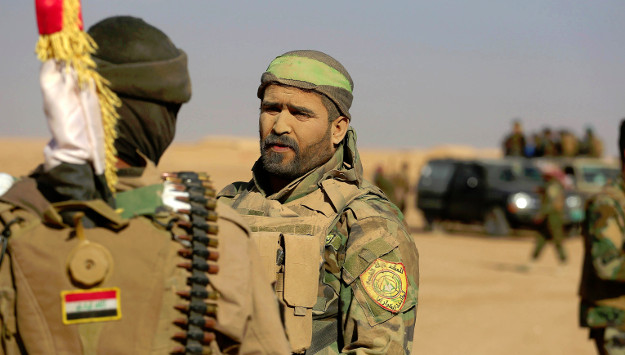
With the fall of Mosul, Iranian-supported Iraqi Popular Mobilization Forces (P.M.F.) is preparing for post-Islamic State Iraq. The paramilitary forces have recently launched a professional public relations campaign on the Internet and social media aimed at justifying and legitimizing P.M.F.’s existence beyond the collapse of the Islamic State. Should the P.M.F. prevail in this effort, it will mark a victory for the Islamic Revolution Guards Corps (I.R.G.C.), which has aided P.M.F. groups for years and sees them crucial for its influence in Iraq in the future.
Competing Iraqi Shiite Militias: Tehran’s Design or Strategic Blunder?
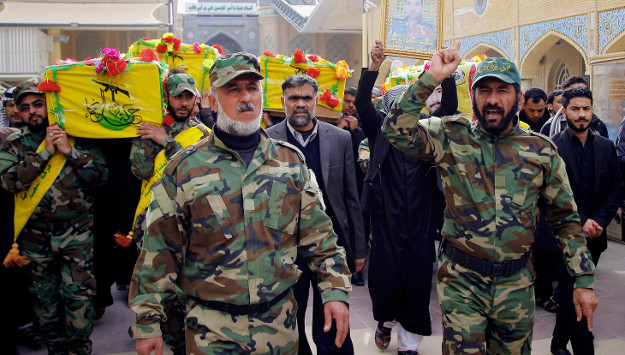
Since the 2003 U.S. invasion, Tehran has encouraged and contributed to the formation of countless Shiite militia groups in Iraq. While most of these armed groups are now formally organized under the umbrella of the Popular Mobilization Forces (P.M.F.), they have in reality remained independent entities and are not controlled by the civilian government in Baghdad.
But has Tehran committed a strategic blunder by fracturing the Iraqi Shiite armed groups or does the existence of competing Shiite Iraqi militias benefit the Islamic Republic?
Iran-Backed Iraqi Militia Leader Intensifies Propaganda against U.S. and Its Allies
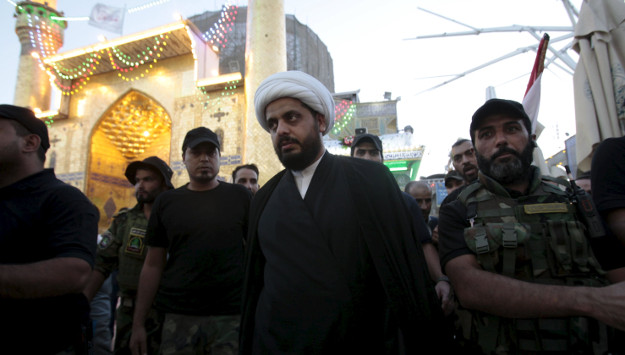
Qais al-Khazali, the secretary-general of Iraq’s Asaib ahl al-Haq armed group, has accused the United States, Israel, Saudi Arabia and Turkey of supporting the Islamic State in Iraq and the broader region, according to Iran’s Fars News Agency. “The heroic forces of Hashd al-Shaabi [Popular Mobilization Forces] easily chop the heads of these forces,” he said while describing the Islamic State as the “special forces” of the United States and its allies.
Influential Iraqi Cleric Muqtada al-Sadr’s Saudi Visit Triggers Worries in Tehran
Prominent Iraqi Shiite cleric Muqtada al-Sadr’s weekend visit to Saudi Arabia has raised concerns in Tehran. While the Iranian government and media outlets affiliated with the Islamic Revolution Guards Corps (I.R.G.C.) largely refrained from commenting on Sadr’s trip and his meeting with Saudi Arabia’s Crown Prince Mohammad bin Salman, some conservative newspapers and Iranian analysts cautioned that the Saudi government is attempting to court Iraqi Shiite leaders to influence Iraqi politics at the expense of Iran’s interests.
New Saudi Outreach with Iraqi Shiite Leaders | Monday Briefing
In this week’s Monday Briefing, MEI experts Randa Slim, Paul Salem, and Marvin G. Weinbaum analyze new Saudi diplomatic engagement with Iraq, the escalating G.C.C. crisis, and the continuation of dynastic politics in Pakistan.