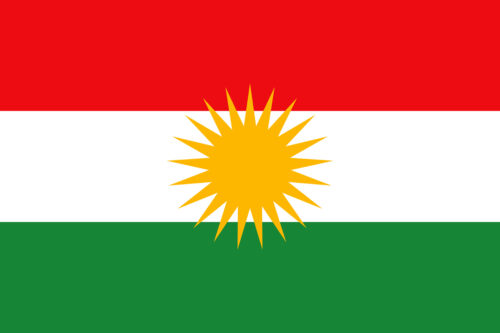
The Kurdistan Region of Iraq (KRI), also known as Iraqi Kurdistan, is a semi-autonomous region in northeastern Iraq with a population of approximately 6.5 million. The KRI’s contemporary politics are rooted in a century of Kurdish efforts to achieve self-rule.
Reflections on a Diplomatic Career in the Middle East: A Conversation With Ambassador Yael Lempert
Brian is joined by Amb. (ret.) Yael Lempert, Vice President for Outreach at MEI, to discuss her career in diplomacy and the importance of US diplomatic efforts abroad. She shares stories from postings across the Middle East in Baghdad, Cairo, Tripoli, Jerusalem, and Amman and examines how her personal and professional experiences shaped her approach to the work. Together, Brian and Yael discuss the realities of life in the Foreign Service, the core tenets of American diplomacy, and why it matters in today’s Middle East.
It has become a commonplace for Americans to describe our current war with Iran as stuck in a kind of limbo, neither full war nor real peace. We’re not the only ones. Iraq finds itself caught in a limbo of its own, between America and Iran, between the tolerable and the intolerable, between progress and relapse.
Qanats and Water Cooperation for a Sustainable Future
This essay is part of the Middle East-Asia Project (MAP) series on “Harvesting Water and Harnessing Cooperation: Qanat Systems in the Middle East and Asia.”
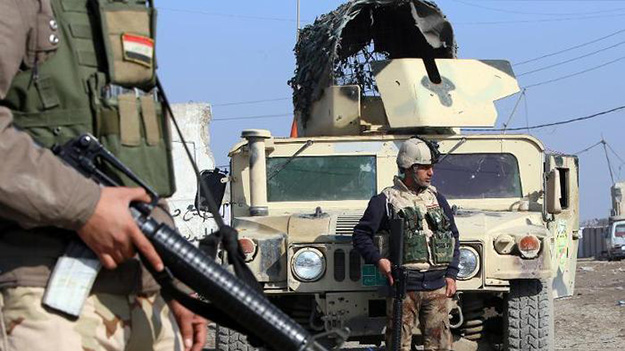
Since the departure of U.S. ground forces from Iraq in 2011 in the wake of failed negotiations to extend the 2008 Status of Forces Agreement, the security situation in Iraq has steadily declined. To many, the situation was predictable, as the absence of a residual U.S. force to mature the Iraqi security forces and moderate long-standing political tensions among the sects led to a security vacuum filled by extremists and terrorists. To others, 10 years of investment and over 4,000 troops lost was enough, and it was time for the Iraqis to resolve their own internal conflicts.
The following is an excerpt from “Iraq’s Tangled Foreign Interests and Relations,” written by MEI Vice President Paul Salem and published by the Carnegie Middle East Center on December 24, 2013. Click here to view the full report.
Earlier today, double explosions near the Iranian embassy in Beirut killed at least 23, including an Iranian diplomat. The Abdullah Azzam Brigades, an Islamist group with links to al-Qa`ida, took responsibility for the attack. MEI sat down with its Vice President for Policy and Research, Paul Salem, to discuss the significance of the bombings in Lebanon as well as their regional and global implications.
Tell us about the bombing and the group that claimed responsibility for it.
Maliki in Washington: Arms Deals, Politics, and Proxy Wars
Iraqi Prime Minister Nouri al-Maliki is in Washington this week for meetings with Vice President Joe Biden, Defense Secretary Chuck Hagel, and President Barack Obama. We sat down with MEI’s Vice President for Policy and Research, Paul Salem, to discuss the topics on the table, what each side hopes to accomplish, and how the United States should approach Iraq.
The Iraqi Factor in the Syrian Crisis: Catalyst or Inhibitor?
Iraqis who cast their votes in postponed local elections in Anbar and Nineveh on 20 June had a lot on their plates. Beyond issues relating to the provision of services locally, the last weeks before the elections saw massive protests against the central government in Baghdad. The many angry slogans on display included calls for greater autonomy for the Sunni-majority areas of Iraq as well as expressions of solidarity with the mainly Sunni Syrian opposition movement.
The Middle East Institute Center for Turkish Studies’ Fourth Annual Conference on TurkeyPanel 4: The Turkey-Iran-Iraq NexusHenri J. Barkey, Lehigh UniversityAlireza Nader, RAND CorporationDenise Natali, National Defense UniversityModerator: Phebe Marr, Author and HistorianJune 14, 2013 3:30pm-5:00 pm
The Middle East Institute Center for Turkish Studies’ Fourth Annual Conference on TurkeyPanel 4: The Turkey-Iran-Iraq NexusHenri J. Barkey, Lehigh UniversityAlireza Nader, RAND CorporationDenise Natali, National Defense UniversityModerator: Phebe Marr, Author and HistorianJune 14, 2013 3:30pm-5:00 pm
The Middle East Institute Center for Turkish Studies’ Fourth Annual Conference on TurkeyPanel 4: The Turkey-Iran-Iraq NexusHenri J. Barkey, Lehigh UniversityAlireza Nader, RAND CorporationDenise Natali, National Defense UniversityModerator: Phebe Marr, Author and HistorianJune 14, 2013 3:30pm-5:00 pm
The Middle East Institute Center for Turkish Studies’ Fourth Annual Conference on TurkeyPanel 4: The Turkey-Iran-Iraq NexusHenri J. Barkey, Lehigh UniversityAlireza Nader, RAND CorporationDenise Natali, National Defense UniversityModerator: Phebe Marr, Author and HistorianJune 14, 2013 3:30pm-5:00 pm
The Middle East Institute Center for Turkish Studies’ Fourth Annual Conference on TurkeyPanel 4: The Turkey-Iran-Iraq NexusHenri J. Barkey, Lehigh UniversityAlireza Nader, RAND CorporationDenise Natali, National Defense UniversityModerator: Phebe Marr, Author and HistorianJune 14, 2013 3:30pm-5:00 pm