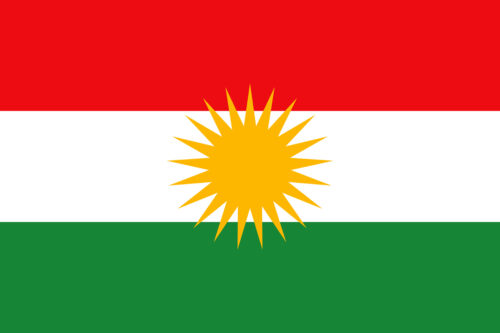
The Kurdistan Region of Iraq (KRI), also known as Iraqi Kurdistan, is a semi-autonomous region in northeastern Iraq with a population of approximately 6.5 million. The KRI’s contemporary politics are rooted in a century of Kurdish efforts to achieve self-rule.
Reflections on a Diplomatic Career in the Middle East: A Conversation With Ambassador Yael Lempert
Brian is joined by Amb. (ret.) Yael Lempert, Vice President for Outreach at MEI, to discuss her career in diplomacy and the importance of US diplomatic efforts abroad. She shares stories from postings across the Middle East in Baghdad, Cairo, Tripoli, Jerusalem, and Amman and examines how her personal and professional experiences shaped her approach to the work. Together, Brian and Yael discuss the realities of life in the Foreign Service, the core tenets of American diplomacy, and why it matters in today’s Middle East.
It has become a commonplace for Americans to describe our current war with Iran as stuck in a kind of limbo, neither full war nor real peace. We’re not the only ones. Iraq finds itself caught in a limbo of its own, between America and Iran, between the tolerable and the intolerable, between progress and relapse.
After the Summit: Assessing Iraq's Relations with its Arab Neighbors
MEI Podcast, 12 July, 2012After the Summit: Assessing Iraq’s Relations with its Arab NeighborsJohn Desrocher, Gregory Gause, Ken Pollack, Amb. Samir Sumaida’ie, Phebe Marr
After the Summit: Assessing Iraq's Relations with its Arab Neighbors
MEI Podcast, 12 July, 2012After the Summit: Assessing Iraq’s Relations with its Arab NeighborsJohn Desrocher, Gregory Gause, Ken Pollack, Amb. Samir Sumaida’ie, Phebe Marr
After the Summit: Assessing Iraq's Relations with its Arab Neighbors
MEI Podcast, 12 July, 2012After the Summit: Assessing Iraq’s Relations with its Arab NeighborsJohn Desrocher, Gregory Gause, Ken Pollack, Amb. Samir Sumaida’ie, Phebe Marr
After the Summit: Assessing Iraq's Relations with its Arab Neighbors
MEI Podcast, 12 July, 2012After the Summit: Assessing Iraq’s Relations with its Arab NeighborsJohn Desrocher, Gregory Gause, Ken Pollack, Amb. Samir Sumaida’ie, Phebe Marr
After the Summit: Assessing Iraq's Relations with its Arab Neighbors
MEI Podcast, 12 July, 2012After the Summit: Assessing Iraq’s Relations with its Arab NeighborsJohn Desrocher, Gregory Gause, Ken Pollack, Amb. Samir Sumaida’ie, Phebe Marr
Turkey’s popular and outspoken Prime Minister, Recep Tayyip Erdogan, was treated to a hero’s welcome last week when he met with Syrian refugees for the first time since Turkey opened its doors to the thousands of people fleeing Bashar Al-Assad’s crackdown. Erdogan’s pledge to defend the rights of the Syrian people and his call for Assad’s removal, however, fell short of expectations. Although Erdogan’s speech drew some applause, it was also interrupted by shouts of “We want arms for the Free Syrian Army and a buffer zone inside Syria!” The Turkish PM’s reiteration of his previous positi
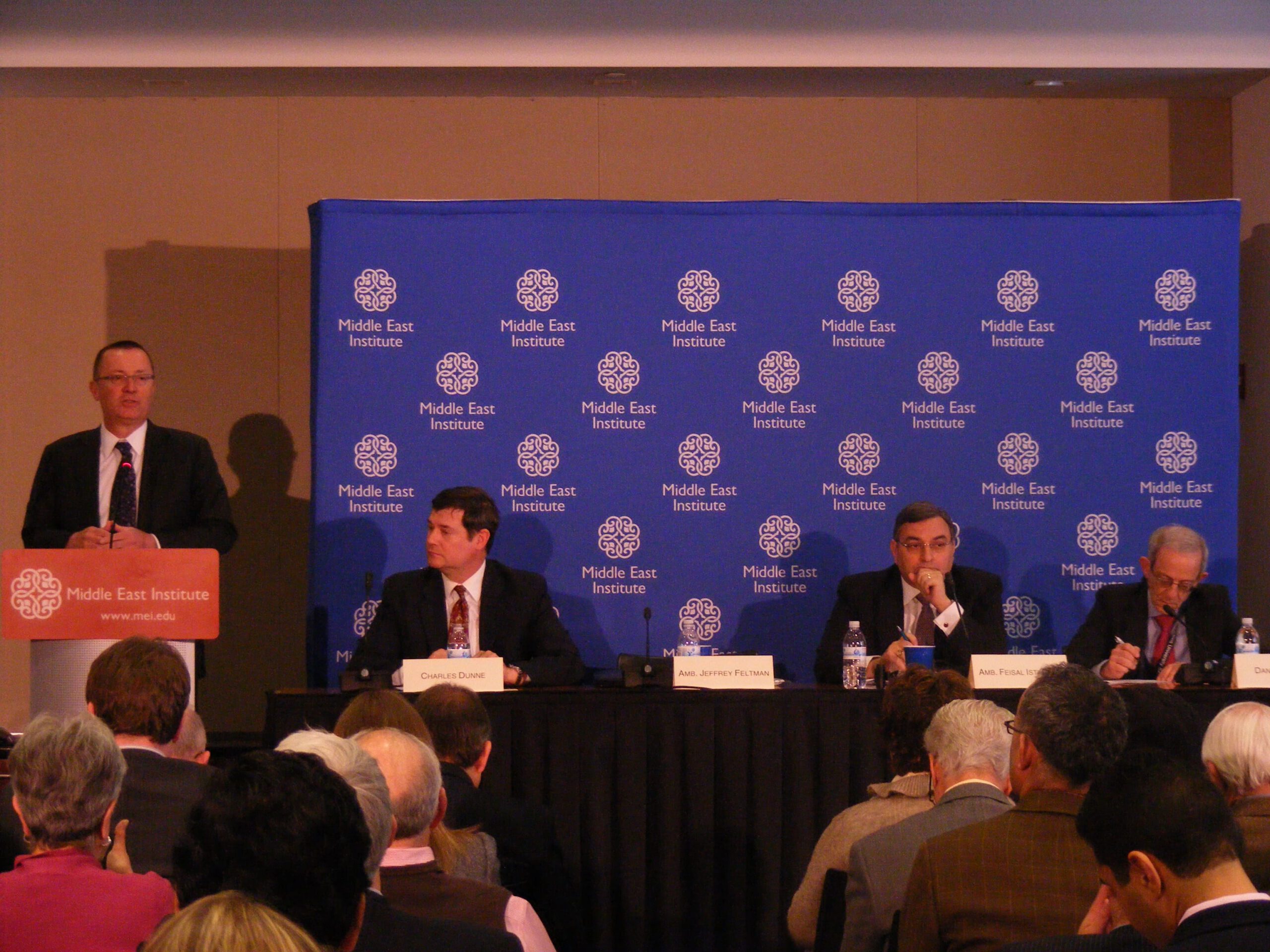
Panelists will explore both the challenges and opportunities presented by the transition of the U.S.-Iraqi partnership from a mainly military to a diplomatic one. What sort of working relationship is emerging between the U.S. and Iraqi governments? What kind of cooperation is taking place in the areas of domestic and regional security, diplomacy, trade, energy, and reform? How has the troop drawdown affected U.S. influence in Iraq and the region in general? Feltman, Istrabadi and Serwer will explore strategies and policies resulting from the new bilateral dynamics.
Introduction to Public Health in the Middle East: Building a Healthy Future
Originally posted September, 2011
The flow of ideas, people, and commerce across national boundaries has been occurring with breathtaking rapidity in the broader Middle East, as elsewhere. These increasingly dense exchanges have generated new threats and vulnerabilities that have tended to impact women, children, and the poorest members of society disproportionately. They also have given people more resources and opportunities with which to shape their lives and their futures.