Defeating the Islamic State Militarily is Only Half the Battle
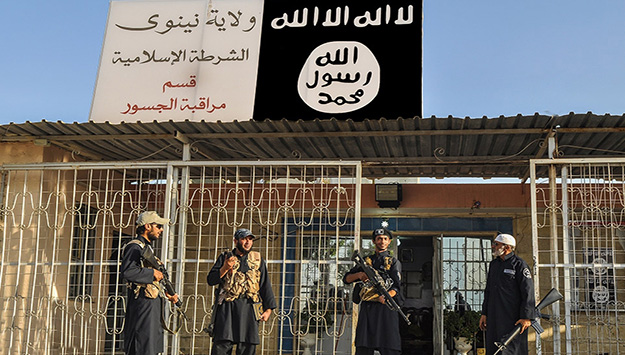
In his speech on September 10 President Obama characterized the Islamic State (ISIS) as a terrorist group.[1] There were clear political benefits to using this label, not the least of which was to facilitate the formation of a broad-based military coalition against the organization.
The Afghan Unity Government: A Victory for Democracy
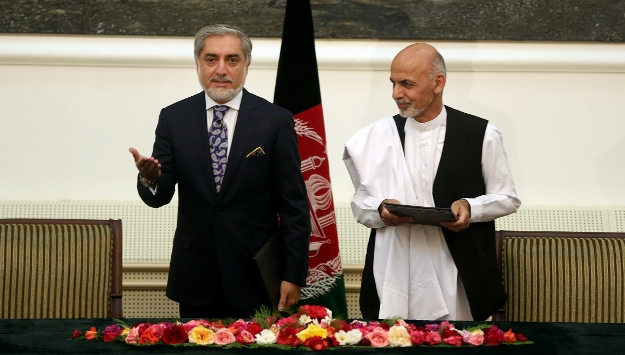
Afghanistan is often thought of as a place where some of the world’s most dangerous Islamists have taken refuge, been nurtured, and been allowed to launch regional and global jihad. Yet, with the agreement to form a unity government, the nation has provided an answer to extremism. Admittedly, the presidential election results were so riddled with fraud that it is probably impossible to determine who actually won. But it may nevertheless result in a victory for democracy. Seven million people risked their lives to vote.

Agrarian Mirage: Gulf Foreign Direct Investment in Pakistan’s Agricultural Sector
In the late 2000s, one rarely picked up a financial newspaper without seeing an announcement of Gulf investments in large tracts of Pakistani agricultural land. Today, however, there is little, if any evidence of a single foreign-financed agricultural project in Pakistan having come to fruition. This essay explores why.
Gulf Investment: Destination Asia
The rise of China and India, coupled with major changes in the global energy market such as the US shale revolution have shifted the Gulf countries’ economic focus towards the Asian continent. East Asia has already emerged as the GCC’s most important trade partner, accounting for over 57% of its external trade.
Contemporary Patterns in Transregional Islam
The essays in this series deal with transregional linkages between the Middle East and Asia. As a whole, the series explores the “vectors” of religious transmission and the consequences of or implications of such interactions.
A Promising Ally in Syria
This article was first published on LobeLog.
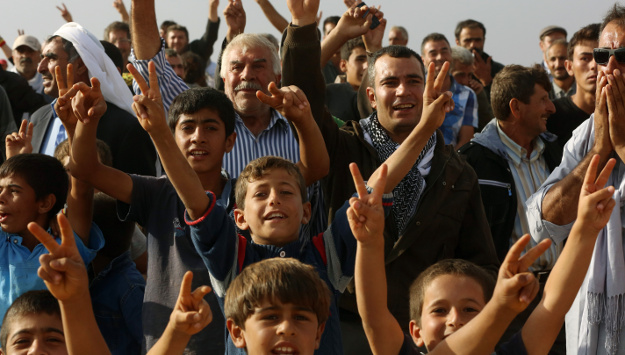
Alongside the wave of Syrian Kurdish refugees into Turkey this month is an equally unsettling story: alarming gains by the Islamic State in an offensive against a potential ally. Syria’s Kurds carved out their own regional bastion extending west from their main base in the extreme northeast corner of Syria. For two years they have fiercely defended their lands against the Islamic State and other extremists, employing many thousands of veteran Kurdish fighters.
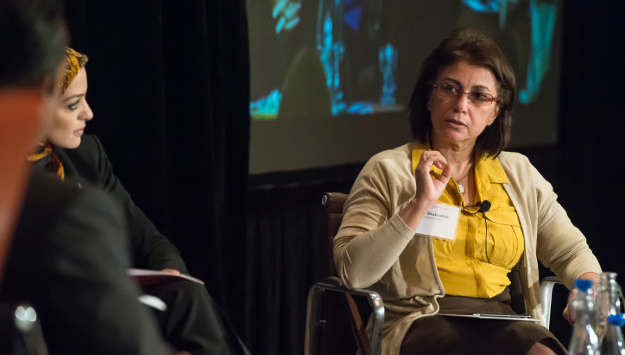
Q&A with Hala Shukrallah, President of Egypt's Al-Dostour Party
Hala Shukrallah, president of Egypt’s Al Dostour (Constitution) Party, spoke with MEI about the party’s preparations for upcoming parliamentary elections, its legislative agenda, and the challenges it will face in Parliament. See more of her comments at this year’s Egypt Conference.
Q: How has the Dostour party been preparing for the upcoming parliamentary elections?
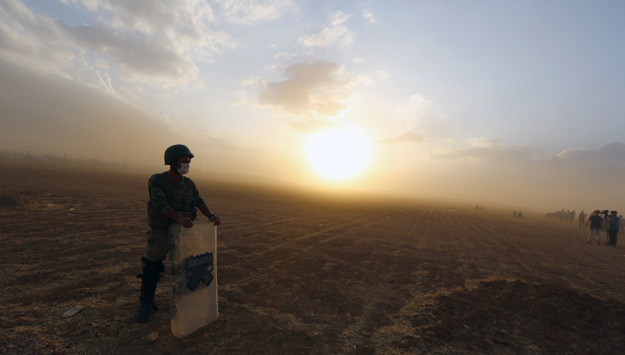
Is Turkey Finally Ready to Aid Military Strikes Against ISIS?
This article was first published on CNN.
Turkey, a key U.S. ally and a NATO member that borders the territory captured by ISIS, which now calls itself the Islamic State, in Syria and Iraq, could play a critical role in the U.S.-led military assault against the jihadist group.
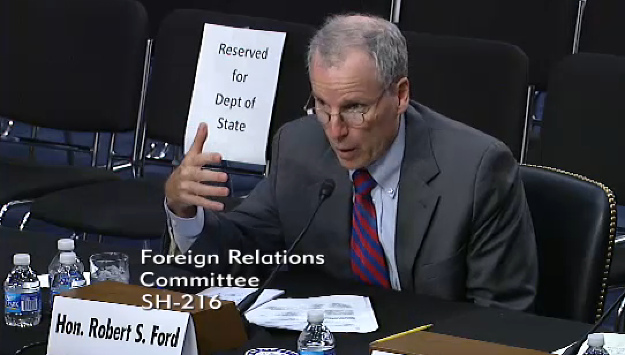
Testimony: US Strategy To Defeat ISIS
The following is the written testimony prepared and delivered by Amb (ret) Robert S. Ford for the Senate Foreign Relations Committee hearing held on September 17, 2014. Click here to watch video of the full hearing (Amb. Ford’s testimony begins at the 3 hours and 26 minutes mark).
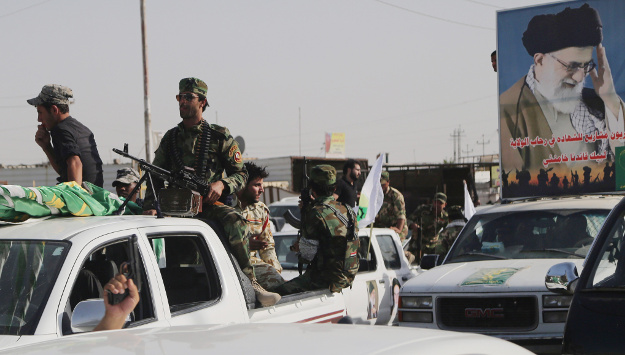
Iran’s Approach to Extreme Sunni Militants
This article was first published by The National Interest.
The conventional wisdom in Washington is that Tehran regards Sunni-jihadist movements as ideologically incompatible rivals. This is not surprising, as the bulk of Sunni-jihadist literature makes it clear that Shia-majority Iran is considered to be the embodiment of apostasy. To most Sunni jihadists, including those from ISIS, Iran is an archenemy surpassing both Israel and the United States.
Israel: The Future is Asia
The forces of globalization have not erased national boundaries. Nor have they shortened the physical distances between countries. Tel Aviv and Tokyo still lie more than 9,000 kilometers apart. The direct flight time between Ben Gurion Airport and Beijing Capital Airport remains just over nine hours.
Israel and Indonesia: Window of Opportunity?
Israel and Indonesia are two nations whose relations―due to political circumstances―have yet to fulfill their enormous potential. Were there to be progress in peace negotiations between Israelis and Palestinians, a window of opportunity could open for Indonesia’s new president to take practical steps that would begin to unlock this potential.
India’s National Security Imperatives and Indo-Israeli Strategic Cooperation
Over the past two decades, successive Indian governments have managed to develop increasingly extensive ties with Israel without damaging their relations with Arab countries. This essay discusses the reasons that India, which had distanced itself from Israel for four decades, decided to pursue security cooperation, and assesses the prospects for its further development.
The New Iraqi Prime Minister: A Change in Style or Substance?
During his first week in office, Iraq’s new prime minister, Haydar al-Abbadi, has made a number of significant announcements, ranging from highly symbolic moves to more wide-ranging initiatives. Signs of divergence between Abbadi and his predecessor, Nuri al-Maliki, are clearly visible.