The water harvesting and underground transmission system called a karez in the Uygur language, or kan er jing in Mandarin, has provided sustainable water supplies in some communities of the Xinjiang Uygur Autonomous Region (Xinjiang), China for over 2,000 years. These water systems have also been used in countries in North Africa and West Asia, as well as other Asian countries, including Afghanistan, Iran, and Pakistan.
The Problem of Transitional Justice in Post-Suharto Indonesia
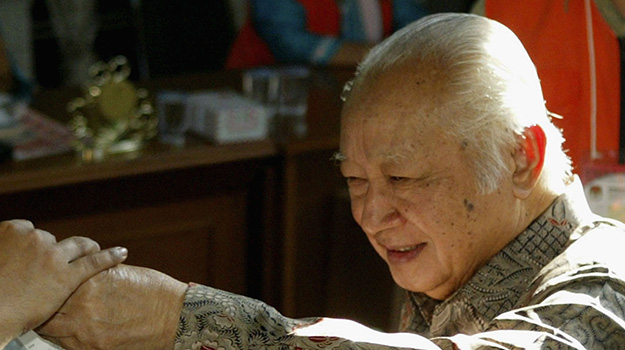
Transitional justice in Indonesia has largely failed. While exact definitions vary, transitional justice here refers loosely to the righting of past wrongs by holding perpetrators accountable for their actions. In Indonesia, neither Suharto nor any of the high-ranking officials of the New Order era have ever been put on trial or held accountable for human rights abuses during 32 years of authoritarian rule. In fact, no Indonesian has been successfully convicted for past abuses despite numerous attempts to do so.
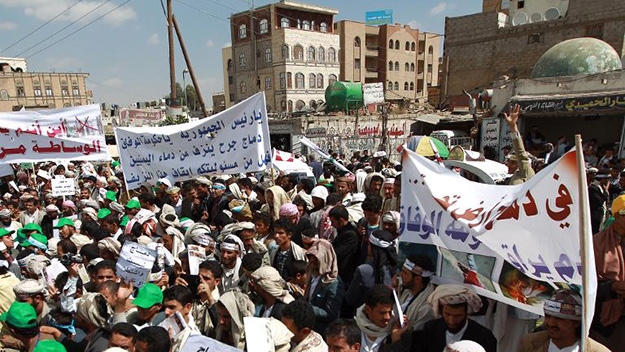
The removal of Yemeni President Ali Abdullah Saleh in 2011 has created an existential crisis for Yemen’s Houthis. Like many other armed political groups in Yemen and elsewhere, the Houthis’ survival depends on the continued existence of an enemy. With Saleh gone, their raison d’être has become difficult to define and their armed opposition hard to defend.
Whereas many observers are lamenting the failure of the “Arab Spring,” Tunisia has proven once again that it is on a march toward democracy. On January 3, the National Constituent Assembly (NCA) began voting on the country’s new constitution. Lawmakers have approved many of the chapters and articles, and the final vote on the entire document should take place within a few days. Surprisingly, many of the controversial articles on state identity, the relationship between religion and politics, and gender equality have passed with a clear majority.
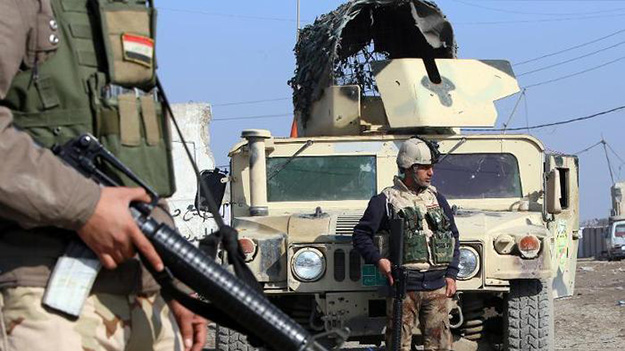
Since the departure of U.S. ground forces from Iraq in 2011 in the wake of failed negotiations to extend the 2008 Status of Forces Agreement, the security situation in Iraq has steadily declined. To many, the situation was predictable, as the absence of a residual U.S. force to mature the Iraqi security forces and moderate long-standing political tensions among the sects led to a security vacuum filled by extremists and terrorists. To others, 10 years of investment and over 4,000 troops lost was enough, and it was time for the Iraqis to resolve their own internal conflicts.
This article was first published on Al Jazeera on December 24, 2013.
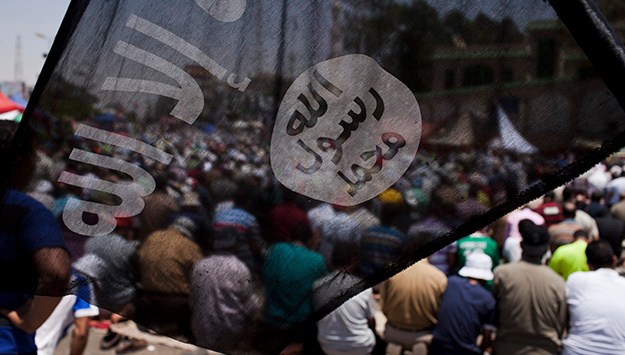
The downfall of Egypt’s Muslim Brotherhood (MB) has put political Islam at a crossroads. Not only has it shown that ideology per se is not a guarantor of political success, but also that Islamists need to rethink their strategy and tactics in order to deal with the new environment following the Arab Spring.
Cambodia’s traumatic history has often been used as a tool for power among rival politicians in the country, particularly when elections are approaching. This article, however, argues that due to the passage of time, such tactics in relation to the Khmer Rouge have started to lose ground, in particular owing to demographic redistribution, social media outreach, and changes in perception.
The following is an excerpt from “Iraq’s Tangled Foreign Interests and Relations,” written by MEI Vice President Paul Salem and published by the Carnegie Middle East Center on December 24, 2013. Click here to view the full report.
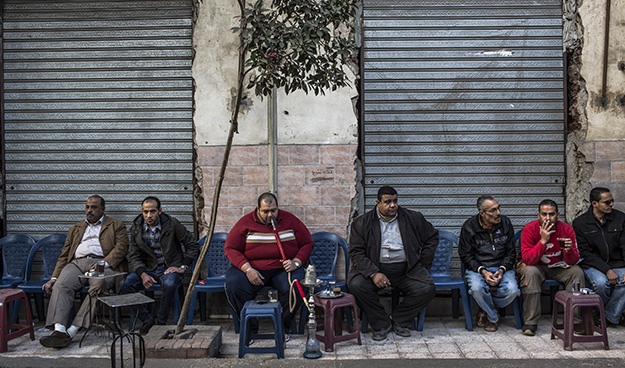
Samy M. has been providing currency exchange services on the black market in Cairo’s hectic neighborhood of Nasr City for nearly a decade. He does this from the crammed office of his other, formal business, which offers real estate services.
“Money exchange has always been lucrative, but it was even busier last year,” he says. With the Egyptian pound weak, hovering at around 6.9 pounds to the dollar on the official market for the past few months, people are drawn to black market rates, which are sometimes as high as 7.20 pounds to the dollar.
Scenarios of Change and Possibilities of Reform in Lebanon
The recent spate of bombings in Beirut underline the degree to which Lebanon has become entangled in the wider regional conflict being fought in and around Syria, but the paralysis of Lebanon’s political institutions indicate an equally deep domestic dysfunction. There is no doubt that part of Lebanon’s problems derive from its difficult geostrategic environment and require external developments and changes, and part of them come from the weaknesses of its domestic political and socioeconomic system and require internal reform.
The Challenges of Transitional Justice in Cambodia
An internationalized transitional justice process has been underway in Cambodia for some years and appears to be nearing a conclusion. This retributive justice process—formally known as the Extraordinary Chambers in the Courts of Cambodia (ECCC) and informally called the Khmer Rouge Tribunal (KRT)—was designed to achieve accountability for gross human rights violations between 1975 and 1979, when Cambodia was ruled by a political movement known as the Khmer Rouge. The ECCC has generated useful lessons for other countries that may be considering a similar exercise. This essay will review a few of those lessons, including (1) political obstacles to ensuring accountability for human rights violations; (2) challenges and limitations of the tribunal model; (3) costs and benefits of amnesties; (4) potential alternative justice mechanisms such as truth commissions, reparations, and apologies; and (5) the consequences of justice too soon and justice delayed.
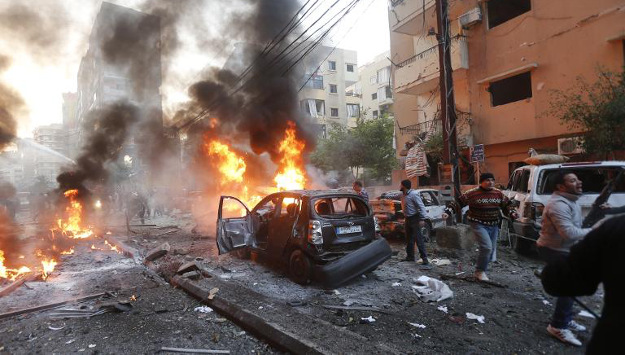
On January 2, only days after a car bomb in Beirut took the life of former Finance Minister Mohamad Chatah and several bystanders on December 27, another bomb struck the capital’s southern suburbs. With initial reports of four dead and 40 wounded, this latest, and possibly retaliatory, attack fits into an ominous pattern as Syria’s conflict spills into Lebanon.
Randa Slim Named Director of MEI Initiative for Track II Dialogues
(Washington, D.C.) – The Middle East Institute (MEI) is pleased to announce that Randa Slim has been named director of the Institute’s new Initiative for Track II Dialogues.
Transitional Justice and the Politics of Lustration in Tunisia
No transitional justice dilemma is more contested in Tunisia than that of lustration and vetting. While trials of former ruling elites, either in absentia or in the courtroom, grab international headlines, the question of how to deal with the tens of thousands of former Ben Ali regime functionaries who were complicit in past abuses yet are not likely to be brought to trial has proven even more politically charged. To be sure, the question over the fate of these potential targets of lustration and vetting continues to contribute to Tunisia’s prolonged post-revolutionary political crisis, as draft laws on lustration and ad hoc leaks from state archives solidify cleavages among Tunisia’s diverse array of transitional political actors.