Community based-Health Initiatives: Healthy Villages in Jordan
Health for All — First Principles to Action
The International Conference on Primary Health Care was held in Almaty, Kazakhstan in 1978. Nearly all of the members of the World Health Organization (WHO) and the United Nations Children’s Fund (UNICEF) were in attendance. The conference culminated in the issuing of the Almaty Declaration — a major landmark in the field of public health.
The Iraq-SAMHSA Partnership to Strengthen Behavioral Health Studies
Originally posted September, 2011
For nearly eight years — since May 2004 — the Substance Abuse and Mental Health Services Administration (SAMHSA) of the US Department of Health and Human Services (HHS) has partnered with the Iraqi Ministry of Health to help Iraq re-establish its behavioral health service system. HHS and SAMHSA have learned much from this effort about improving behavioral health services in the US, particularly for Muslim populations and for persons experiencing extended trauma.
The Lesson from Morocco and Jordan: Reform or Perish
The basic legitimization of political authority and the specific logics of domination that have for decades regulated Arabs’ behavior and subjugated their life patterns are under siege in much of the Arab world. Only those regimes that still enjoy the historical prestige of traditional authority have so far managed to weather the assaults on the legitimacy of their rule.
Governments in the Middle East and North Africa have long relied on repression to intimidate, harass, and punish political opponents. During the Arab uprisings, dictators under threat have all ordered and used violence against peaceful protestors as a way to maintain power. But this repression has had widely divergent effects on the course of the different conflicts.
Implications of the Iraq-SAMHSA Initiative for the Delivery of Behavioral Health Services in the United States
Through the collaboration between Iraq and the Substance Abuse and Mental Health Services Administration (SAMHSA) of the US Department of Health and Human Services (HHS), US providers have learned a great deal about improving behavioral health services, including trauma services, from their Iraqi colleagues since 2004.[1] Two of the many implications for US behavioral health services resulting from this partnership are directly relevant to shaping services for both returning veterans, and refugees and immigrants from the Middle East:
Building an Addiction Workforce in the Middle East: A Counselor Training Program Partnership Between Kasr Al-Ainy and UCLA
Drug and alcohol problems know no borders. Annually, the United Nations World Drug Report documents that heroin, methamphetamine, cocaine, alcohol, and prescription drugs negatively impact public health, public safety, and social institutions in countries around the world.[1] In many parts of the Middle East, there is limited data on the nature and extent of alcohol and drug problems.
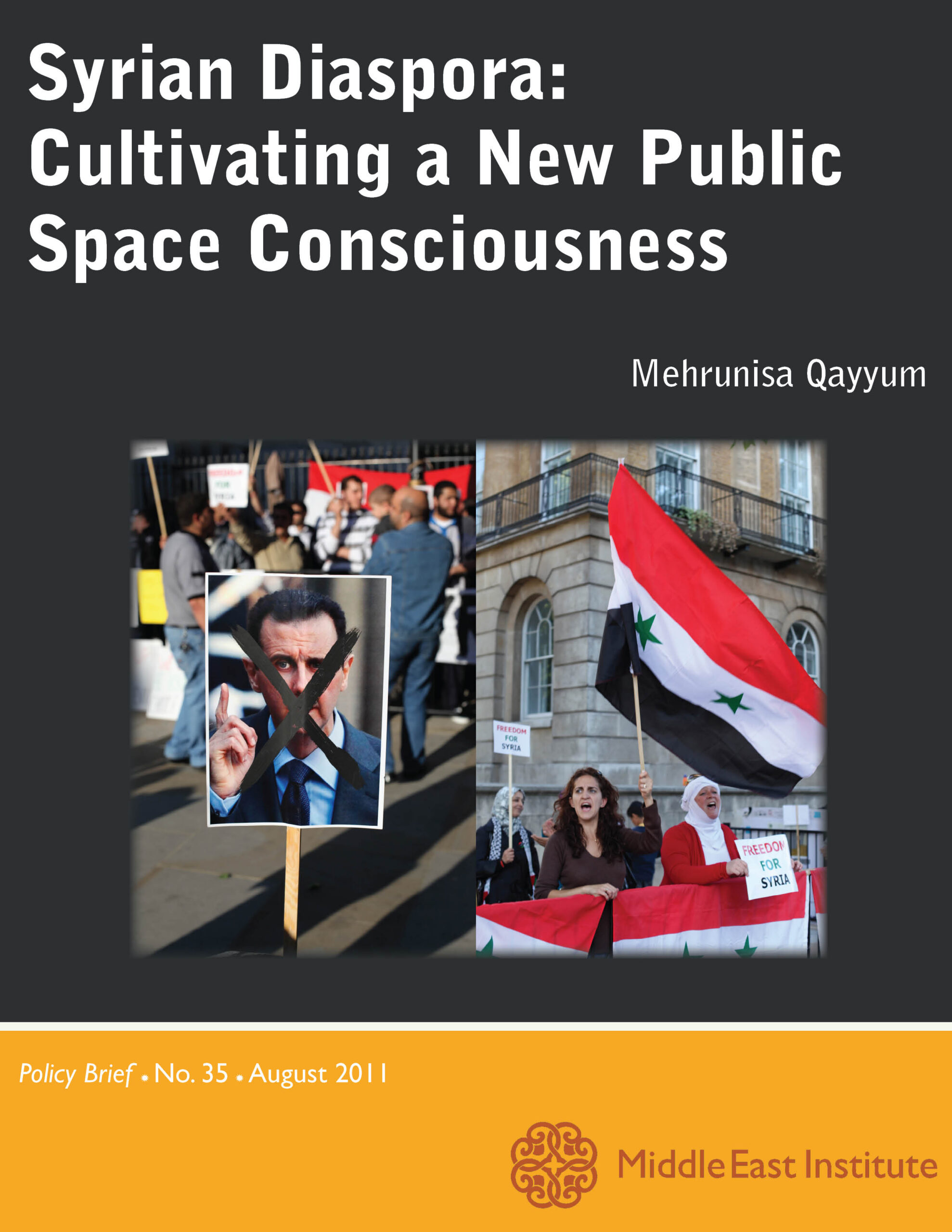
Syrian Diaspora: Cultivating a New Public Space Consciousness
The Syrian government under both Hafiz and Bashar al-Asad has long pursued a strategy of intimidation and violence against political dissidents, while imposing legal and security structures that inhibit the growth of civil society. The resulting profound vacuum of civil society has made organizing for political change, both inside and outside of Syria, extremely difficult. Furthermore, this overall strategy of intimidation has led to “brain drain” as large numbers of highly educated Syrians flee to other countries.
This Commentary was first published as an op-ed in the Washington Post on August 22, 2011
A relatively successful transition from the Gaddafi regime to a united, stable, more open and democratic Libya would be seen in the region, and more widely, as a credit to the NATO-led intervention. It would enable Libya to resume its oil and gas exports, demonstrate international community capacity to manage such transitions and encourage positive outcomes to other Arab Spring protests.
This Commentary was first published as an op-ed in the Washington Post on August 4, 2011
The political crisis in Bahrain appears to have subsided, even if the issues that provoked it remain unresolved. Now, the challenge before Washington is redefining the terms on which it deals with an important but seriously tarnished ally.
F. Stephen Larrabee, Distinguished Chair in European Security at the RAND Corporation, and Gonul Tol, Executive Director of the Middle East Institute’s Center for Turkish Studies, highlight the importance of drafting a new civilian constitution to solve Turkey’s Kurdish issue.
Supporting Democratic Movements in the Arab World: An Economist's Perspective
The global community was surprised by the suddenness and intensity of democratic movements in the Arab countries. While universally welcomed, the global response in support of these movements has so far been reactive, uncertain, and slow to build up. The only coherent rendering of such an initiative is the declaration of Deauville Partnership by the Group of 8 countries on May26-27, 2011.