Qatar to Top Agenda of Kuwaiti Emir’s Washington Visit | Weekly Briefing
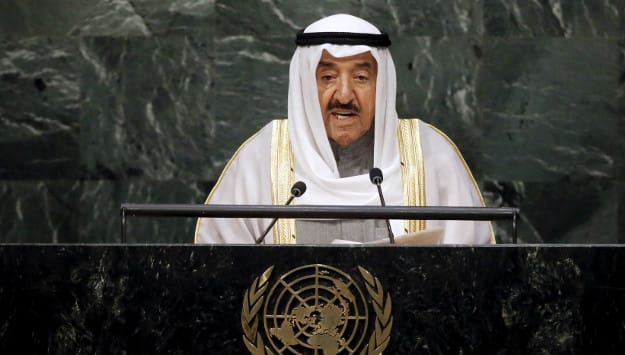
In this week’s briefing, MEI experts Gerald Feierstein, Charles Schmitz, Jonathan M. Winer, and Yousef Munayyer provide analysis on recent and upcoming events including Kuwaiti Emir Sheikh Sabah al-Sabah’s upcoming visit to Washington, recent clashes in Yemen, the French Foreign Minister’s trip to Libya, and the U.N. Human Rights Council’s discussion on Israel/Palestine.
Monday Briefing | Is the Middle East Tilting toward De-Escalation?
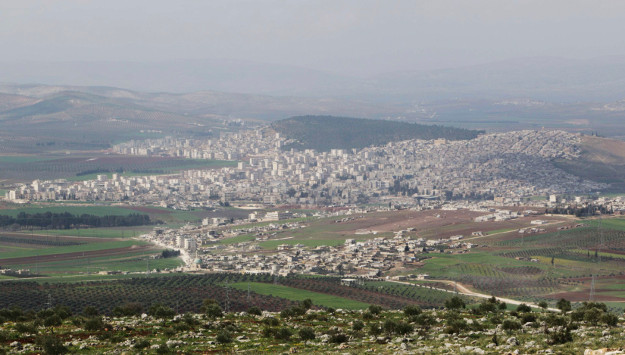
In this week’s Monday Briefing, MEI experts Paul Salem, Gonul Tol, Alex Vatanka, and Jonathan M. Winer provide analysis on recent and upcoming events including Saudi Arabia’s diplomatic engagements in the region, Turkey’s consideration of military operations in northern Syria, Iranian President Rouhani’s centrist cabinet nominations, and Libyan leaders’ decision between greater cooperation or renewed confrontation.
Libya Still Seeking Grand Bargains, But Facing Range of Spoilers
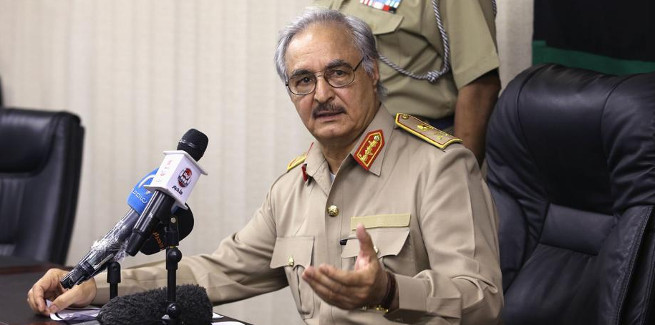
The hopeful scene in Paris July 25 was a familiar one. Libyan leaders, in this case General Khalifa Haftar and Prime Minister Fayez al-Sarraj, meet under the umbrella of another world leader, in this case, French Prime Minister Emmanuel Macron, and announce progress on a deal to put Libya back together and hold new elections.
It was a scene that had last played on May 2 in Abu Dhabi, under Emirati guidance with the same Libyan players, and one I and others had sought to put together a full year ago when I was serving as U.S. Special Envoy for Libya.
The Influence of North African Militaries in Foreign Policy-Making
This essay looks at five North African states, arguing that the armed forces — for a variety of often case-specific reasons — are actually not as politically powerful and thus influential in foreign policy-making as one might expect. It first discusses the political strength of the military establishments of five North African states — Morocco, Algeria, Tunisia, Libya, and Egypt — and then investigates the difference, if any, that the recent Arab upheavals have made in their involvement in foreign policy-making.
Foreign Powers Should Push for Compromise in Libya
Whenever power is contested in a country—any country—the political fight over who will ascend to the helm provides opportunities for foreign powers to intervene, and in some cases, influence the outcome of the political process.
Such behavior can carry short-term rewards when a new leader, put into power with the help of the foreign government, tilts favorably toward the sponsor; but it also can be counterproductive.
Monday Briefing: Chances for MidEast Peace Remote under Trump
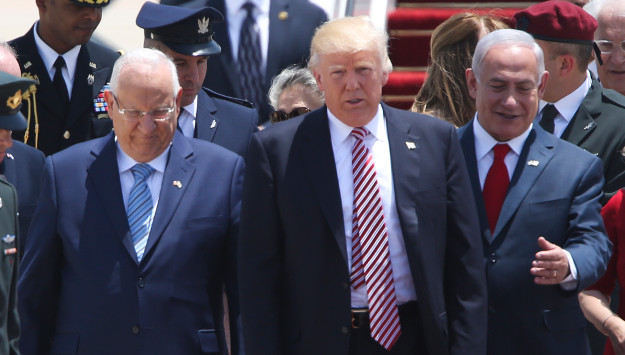
In this week’s Monday Briefing, MEI experts Yousef Munayyer, Alex Vatanka, Jonathan M. Winer, and Marvin G. Weinbaum provide analysis on recent and upcoming events including President Trump’s trip to Israel and the prospects for a peace process, the reelection of Iranian President Hassan Rouhani, Russia’s planned naval drill off the coast of Libya this week, and the Afghan Taliban’s decision to reject peace talks.
Russia Seeks U.S. Support for Syria Plan | Monday Briefing
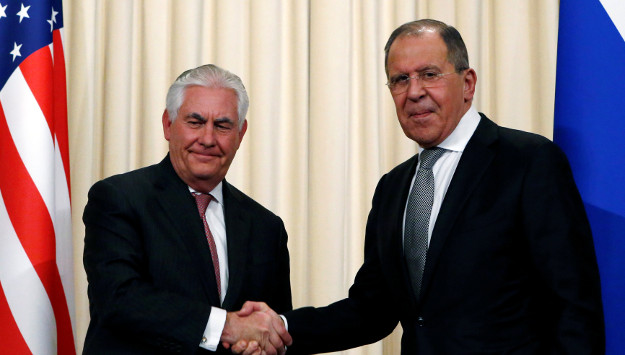
In this week’s Monday Briefing, MEI experts Charles Lister, Alex Vatanka, and Jonathan M. Winer provide analysis on recent and upcoming events including the meeting between Russian Foreign Minister Lavrov and Secretary of State Tillerson, Iranian President Rouhani’s battle for re-election, and the efforts to strike a deal for the future of the Libyan state.
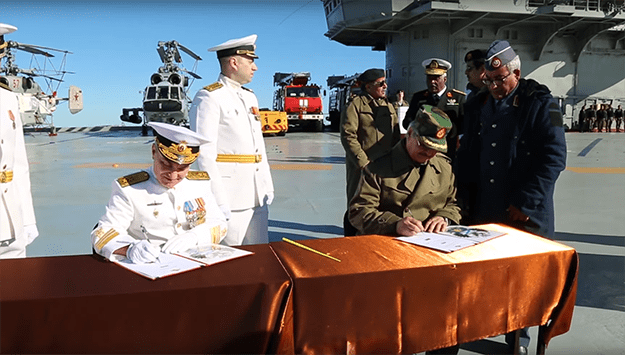
The image of the Russian aircraft carrier Admiral Kuznetsov steaming across the Mediterranean on its way to the Syrian shore became one of the symbols of Moscow’s military support for Syrian President Bashar al-Assad. When the aircraft carrier completed its mission in Syria in January this year and made a surprise port call in eastern Libya, analysts immediately suggested that Libya may become another country where Moscow will project its military power.
A common theme among many postcolonial countries in the Middle East is the difficulty of placing various religious and ethnic groups under the same state’s flag. Libya is different, as its people are overwhelmingly Sunni Arab. Nevertheless, tribal politics have instilled serious divisions in the country. The friction coalesces around two of the three primary regions of Libya, Cyrenaica in the east and Tripolitania in the west (the third historic province of Libya, Fezzan, is to the south of Tripolitania and tends to align its views with its northern neighbor).
This essay, which draws upon extensive field research in Libya over the period 2011-2013, seeks to shed light on an under-theorized area of research, namely the forces that challenge an emerging civil society during a political transition. In doing so, the essay makes two contributions to knowledge, first by arguing the value and inevitable role of civil society in a divided or conflict-ridden society, and second by helping readers better understand and unpack the case of Libya’s disrupted and dispersed civil society.
Monday Briefing: Shiite Militias to Join Mosul Battle
In this week’s Monday Briefing, MEI experts Randa Slim, Robert S. Ford, and David Mack provide analysis on recent and upcoming events including updates on the battles for Mosul and Aleppo, and the potential meeting of Libyan factions currently locked in a stalemate.
Monday Briefing: President Obama's Final UNGA Address
In this week’s Monday Briefing, MEI experts Paul Salem, Robert S. Ford, Charles Lister, Alex Vatanka, and David Mack provide analysis on recent and upcoming events including Obama’s upcoming final speech to the UN General Assembly, the Syrian collapsed ceasefire, the buildup to an eventual Mosul offensive, Rouhani’s trip to Latin America, and Libya’s oil exports.
After the liberation of Sirte from ISIS, now the really hard work begins. The nine-member Presidential Council (P.C.) and the Government of National Accord (G.N.A.) that it named under Prime Minister Fayez Serraj have yet to receive an affirmative vote from the House of Representatives (H.O.R.) in Tobruk. Although a majority of H.O.R. members were prepared many weeks ago to confirm Serraj and his cabinet, speaker Aquila Saleh declined to bring the matter to a vote.
The Libyan Presidential Council (P.C.), representing a rough consensus of Libyan political forces, is making slow but promising gains in several key areas. There will probably be setbacks on the road to the kind of progress that will generate wider support from both key Libyan factions and the general populace. Signs are encouraging, however, in areas such as security and legitimacy. It is too early to say that the Government of National Accord (G.N.A.) appointed by the P.C. is truly governing, but it is taking steps that provide more confidence to the international community.
Monday Briefing: Responding to Orlando, ISIS in Libya, and Hamas-Fatah Meeting
In this week’s Monday Briefing, MEI chairman Richard A. Clarke responds to the mass shooting in Orlando, and Charles Lister and Antoun Issa provide analysis on events including the pushing back of ISIS in Libya and the upcoming meeting of Hamas and Fatah.