Respect for Afghanistan’s sovereignty is a sine qua non condition to restoring the country to normalcy. The fact that a country expects and demands that its sovereignty be respected should not be misconstrued as a refusal to engage the outside world — as a sign that the country is drifting towards some type of chauvinistic nationalism.
The 2001 destruction of the two giant Buddhas in Bamiyan is, by far, the most spectacular attack against the historical and cultural heritage of Afghanistan committed during the country’s recent period of turmoil.
Post-Buffer Afghanistan: A Nation-State Here to Stay?
Originally posted December 2009
Nation-states, like their citizens, have life spans. Some are short. The bumptious Republic of Texas, for instance, lasted only nine years before being absorbed by a larger and even more energetic United States of America. Yugoslavia survived intact for two generations and then fragmented into six parts, seven including Kosovo.
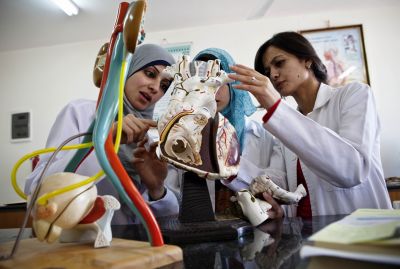
Women's Prospects in Afghanistan: Oppression or Opportunity?
Recent media reports indicate that fewer Afghan women turned out to vote for a President on August 20, 2009 than went to the polls five years ago, when in some districts female turnout had been even higher than that of males. Apprehension, convention, ennui, and disorganization led to families keeping their women home on election day, even as men dared to vote. The reversal of women’s rights, which they had only recently begun to exercise, is an ominous sign.
The Russian government, like its counterparts in the West, the Middle East, and elsewhere, was caught off guard by the outburst of Arab uprisings beginning in January 2011 that swept away long-ruling authoritarian regimes in Tunisia, Egypt, Libya, and (it appears) Yemen, and have threatened to topple those in Bahrain and Syria. The response of the Russian government to these events has, like that of Western governments, often been confused and inconsistent. Just as Western governments have done, Moscow has sought to protect its interests in the region.
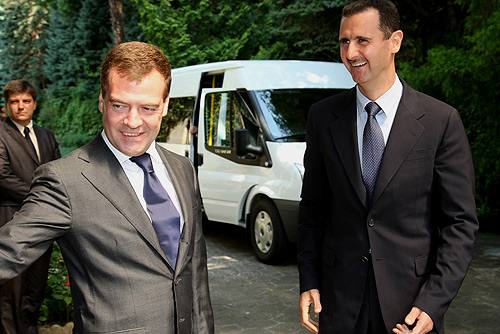
Russia's relations with Syria – even under the Assad regime – have been more troubled than current press accounts of Moscow-Damascus ties indicate. But despite the internal and external opposition to the Assad regime that has risen up over the past year, the Russian government has defended it staunchly via its Security Council veto and other means. In his talk, Mark Katz will discuss why Moscow supports the Assad regime so strongly as well as why it is willing to incur the costs of doing so.