Monday Briefing: Biden’s realist roadshow
Read MEI’s weekly briefing featuring expert analysis of key regional developments for the week ahead.
This individual is a guest contributor. MEI is not able to assist with contact requests.
Dr. Zubair Iqbal worked with the International Monetary Fund (IMF) for 35 years, retiring in 2007 as Assistant Director of the Middle East and Central Asia Department. Before joining the IMF, Iqbal worked as Senior Research Fellow, Department of Economics, Islamabad University, Islamabad, Pakistan.
At the IMF, Iqbal held multiple postings ranging from those for the development of macroeconomic and exchange and trade policies for adjustment and growth in member countries, strategies for IMF-member country relations, design of adjustment programs for the balance of payments assistance and technical support. During the period, Iqbal participated in missions to 54 countries in Africa, Asia, the Middle East, Europe, and Latin America. During the last two decades, the primary focus was on the Middle Eastern and Central Asian countries, including as mission leader to 16 countries, both oil producers and oil importers. He also served as senior advisor to the Saudi Arabian Executive Director to the IMF. In addition to operational work, Iqbal conducted and guided research in trade policy issues, role and effectiveness of foreign aid, external debt, Islamic banking and finance, regional integration (primarily in the Middle East), and transition from oil dependence to more diversified economies. In the process, he wrote or edited 5 books and over forty articles in the IMF and external research publications.
Read MEI’s weekly briefing featuring expert analysis of key regional developments for the week ahead.
The framers of the 2020-21 budget were confronted with a long list of conflicting objectives.
In this week’s Monday Briefing, MEI experts Randa Slim, Gerald Feierstein, Zubair Iqbal, Marvin G. Weinbaum, Mirette F. Mabrouk, Robert S. Ford, and Rauf Mammadov provide analysis on recent and upcoming events including the escalating tensions between the United States and Iran with Iraq caught in between, Jared Kushner’s economic development plan for Palestinians, the IMF’s bailout deal with Pakistan, political turmoil ahead of the Afghan presidential election, developments in the Egyptian media landscape following recent constitutional amendments, debate over how to approach elections in Algeria, and the impact of US-Iran tensions on the oil market.
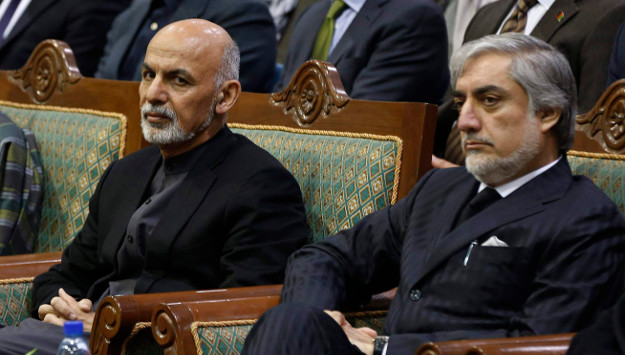
In this week’s Monday Briefing, MEI experts Zubair Iqbal, Alex Vatanka, and Marvin G. Weinbaum provide analysis on issues including India’s Middle East policy as its foreign minister is set to visit Iraq and Syria, the opening of relations between Iran and Turkey following the latter’s recent failed coup, and the latest signs of tension within Afghanistan’s shaky unity government.
This paper is part of a MEI scholar series titled “The Middle East and the 2016 Presidential Elections.”
Introduction
This paper is part of an MEI scholar series, titled “Obama’s Legacy in the Middle East: Passing the Baton in 2017.” Click here to view the full project, or navigate using the table of contents to the right.
In the last three years, Egypt’s economic position has deteriorated dramatically. Domestic and external deficits have increased, causing public debt to grow sharply, external reserves to fall, investment to shrink, and inflation to increase. In the process, growth decelerated, unemployment rose, income distribution worsened, and the medium term economic outlook became clouded.
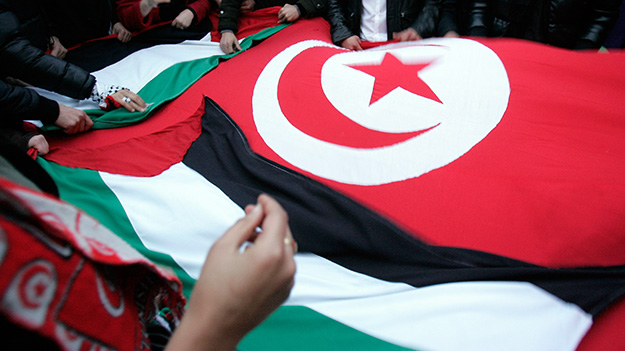
Economist Zubair Iqbal explains the daunting economic challenges facing Arab countries in transition following the Arab Awakening and the different trajectories stemming from those nations’ policy responses. Tunisia and Egypt provide an instructive case study: the former made hard fiscal decisions and has embraced sound economic principles and achieved broad support for a reform plan, while the latter, suffering from more difficult political conditions, has been faced with limited policy options that increase the risk for long-term challenges.
The global community was surprised by the suddenness and intensity of democratic movements in the Arab countries. While universally welcomed, the global response in support of these movements has so far been reactive, uncertain, and slow to build up. The only coherent rendering of such an initiative is the declaration of Deauville Partnership by the Group of 8 countries on May26-27, 2011.
I. Overview