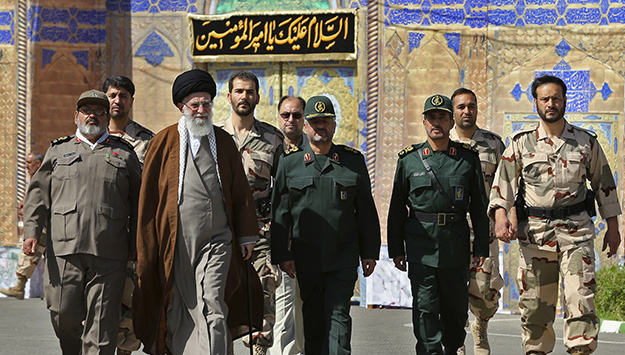
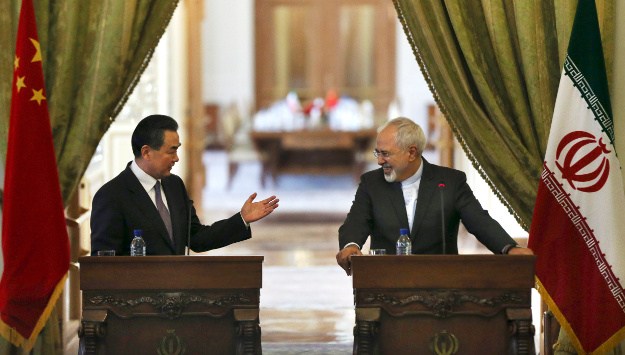
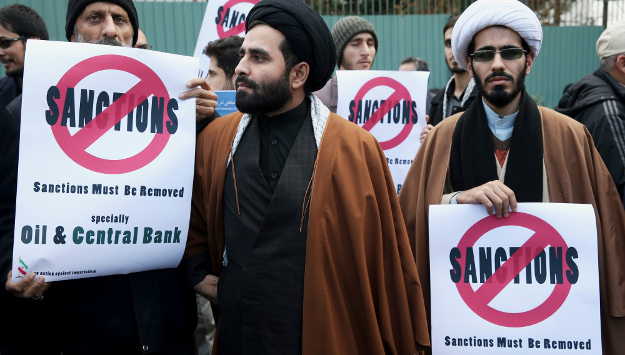
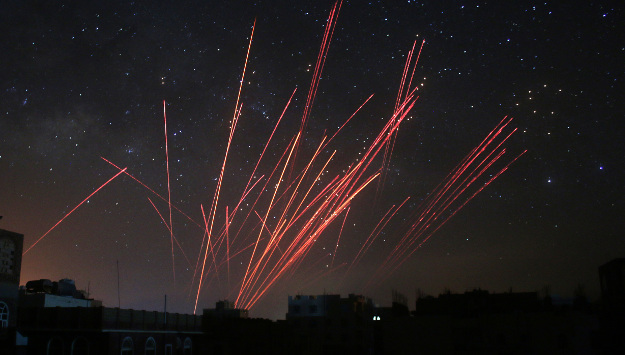
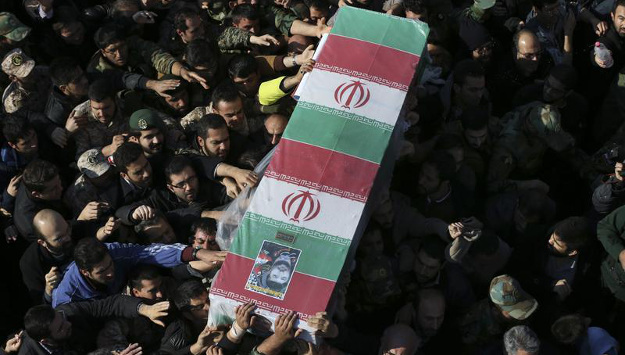
Iran offers a unique platform for China’s ambitions in the Middle East, and as such Beijing is willing to bet that the benefits of closer ties with Tehran will outnumber the costs. This analysis examines the calculations China is making regarding its relationship with Iran and argues that deepening bilateral ties reveal the centrality of Iran for China’s Middle East strategy.
Can Kabul and Islamabad Cooperate Effectively on Counterterrorism?
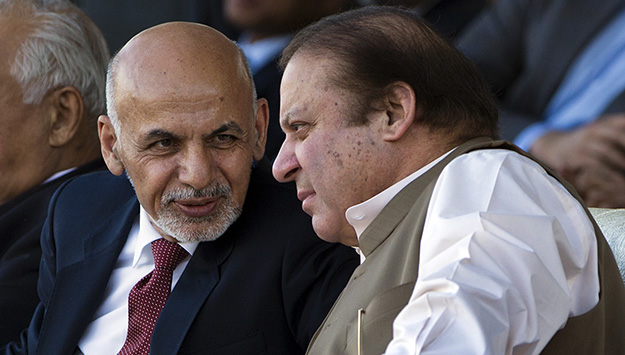
Soon after Ashraf Ghani and Abdullah Abdullah formed a unity government in Afghanistan in September 2014, there were signs of rapprochement between Kabul and Islamabad. When President Ghani visited Pakistan in November, he went to the army’s headquarters in Rawalpindi and laid a wreath at the monument to the country’s fallen soldiers—an indication that the Kabul government had come to an understanding with the Pakistani army, which controls the country’s Afghan policy.
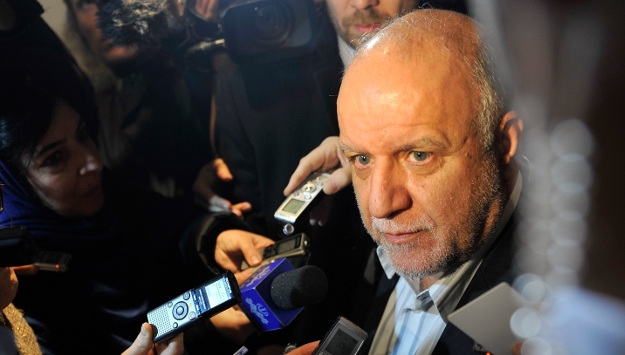
As the June 30 deadline for a nuclear deal between Iran and the P5+1 approaches, the world is eagerly following the fortunes of political moderate figures in Tehran. Can the Cabinet of President Hassan Rouhani overcome any last-minute roadblocks put up by hardliners in either Tehran or in Washington? One member of Rouhani’s cabinet, Minister of Petroleum Bijan Namdar Zangeneh, is arguably more vested than anyone else in hoping for a positive result from the talks. …
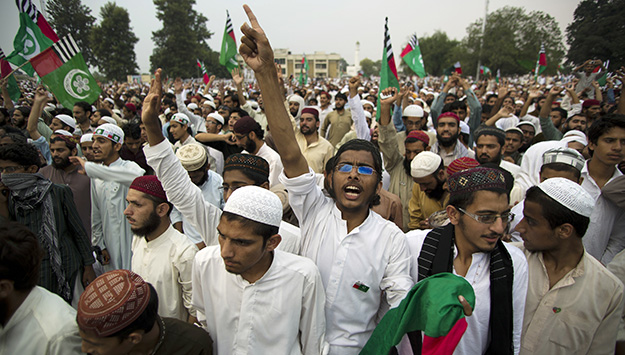
On May 13, more than 40 people were killed and at least 13 injured in a gun attack on a bus carrying members of the minority Ismaili Shi‘i sect in Karachi, Pakistan. This was not the deadliest attack of the year, as that dubious honor goes to a suicide bombing in a district in Sindh, which left 61 Shi‘a dead in January. Yet the brazen nature of the attack―carried out in daylight in the bustling megacity of Karachi by gunmen who reportedly boarded the bus and shot at passengers indiscriminately―was striking even in a country where over 2,000 people have been killed and 3,500 injured in sectarian attacks in the past five years.
Beyond Sanctions: The Factional Nuclear Split in Tehran
As the world awaits the outcome of the June 30 deadline for a deal between Tehran and the P5+1, the Iranians continue to weigh their options. While the nature of the nuclear debate in Tehran is not as rowdy as the one in Washington, it still features competition between two distinct worldviews about Iran’s place in the world, namely whether the deal should ultimately result in closer relations with the United States.
Defying Gravity: Working Toward a Regional Strategy for a Stable Middle East
In this MEI Policy Paper, Ross Harrison asserts that a new regional order is emerging out of the conflicts of the Middle East. The relationships among the pillars of this order–Egypt, Saudi Arabia, Turkey, and Iran–are crucial, as they will largely determine “whether the future of the Middle East will be a continuation of the current chaos and destruction or a more positive transition toward stability and prosperity.” Harrison argues that global powers must concentrate on creating conditions conducive to cooperation among the pillars.
Iran’s Failed Foreign Policy: Dealing from a Position of Weakness
In this MEI Policy Paper, Thomas Juneau examines Iran’s role in Yemen, Syria, Iraq, and the Arab-Israeli conflict to explain why Iran is not a “rising regional hegemon” but rather a “mid-sized regional power frustrated at not reaching its ambitions.”
In a significant New York Timesop-ed on April 20, Iranian Foreign Minister Mohammad Javad Zarif made a pitch for regional dialogue between Iran and its neighbors.
Pakistan’s Balancing Act Between Saudi Arabia and Iran
April 23, 2015 – Marvin Weinbaum, director of the Center for Pakistan Studies at The Middle East Institute, explains Pakistan’s decision not to provide military aid for Saudi Arabia’s operation in Yemen, and how Prime Minister Sharif is working to repair relations with Riyadh.
Read the full article on the Washington Post’s Monkey Cage blog.
An intense public debate is unfolding in Iran over the details of the ongoing nuclear negotiations. For a country that has been largely deprived of informed, open and critical discussions on the merits of this costly program, this is highly unusual. Even more striking, it is the hard-liners who are spearheading this dialogue in the run-up to the June 30 deadline for the final agreement.
Relations between Iran and Saudi Arabia have always been thorny, but rarely has the state of affairs been as venomous as it is today.
Tehran and Riyadh each point to the other as the main reason for much of the turmoil in the Middle East. In its most recent incarnation, the Iranian-Saudi conflict by proxy has reached Yemen in a spiral that both sides portray as climatic.
For the majority of Arabs, Syria symbolizes all that is wrong with Iranian influence in the Middle East. Since 2011, Tehran and its regional proxies have poured men, money, and weapons into Syria to prevent President Bashar al-Assad’s military defeat. In June 2013, Hezbollah’s intervention in the western city of Qusayr single-handedly turned the tide of the war in Assad’s favor.