The Horn of Africa’s Growing Importance to the U.A.E.
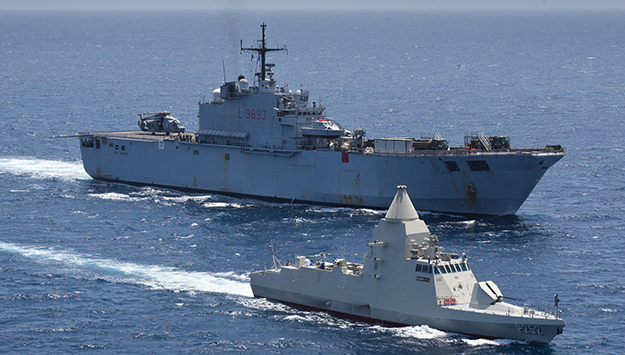
The Horn of Africa is currently playing a pivotal role in the U.A.E.’s security interests at a time of international uncertainty, regional conflicts, and demanding domestic transformations. The U.A.E. is expanding its foothold in the region, with Eritrea to host its first military base abroad and another in Somaliland in the works. Abu Dhabi’s ‘pivot to the Horn’ strategy is designed to tackle three rising security concerns now: Yemen’s instability, freedom of navigation threats, and piracy.

Sharjah Biennial—the Epicenter of Arab Art
Since its inception in 1993, the Sharjah Biennial has become the biggest art event in the Arab world. It is an enormous cultural podium whose breadth, scope, and ambition is unrivaled in the region. Encompassing new commissioned pieces, film screenings, video and audio installations, and copious talks throughout its lengthy duration, the Sharjah Biennial has transcended its fine arts origins to evolve into a global endeavor.
U.A.E’s Reformed Foreign Ministry a Pioneer in the Region
When Dubai Ports World made an offer in October 2005 to purchase ports manager P&O, it did not imagine the deal would unleash a firestorm of bipartisan wrangling in the United States. The P&O purchase would have resulted in a Middle Eastern firm managing six U.S. ports including those in New York, Newark, Baltimore, and Miami, which some senators found to be unacceptable. While D.P.
Geopolitics Drive Russia and the U.A.E. Closer
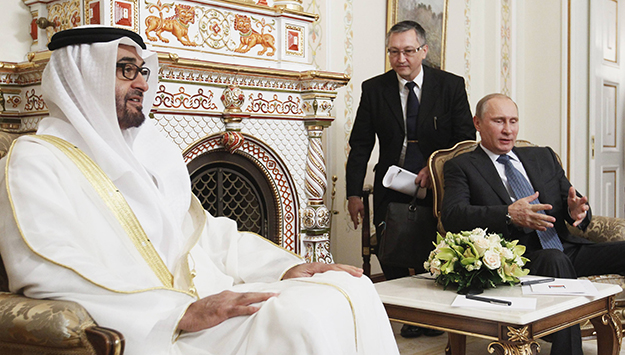
Russia and the United Arab Emirates (U.A.E.) are developing a unique bilateral relationship. The latest manifestation of growing ties occurred at the biennial International Defense Exhibition & Conference (IDEX) in February when Russia and the U.A.E. announced a deal to co-produce a fifth-generation jet fighter in the Emirates. Although Moscow and Abu Dhabi have been cooperating on a range of economic and security issues for years, this was an unprecedented move.
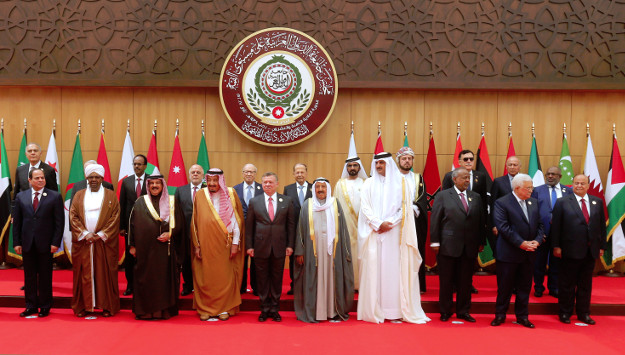
Iran Rejects Arab Leaders’ Call for Dialogue on Disputed Islands
Iran’s Foreign Ministry has rejected a request by Arab leaders to negotiate with the United Arab Emirates for a peaceful settlement to the three disputed islands of Greater Tunb, Lesser Tunb and Abu Musa.
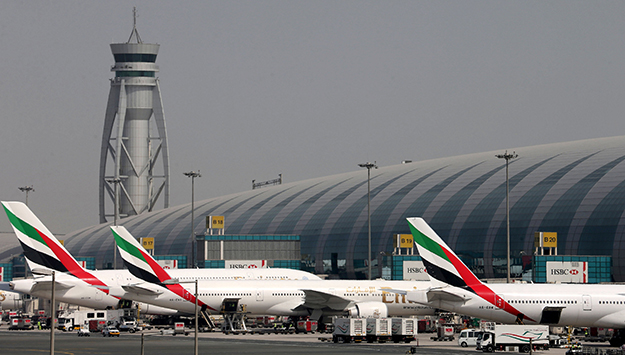
Trump’s Laptop Ban Targets Gulf Airlines
When I was approached last summer by New York University’s Hagop Kevorkian Center for Near Eastern Studies to teach a class this spring, I did not imagine the changes that would take place in the American political landscape. Since Donald Trump took office, his promise to place “America first” has manifested itself in numerous ways. Although I am committed to the university and the students, traveling to the United States is becoming less and less enticing.

U.A.E. Top Diplomat in U.S. Calls for Collective Action to Counter Iran’s Destabilizing Role in Middle East
Yousef al-Otaiba, the United Arab Emirates’ ambassador to the United States, said on Thursday that Iran’s “hostile behavior” in the Middle East “is growing worse” despite the nuclear deal Tehran signed with world power

U.A.E. Blasts Iran for Prolonging Yemeni Crisis by “Directly Arming” Houthis
Anwar Mohamad Gargash, the minister of state for foreign affairs of the United Arab Emirates, blamed Iran’s “interventionism” for the war and human suffering in Yemen.

U.A.E. Releases Evidence of Iranian Military Assistance to Yemeni Insurgents Violating U.N. Resolutions
The United Arab Emirates has summoned Iran’s charge d’affaires to protest Iran’s arming of Houthi rebels in Yemen, Iranian and

Big News! Conscription in the Gulf
The introduction of the draft in Gulf monarchies — after decades of sovereign statehood — presents an interesting puzzle. What are the reasons behind the newly implemented conscription? What broader implications does this phenomenon have for the Gulf? This essay addresses these questions.
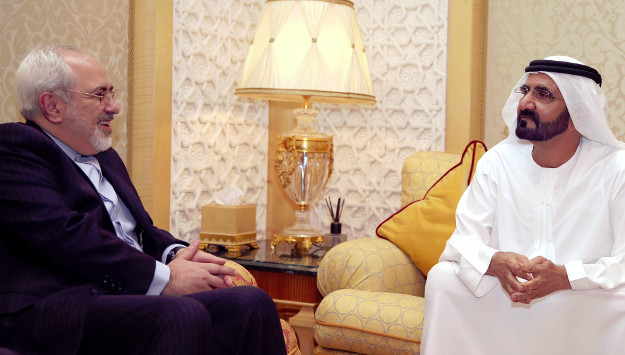
UAE's Siding with Saudi Arabia in Diplomatic Row Unsettles Iran
Diplomatic relations between Iran and the United Arab Emirates are going through another rough patch as the latter recently submitted a letter to the United Nations General Assembly, expressing concern over Iran’s “expansionist” policies in the region.
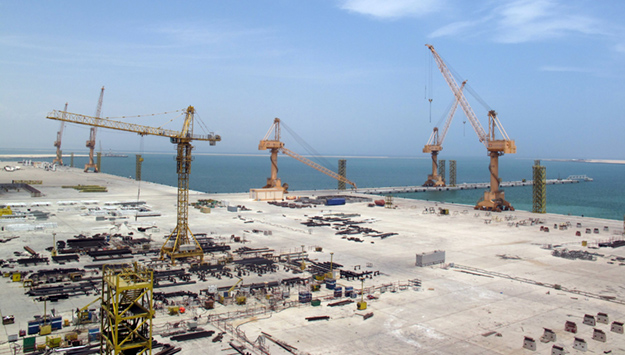
G.C.C., Iran Look to Sea Trade to Reduce Dependence on Oil
Continuing low oil prices have prompted Persian Gulf states to diversify their heavily petro-dependent economies. This issue is forcing the oil-rich states to invest and expand their potential as international trade hubs as a pathway away from the time bomb of single commodity exports. As many Gulf states have outlined in economic plans, as well as developed on the ground, maritime trade is an increasingly essential link connecting the Middle East to the global economy.

The Potential for Intra-Regional Energy Cooperation
Regional Cooperation Series
This Policy Paper is part of The Middle East Institute’s Regional Cooperation Series. Throughout 2016, MEI will be releasing several policy papers by renowned scholars and experts exploring possibilities to foster regional cooperation across an array of sectors. The purpose is to highlight the myriad benefits and opportunities associated with regional cooperation, and the high costs of the continued business-as-usual model of competition and intense rivalry.
Summary
Gulf Decisionmakers' Perceptions of Security Ties with China
The essays featured here are the products of a workshop series analyzing China’s position in the context of Gulf security, organized by the Department of International Affairs and the Center for Humanities and Social Sciences of Qatar University under the direction of Dr. Imad Mansour.