تمت ترجمة هذا النص بواسطة الذكاء الاصطناعي وقد يحتوي على أخطاء.
تخطي إلى المحتوى

Research & Commentary Results

تصفية حسب
684 Results
Algeria charts a path for renewable energy sector development
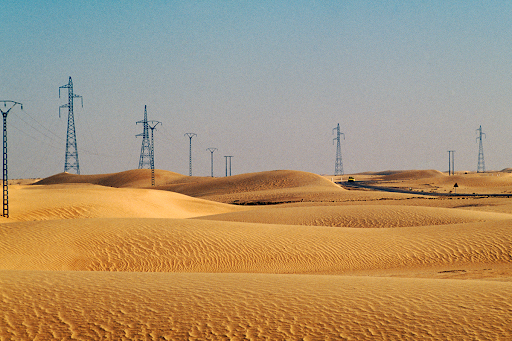
Pylons near Touggourt, Sahara Desert, Algeria
  • التحليل
  • Algeria charts a path for renewable energy sector development

    Algeria is at a critical stage in its energy sector development. The nation has both the potential and the incentive to maximize its natural resources and become a renewable energy leader. In addition to its status as the second-most-populous country in North Africa, Algeria is noteworthy for its relative size, wealth, location, gas reserves, renewable energy potential, and greenhouse gas emissions. Recent oil and gas price volatility and increasing domestic electricity demand provide impetus for Algeria to prioritize clean energy investment.

    October 20, 2020

    US sanctions hurt Syrian civilians — they need to be worth it
    Photo by Hasan Belal/NurPhoto via Getty Images
  • التحليل
  • US sanctions hurt Syrian civilians — they need to be worth it

    On June 17, 2020, the U.S. State Department’s special envoy to Syria, Joel Rayburn, announced the beginning of the “summer of Caesar,” promising a wave of sanctions designations under the newly activated Caesar Syria Civilian Protection Act. Summer has come and gone, but there’s little to show for it.

    October 15, 2020

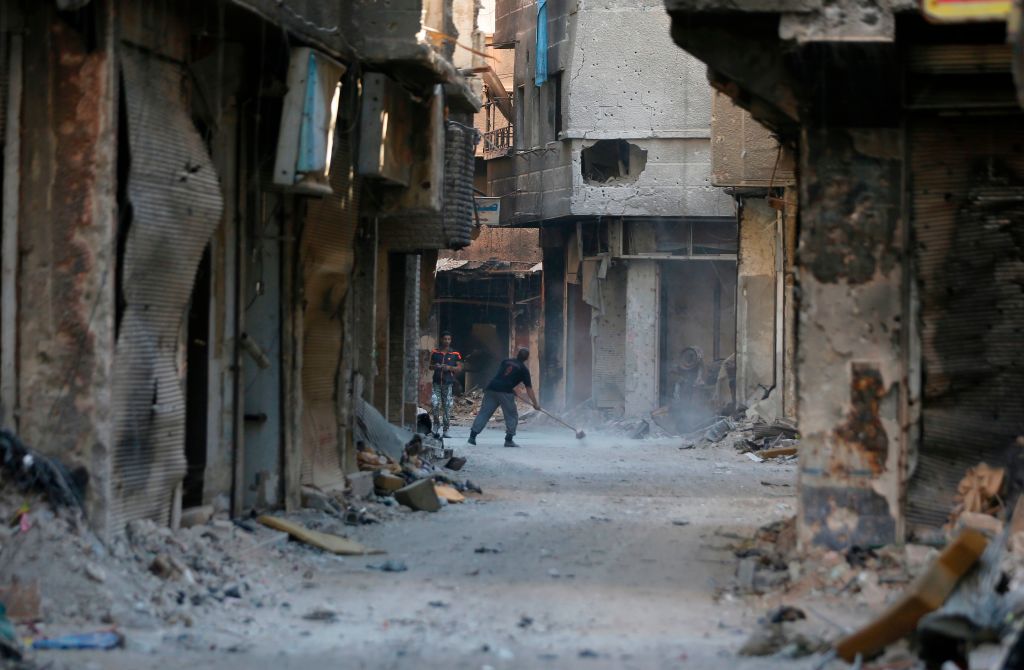
    How are Russia and China responding to the Caesar Act?
    Photo by LOUAI BESHARA/AFP via Getty Images
  • التحليل
  • How are Russia and China responding to the Caesar Act?

    The Caesar Civilian Protection Act sanctions on Syria, which were signed into law by U.S. President Donald Trump in December and took effect on June 17, have polarized the international community. Most European countries have supported the Caesar Act’s use of sanctions to punish Syrian President Bashar al-Assad for war crimes, but Russia and China have stridently criticized the legislation.

    October 14, 2020

    Regional transit trade isn’t enough to drive Pakistan’s Gwadar Port
    In this photograph taken on October 4, 2017, Pakistani labourers walk through Gwadar port. Remote and impoverished, Pakistan's Gwadar port at first glance seems an unlikely crown jewel in a multi-billion dollar development project with China aimed at constructing a 21st century Silk Road. Situated on a barren peninsula in the Arabian Sea, Gwadar, or the
  • التحليل
  • Regional transit trade isn’t enough to drive Pakistan’s Gwadar Port

    Landlocked Afghanistan has begun using the Chinese-operated Pakistani port of Gwadar for transit trade — a development Pakistani officials see as marking the start of Gwadar’s role as a gateway port through the China-Pakistan Economic Corridor. Pakistan’s hope to develop the Arabian Sea port into a gateway for Afghanistan, Central Asia, and China’s Xinjiang region has been a long-standing one — and it is misguided. Islamabad should instead focus on local drivers to build the port and use it as a vehicle to develop the impoverished, but resource-rich region of southern Balochistan.

    October 14, 2020

    Rethinking Egypt’s Economy
  • التحليل
  • Rethinking Egypt’s Economy

    Egypt is not alone in having been knocked into a pit by the fallout from the COVID-19 pandemic, but it will have to dig itself out on its own. However, if Egypt is going to do so, it needs to rethink its approach to development, starting with looking for the silver lining to the pandemic. Is it possible to address existing issues that have been brought home by the exceptional circumstances? In this report, contributors dissect the weaknesses that make Egypt particularly vulnerable to external threats and examine ways in which to address these vulnerabilities and shore up the economy and the business and developmental environment.

    Will the lights stay on in Egypt?
    Photo by Oliver Weiken/picture alliance via Getty Images
  • التحليل
  • Will the lights stay on in Egypt?

    With its successful turnaround, strategic location, and extensive infrastructure, Egypt is repositioning itself as a regional energy hub for not only Europe and the Middle East, but also for Africa. It is useful to reflect on the successful transformation of Egypt’s energy sector while also evaluating where the sector stands today and how it will react to the twin challenges of the COVID-19 global pandemic and the oil price shock.

    October 7, 2020

    An International Financial Commission is Libya’s Last Hope
    View of the headquarters of Libya's Central Bank in Tripoli.
  • التحليل
  • An International Financial Commission is Libya’s Last Hope

    For the last five years, the international community has tried a range of different approaches to mediating the Libyan civil war. All have failed. Most nations not actively fueling the war with weapons, money, training, and mercenaries now see that halting these destructive flows is critical to bringing the rival militias to the negotiating table. However, this will not be enough to solve the conflict. Once militias are cut off from external sources of support, the core economic issues that gave rise to the conflict will still remain. Only a new approach empowering Libyan economic reformers and reworking the economic system can fix the dysfunction. To achieve this, international actors need to facilitate the establishment of a Libyan-led International Financial Commission with the authority to restructure the economy.

    September 14, 2020

    Economic transparency and structural reform remain Libya’s last hope
    Photo by MAHMUD TURKIA/AFP via Getty Images
  • التحليل
  • Economic transparency and structural reform remain Libya’s last hope

    Since 2011 Libya’s seemingly endless Wars of Post-Gadhafi Succession have not fundamentally been fought over the control of territory, but rather over the control of economic institutions, patronage networks, and the amorphous optics of legitimacy and international support. The most recent battle, the 2019-20 “War for Tripoli,” was about gaining access to the fonts of both legitimate and corrupt enrichment: letters of credit, smuggling networks, subsidized petrol, and control of those myriad institutions to which Libya’s sui generis economic system grants the ability to exert de facto fiscal, financial, and legal power. Therefore, although Hifter and his allies have been wholesale evicted from western Libya, the grievances they highlighted, preyed upon, and took advantage of remain unchanged.

    September 14, 2020

    The Iranian government’s risky stock market bet
    الصورة من ATTA KENARE/AFP عبر Getty Images
  • التحليل
  • The Iranian government’s risky stock market bet

    Following the outbreak of the COVID-19 pandemic, the Tehran Stock Exchange (TSE) took a different path than the rest of the financial world. As markets around the globe plunged, the TSE soared to new heights. There has been a recent reversal, however, with the index falling sharply from its peak in early August and losing around 20 percent of its value over the course of a month. The story of the TSE is about the extreme measures a desperate government is willing to take to make ends meet. 

    Election 2020: Challenges and Opportunities for US Policy in the Middle East
  • التحليل
  • Election 2020: Challenges and Opportunities for US Policy in the Middle East

    In a new briefing book released ahead of the U.S. elections in November, entitled Election 2020: Challenges and Opportunities for US Policy in the Middle East, MEI scholars lay out key issues across the region, highlight the U.S. interests at stake, and provide policy insights and recommendations for the path forward. 

    Taiwan should implement the “Economic Miracle” model in Somaliland to win Africa’s goodwill
    Photo by MUSTAFA SAEED/AFP via Getty Images
  • التحليل
  • Taiwan should implement the “Economic Miracle” model in Somaliland to win Africa’s goodwill

    Countries in the Horn of Africa can draw lessons from the Taiwanese because they are themselves attempting to make the same political transition Taiwan did, but have not yet achieved the needed reforms such as ensuring good governance, eradicating corruption, and developing economic self-reliance to reduce dependency on aid. Taiwan may not have the financial resources to win against the PRC’s checkbook-driven One-China policy in Africa, but it could overcome that disadvantage by convincing African nations that it can help them replicate the sustainable growth model of the “Taiwan Economic Miracle.” Taiwan’s recent diplomatic overtures in Somaliland seem like a step in that direction and could be a game-changer, not only for the Horn of Africa but for the continent as a whole.

    September 2, 2020

    From port to port: Both Lebanon and Turkey would benefit from greater shipping connectivity
    Photo by Sezgin Pancar/Anadolu Agency/Getty Images
  • التحليل
  • From port to port: Both Lebanon and Turkey would benefit from greater shipping connectivity

    Following the devastating explosion that rocked Beirut on Aug. 4, one of the first foreign state dignitaries to visit Lebanon to pledge support was Turkish Vice President Fuat Oktay. Oktay said that not only would Turkey help to rebuild the damaged port and the surrounding buildings, but it could also provide temporary support in the form of linking Turkey’s largest Mediterranean port, Mersin International Port, with the Port of Beirut.

    September 2, 2020

    How is the crisis in Lebanon impacting Syria’s economy?
    الصورة من وكالة فرانس برس عبر غيتي إيمدجز
  • التحليل
  • How is the crisis in Lebanon impacting Syria’s economy?

    The explosion at the Port of Beirut on Aug. 4 has resulted in a further escalation of the political and economic crisis in Lebanon. Its repercussions can already be deeply felt in neighboring Syria and are expected to take an even greater toll on the country given its complex links to Lebanon. This crisis is feeding into Syria through multiple channels and has severe implications for its ability to import goods and, ultimately, its food security.

    August 28, 2020

    Jordan’s rising economic challenges in the time of COVID-19
  • التحليل
  • Jordan’s rising economic challenges in the time of COVID-19

    The Jordanian government implemented one of the most comprehensive and effective COVID-19 responses in the region. While the government’s stringent measures did prompt some public discontent, the population largely accepted them. The government’s rapid and broad initial response was successful in thwarting a major public health crisis. Nevertheless, the kingdom has not been able to forestall the damaging economic consequences of COVID-19, which are bound to linger for years to come.

    August 27, 2020