تمت ترجمة هذا النص بواسطة الذكاء الاصطناعي وقد يحتوي على أخطاء.
تخطي إلى المحتوى

Research & Commentary Results

تصفية حسب
967 Results
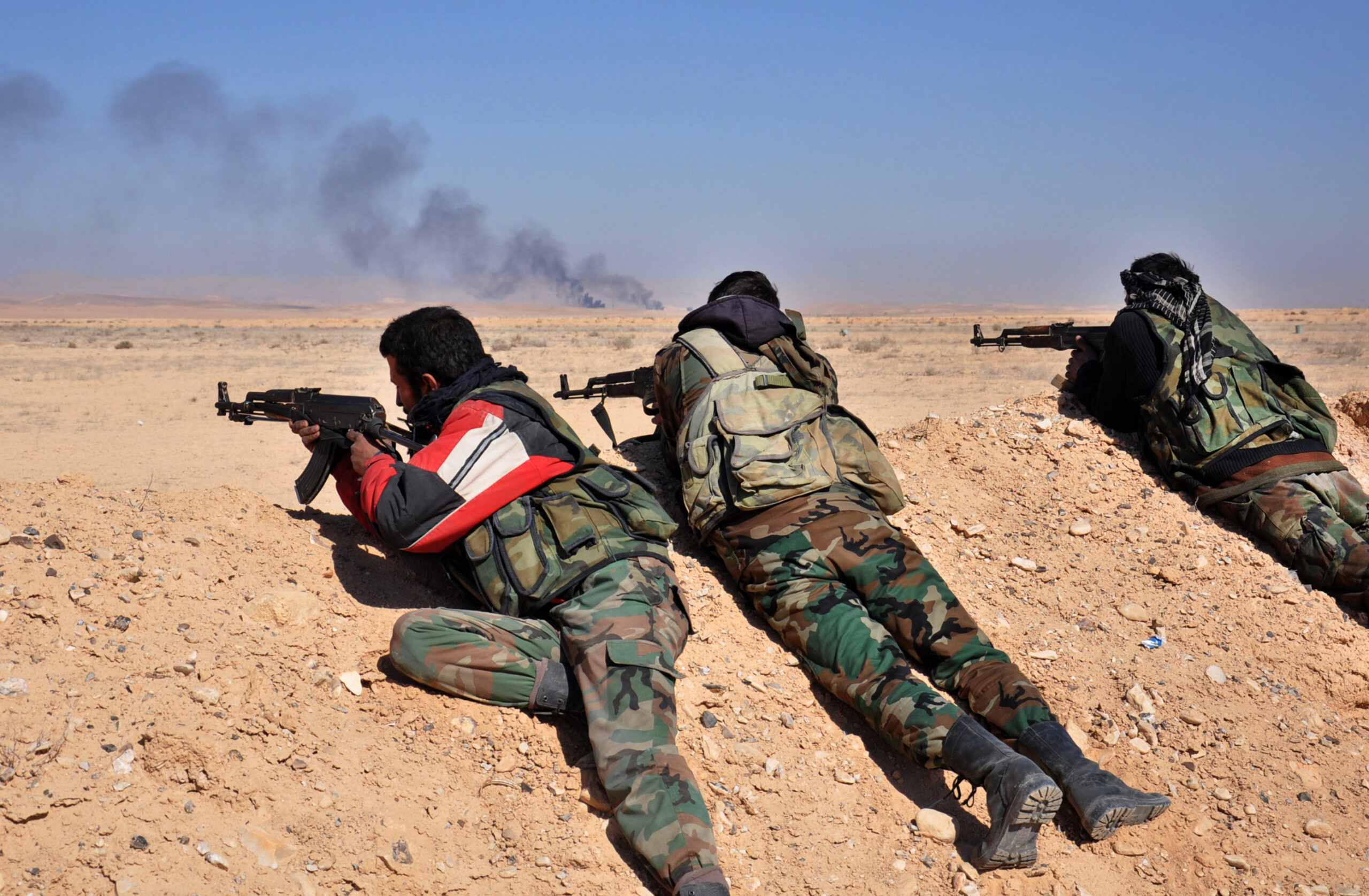
Is Russia prepared for an open-ended conflict in Syria?
Photo by Alexei NikolskyTASS via Getty Images
  • التحليل
  • Is Russia prepared for an open-ended conflict in Syria?

    Russia’s key foreign policy dilemma is the tension between its aspirations of retaining its Soviet-era geopolitical clout and its lack of ideological and economic tools to achieve that goal. From a strategic standpoint, Russia’s campaign in Syria seems like an open-ended story that bears some resemblance to the situation in Ukraine. These similarities in Russia’s methods are not accidental. The Kremlin lacks the ability to impose its foreign policy blueprint on the West and can only leverage its power to stir up trouble in unstable regions.

    The Houthis and the limits of diplomacy in Yemen
    Photo by Stringer/Getty Images
  • التحليل
  • The Houthis and the limits of diplomacy in Yemen

    President Joe Biden’s commitment to “stepping up” diplomacy to end the war in Yemen generated hope among peace practitioners and policy shapers. In February, the president appointed Tim Lenderking, a seasoned diplomat with solid experience in the region, as the U.S. special envoy to Yemen.

    CAATSA sanctions are hurting Turkey’s military readiness at a time when NATO can’t afford it
    Photo by Aytac Unal/Anadolu Agency/Getty Images
  • التحليل
  • CAATSA sanctions are hurting Turkey’s military readiness at a time when NATO can’t afford it

    On Dec. 14, 2020, the Trump administration sanctioned Turkey’s Presidency of Defense Industries (SSB), along with key individuals involved in the purchase of the Russian–made S-400 surface-to-air missile system. The sanctions were issued under the 2017 Countering America’s Adversaries Through Sanctions Act (CAATSA), a law intended to punish Russia for a wide range of malign activities.

    May 6, 2021

    كيف ساهمت سياسات الإدارة الذاتية في عودة نشاط "داعش"؟
  • التحليل
  • كيف ساهمت سياسات الإدارة الذاتية في عودة نشاط "داعش"؟

    الرغم من مرور أكثر من عامين على تحرير مخيم الباغوز في محافظة ديرالزور، والذي كان آخر معاقل تنظيم “داعش” في سورية، ومحاولات التحالف الدولي وحليفته الإدارة الذاتية ارساء الاستقرار في مناطق شرق الفرات ومنع عودة التنظيم إلى واجهة الأحداث، إلا أن التنظيم لازال يمارس نشاطه وعملياته الأمنية في المنطقة، والتي تشهد تزايداً ملحوظاً مع مرور الزمن خاصة في العامين الأخيرين.

    Expert Views: The Biden administration and the Middle East: Reflecting on the first 100 days
    الصورة من تصوير تشيب سوموديفيلا/Getty Images
  • التحليل
  • Expert Views: The Biden administration and the Middle East: Reflecting on the first 100 days

    At the end of Joe Biden’s first 100 days as president of the United States, where do things stand when it comes to U.S. policy toward the Middle East and North Africa? We asked experts and scholars from across MEI to weigh in with their thoughts on the changes we’ve seen so far, the new challenges that have emerged, and what we know about the administration’s key priorities for the region. 

    The Roadblocks to a Regional Security Dialogue in the Middle East
    Photo by EU Delegation in Vienna via Getty Images
  • التحليل
  • The Roadblocks to a Regional Security Dialogue in the Middle East

    It’s easy to see why there’s an enduring attraction for a regional security dialogue in the Middle East. Countries in the region face shared and borderless challenges — including terrorism, insurgency, environmental safety, arms races, cybersecurity, maritime piracy, and the proliferation of weapons of mass destruction — that can be dealt with more effectively through multilateral measures.

    April 26, 2021

    How have Russia’s policies in the Middle East changed since the Arab uprisings?
  • التحليل
  • How have Russia’s policies in the Middle East changed since the Arab uprisings?

    The response of the Russian government to the Arab uprisings that began in January 2011 has aimed primarily at protecting its interests in the Middle East, including security and economic objectives.[1] Nonetheless, it has pursued different approaches over time: an initial period of observation and political pressure between 2011 and 2015, followed by more active policies thereafter. This essay explains the reasons for this shift and argues that Russia’s policies since 2015 are likely to continue, despite domestic and external challenges.

    April 22, 2021

    Preventing a miscalculation between the US and Israel on Iran
    Photo by MENAHEM KAHANA/POOL/AFP via Getty Images
  • التحليل
  • Preventing a miscalculation between the US and Israel on Iran

    The U.S.-Israel relationship is a close partnership founded on shared national security interests as well as democratic values. Washington’s commitment to the security and wellbeing of the state of Israel is exceptional, and bilateral ties remain strong despite the erosion of support for Israel among progressive and isolationist circles in the U.S. In spite of all this, the Iran issue presents many pitfalls for miscalculation that could derail even the most well-intended efforts at formulating a coordinated U.S.-Israel strategy.

    April 21, 2021

    Terrorism Laws in Malaysia: The Continuing Case for SOSMA and POTA
    معهد الشرق الأوسط
  • التحليل
  • Terrorism Laws in Malaysia: The Continuing Case for SOSMA and POTA

    Calls for the abolishment of terrorism laws have resurfaced in Malaysia recently. The Malaysian Bar and human rights advocates have referred to current terrorism laws as “unjust,” “regressive,” violations of basic human rights and laws that need to be abolished immediately. Yet, despite the physical loss of the Islamic State (IS) caliphate, the terrorism threat still looms in the region owing to IS’ ideology. This article discusses Malaysia’s two terrorism-related laws — correcting misconceptions about them, arguing for their retention, and suggesting ways that valid concerns about them might be addressed.

    April 20, 2021

    A new general and a fragile peace in Deir ez-Zor
    Maj. Gen. Khader (center) tours regime positions near Shoula alongside Feras Jeham (pointing) commander of the Deir ez-Zor NDF and Republican Guard officers.
  • التحليل
  • A new general and a fragile peace in Deir ez-Zor

    Five months into his job as commander of regime forces in Deir ez-Zor, Maj. Gen. Nizar Khader appears to have skillfully gained control over the diverse tapestry of loyalist forces in the region. Khader’s return to power in the east quickly put an end to the deadly disputes that had plagued the governorate’s security forces for years. He then launched a nearly three-month campaign, coordinated between Syrian, Iranian, and Russian forces, to push ISIS cells back into the province’s hinterlands, securing the crucial highway connecting Deir ez-Zor with Palmyra and Damascus to the west. His success, while impressive, will face its second major test soon as ISIS prepares for a potential Ramadan offensive.

    April 19, 2021

    Iran’s game plan for Iraq’s militias
    Photo credit should read AHMAD AL-RUBAYE/AFP via Getty Images
  • التحليل
  • Iran’s game plan for Iraq’s militias

    Historically, Iran has used Iraqi militias to implement both its short-term plans and long-term strategies. At this stage Iran seems to have included its Iraqi proxies in plans to lift U.S. sanctions. Going forward, the Islamic Republic may use escalation against the United States in Iraq to exercise leverage in its dealings with Washington on the JCPOA.

    April 19, 2021

    Counter-terrorism under the Biden administration
    معهد الشرق الأوسط
  • Podcast
  • Counter-terrorism under the Biden administration

    Matthew Levitt and Douglas London join host Alistair Taylor to discuss the new and evolving threats of terrorism at home and abroad and what the US needs to do to adapt and innovate to address them.

    March 30, 2021

    Political risk vs. risk to force: How policy decisions impact risk and capability in partner operations
    Photo by BULENT KILIC/AFP via Getty Images
  • التحليل
  • Political risk vs. risk to force: How policy decisions impact risk and capability in partner operations

    Operation Inherent Resolve (OIR) is the U.S. military’s name for the international intervention to defeat ISIS in Syria and Iraq starting in 2014. While OIR has been a success, it has necessarily been imperfect. Throughout the campaign, cost-benefit calculations made by policymakers led to missed opportunities and possibly a longer conflict. These decisions will have lasting repercussions that could undermine the hard-won victory against ISIS, as well as the ability to partner in future interventions. In particular, the United States mishandled its partner relationships in the war to defeat ISIS. Political considerations apparently won out against supporting and sustaining the SDF, our military partner forces.