The war in Afghanistan, the longest in U.S. history, shows little sign of winding down. Despite hundreds of billions of dollars in military aid and state support, Afghanistan still struggles with resilient Taliban and Islamic State insurgencies. Recent brazen terrorist attacks and growing disunity among the country’s political leadership raise new doubts about its future.
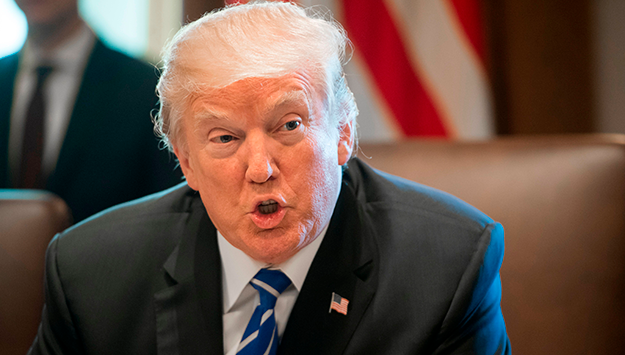
A series of devastating terror attacks orchestrated by the Afghan Taliban and the Haqqani network in the past two weeks have unnerved both the United States and Afghanistan. Visibly upset over the lack of success of his recently announced strategy on Afghanistan, President Donald Trump has declared that “We don’t want to talk to the Taliban.
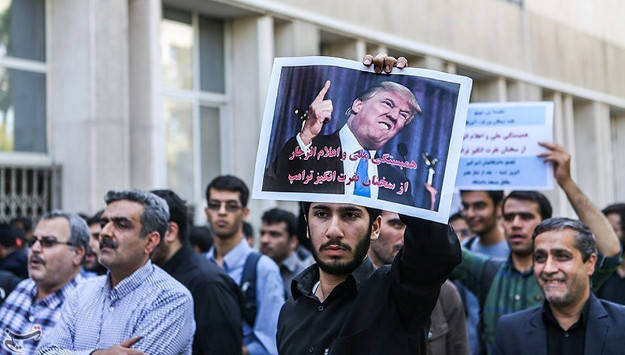
Trump will no longer waive U.S. nuclear sanctions on Iran | Weekly Briefing
In this week’s Monday Briefing, MEI experts Alex Vatanka, Charles Lister, Marvin G. Weinbaum, and Eran Etzion provide analysis on recent and upcoming events including President Trump’s statement that he will no longer waive U.S. nuclear sanctions on Iran, new developments in northern Syria, Pakistan’s response to the withdrawal of U.S. security assistance, and Benjamin Netanyahu’s trip to India.
January 10, 2018 – Mobile technologies for consuming and spreading information are empowering individuals and nonstate actors in politics and in conflicts. Social media activists scrutinize authoritarian and democratic powers alike. Violent extremists such as ISIS have used the web to advance their ideologies, project invincibility, undermine governments, and sow fear and hatred. The information battlefield surrounds all internet users.
The war in Afghanistan has dragged on for 16 years, appearing to many Americans to have no end in sight or positive outcome. However, as Defense Secretary James Mattis recently testified, “Violence and progress in Afghanistan continue to coexist.” What is that progress, and what does it mean for Afghans themselves? Saad Mohseni, chairman and CEO of Moby Media Group, and Ahmad Majidyar, director of MEI’s IranObserved project, join host Paul Salem to discuss the positive changes taking place in the country.
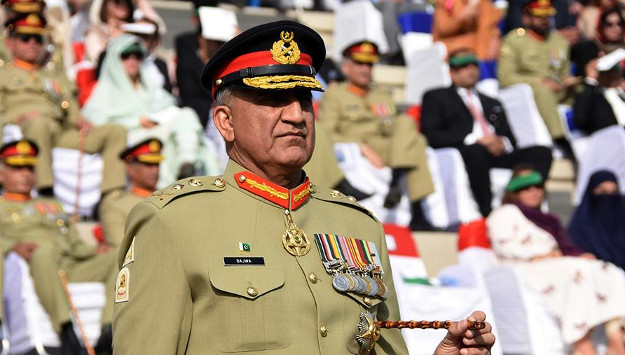
Pakistan’s Army Chief: We’re Interested in Learning Experience of Basij from Iran
When the chief of the Pakistani Army visited Tehran last week, he told the commander of Iran’s Islamic Revolution Guards Corps (I.R.G.C.) that Pakistan is interested in learning from Iran’s experience of creating the Basij Organization and using “popular forces” to counter enemy threats, according to the Iran
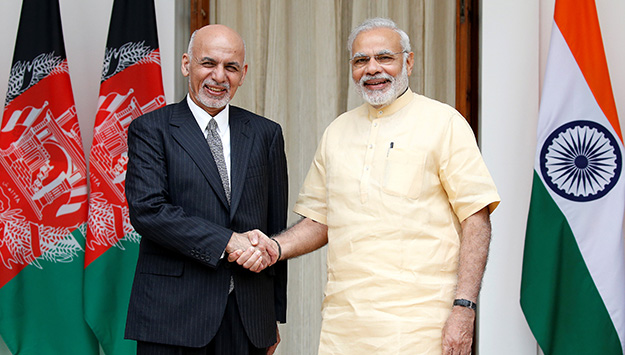
Ever since the announcement of America’s new Afghan-Pakistan strategy, the Trump administration has not been willing to let Pakistan off the hook. The manner in which President Donald Trump has confronted Pakistan on its double dealing on terrorism and called for a larger Indian role in Afghanistan has brought about an irreversible shift in U.S.-Pakistan relations.
Think West to Go West: Origins and Implications of India’s West Asia Policy Under Modi (Part II)
The first part of this article outlined how the newly-elected Narendra Modi government had no sense of where West Asia, including the Persian Gulf, fit into its larger foreign policy. However, this view changed radically following overtures from the Abu Dhabi royal family and the August 2015 state visit by Prime Minister Modi to the United Arab Emirates (U.A.E.). This second part details how, since that visit, India’s relations with West Asia, and particularly with the Gulf monarchies and Iran, have evolved.
Tillerson Promotes Stronger Saudi-Iraq Ties | Monday Briefing
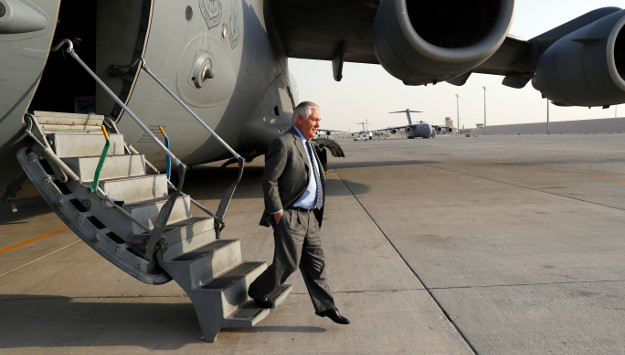
In this week’s Monday Briefing, MEI experts Gerald Feierstein, Marvin G. Weinbaum, Randa Slim, Paul Salem, and Gonul Tol provide analysis on recent and upcoming events including Secretary Tillerson’s visit to Riyadh and Doha as well as his visit to India and Pakistan, Abadi’s regional tour to promote positive relations with neighbors, Sisi’s visit to Paris to boost Egypt-France relations , and German Chancellor Merkel’s threat to cut European Union funding to Turkey due to its crackdown on democratic institutions.
On September 25 Iraq’s Kurdish region pressed ahead with a controversial independence referendum. It had a high voter turnout of 73%, 93% of whom voted in favor of independence. The referendum is technically non-binding but it has sparked a political crisis with threats of action against the Kurdish region from its neighbors, Turkey and Iran, as well as Iraq’s central government. The United States also opposed the vote. MEI experts Randa Slim, Gonul Tol, and Ahmad Majidyar join host Paul Salem to discuss the implications of the vote and what happens next.
Erdogan Visits Iran as Tension Rises over Kurdish Vote | Monday Briefing
In this week’s Monday Briefing, MEI experts Alex Vatanka, Randa Slim, Marvin G. Weinbaum, Yousef Munayyer, and Gerald Feierstein provide analysis on recent and upcoming events including Turkish President Erdogan’s visit to Iran, Ayatollah Ali al-Sistani’s efforts to push for dialogue after the Kurdish independence referendum, the pending indictment of Nawaz Sharif in Pakistan, signs of progress in the reconcilliation attempt between Hamas and Fatah, and the Saudi king’s visit to Moscow.
Think West to Go West: Origins and Implications of India’s West Asia Policy Under Modi (Part I)
Prime Minister Modi’s 2015 visit to the U.A.E. and subsequent events have seen India’s view of the region undergo a fundamental shift. This essay, the first of two parts, shows how New Delhi has come to regard the Gulf more as a source of investment and less as a source of energy and visas; and has begun to take a more strategic and military view of the region.
Will Pakistan Reassess its Ties to Terror Groups after Trump Speech?
The major components of President Donald Trump’s much-awaited Afghanistan strategy are sufficient to give Pakistani strategists sleepless nights. The new plan will acknowledge Pakistan’s significant role in providing safe havens for terrorists; escalate war against the Afghan Taliban while denying it the ability to fight its way into positions of power; and enhance India’s role in stabilizing and developing Afghanistan. Moreover, the strategy does not provide deadlines for withdrawal of U.S. forces.
Iraqi Forces Turn Attention to Hawija | Monday Briefing
In this week’s Monday Briefing, MEI experts Paul Salem, Robert S. Ford, Alex Vatanka, and Bilal Y. Saab provide analysis on recent and upcoming events including the Iraqi military’s new operation to take back the town of Hawija from ISIS, the operation by the Syrian regime and U.S.-backed forces in Deir Ezzor, the Pakistani foreign minister’s visit to Iran, and the resumption of U.S. and Egyptian war games after being suspended since the 2011.