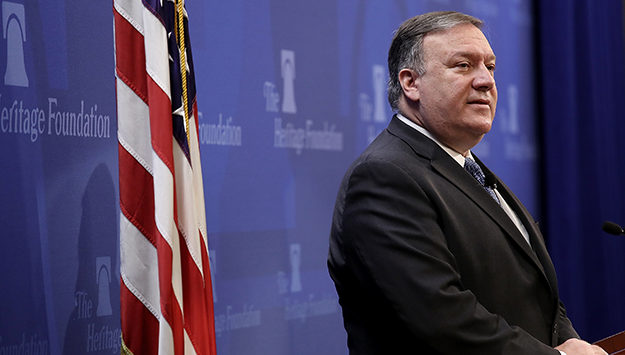
In this week’s Monday Briefing, MEI experts provide analysis on Secretary Pompeo’s speech on Iran, Erdogan’s decision to lift Turkey’s state of emergency, the cease-fire in Gaza, Iran’s continued threat in Syria, Trump’s tweets on Iran, and Vice President Dostum’s return to Afghanistan.
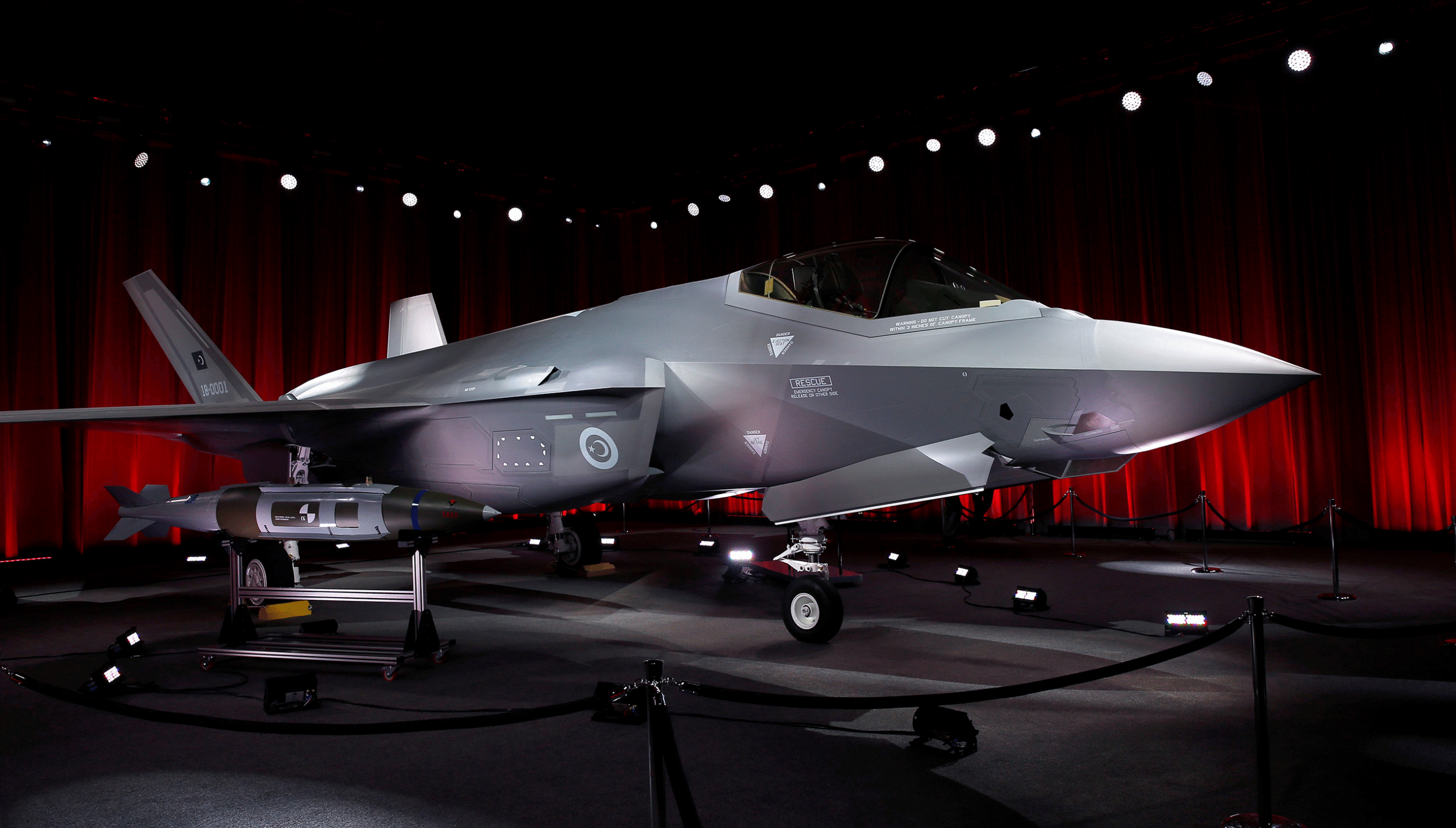
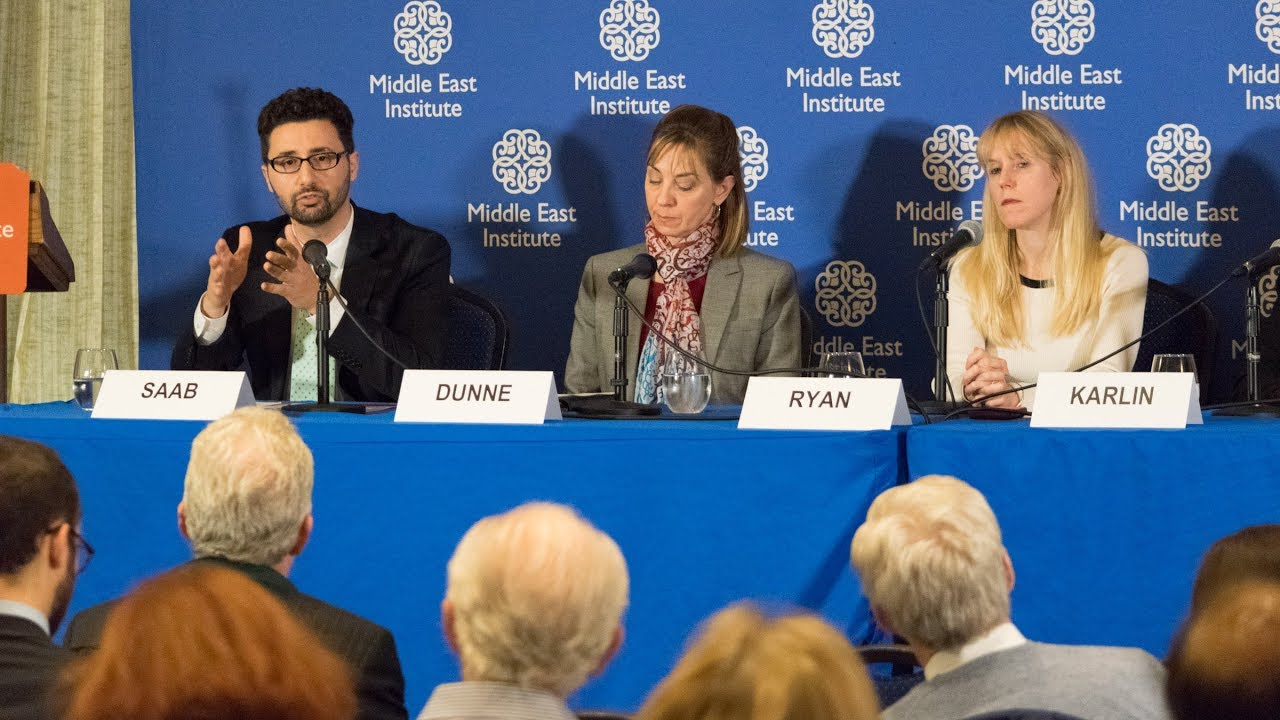
In this week’s Monday Briefing, MEI experts Bilal Y. Saab, Randa Slim, and Gerald Feierstein provide analysis on recent and upcoming events including Washington’s concerns about F-35 sales to Turkey, Iraq’s vote recount amidst mounting violence, and the king of Jordan’s visit to the White House to discuss Trump’s Israeli-Palestinian peace plan.
Resistance at 70: the future of the Palestinian national movement
Seventy years after the Nakba, the Palestinian dispossession and exile that accompanied the establishment of the State of Israel in 1948, Palestinians today remain stateless. Their prospects for securing collective or individual rights are bleaker than they have been for decades. Alongside the international and regional developments that are undermining their quest for self-determination, Palestinians are also on the cusp of a leadership change that could have far reaching implications for their collective future.
Hamas supports Gaza’s protest movement—and that’s a good thing
My first in-depth conversation on nonviolence with Hamas leader Khaled Meshaal came in the months before the Arab Spring uprisings, when the latter was still chairman of Hamas’s politburo.
Sitting in his Damascus office, Meshaal underscored that Hamas was open to any strategy that would advance Palestinian self-determination, including nonviolence—“if it would work.”
Trump’s Jerusalem decision destabilizing West Bank and Gaza | Monday Briefing
In this week’s Monday Briefing, MEI experts Nathan Stock, Alex Vatanka, Ruba Husari, and Gonul Tol provide analysis on recent and upcoming events including the fallout from President Trump’s decision to recognize Jerusalem as Israel’s capital, Iran’s diplomatic efforts with Europe to keep the nuclear deal alive, how Iran’s other trading partners are responding to U.S. warnings of sanctions, and Britain’s efforts to cultivate closer ties with Turkey.
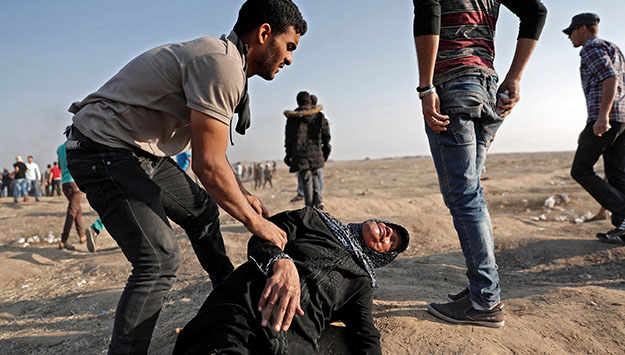
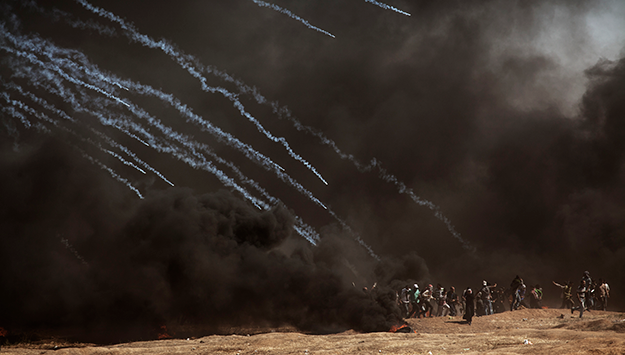
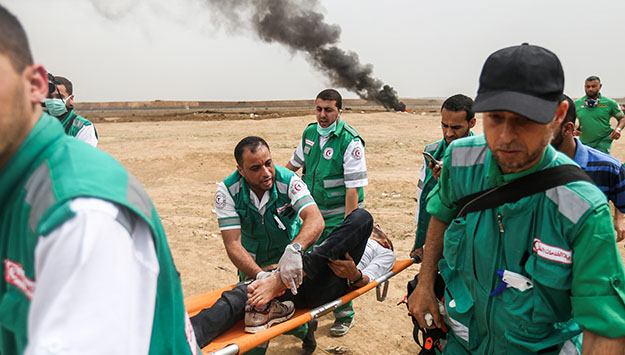
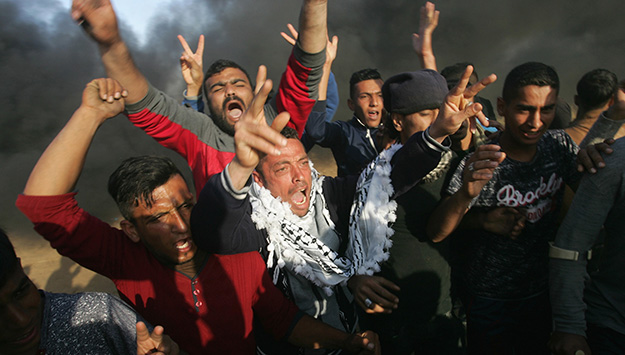
In recent weeks, mass demonstrations in Gaza, near the Israel-Gaza fence, have resulted in large numbers of casualties, reportedly 44 dead and several thousand wounded.
In this week’s Monday Briefing, MEI experts Charles Lister, Gerald Feierstein, W. Robert Pearson, and Marvin G. Weinbaum provide analysis on recent and upcoming events including the escalating deterrence between Israel and Iran, Pompeo’s pressure to resolve the Gulf crisis, Turkey’s increasing isolation, and the Pashtun protests in Pakistan.
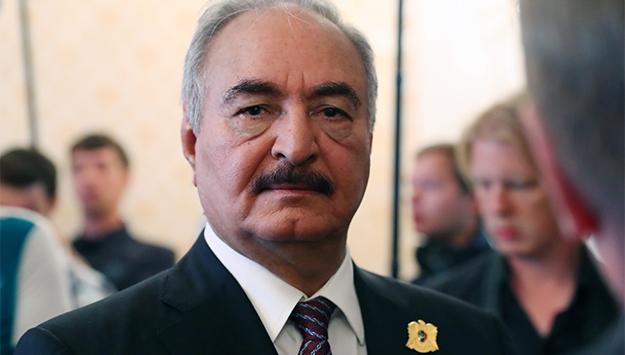
The issue for Libya is not whether 75-year-old Gen. Khalifa Hifter returns to normal health following the medical crisis that led to his hospitalization in Paris. No matter what happens to Hifter, the country must find ways to build an inclusive government in which integrated security forces at the national level are under the command of civilian, elected leaders.
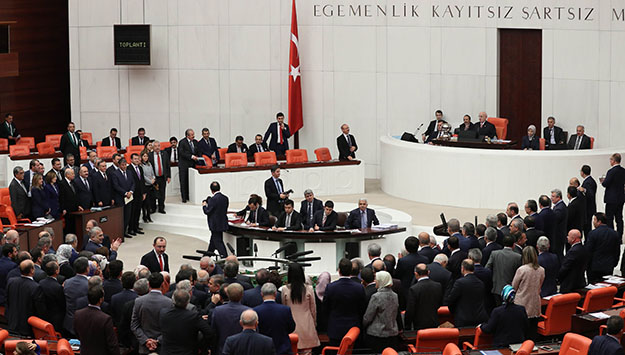
In this week’s Monday Briefing, MEI experts Gonul Tol, Paul Salem, Nathan Stock, Alex Vatanka, Gerald Feierstein, and Marvin G. Weinbaum provide analysis on recent and upcoming events including upcoming snap elections in Turkey, Lebanon’s Free Patriotic Movement party, protests in Gaza, the future of the Iran nuclear deal, Yemeni peace talks, and the ISKP attack on Shiite Hazaras.
In this week’s Monday Briefing, MEI experts Paul Salem, Bilal Y. Saab, Marvin G. Weinbaum, and Charles Lister provide analysis on recent and upcoming events including the latest violence in Gaza, Gulf Shield-1 military drills, the Taliban’s resistance to peace, and the approaching Syria summit in Ankara.
Monday Briefing: Mohammed bin Salman’s American charm offensive
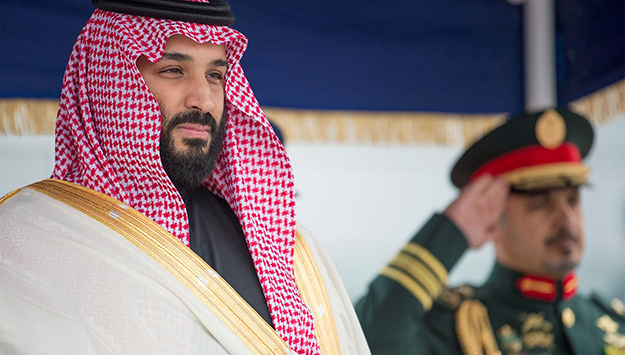
In this week’s Monday Briefing, MEI experts Gerald Feierstein, Paul Salem, Charles Lister, Jean-François Seznec, and Jonathan M. Winer provide analysis on recent and upcoming events including the shaping of U.S.-Saudi relations, Pompeo’s appointment to secretary of state, Turkey’s capture of Afrin, the future of Saudi energy, and Egypt’s efforts to unite the Libyan military.
The way forward for Palestine: Fatah, Hamas and Dahlan
As Palestinians confront U.S. President Donald Trump’s “deal of the century,” the debilitating effect of endemic, internal division within their ranks continues to define their domestic political landscape.
Reevaluating U.S. security assistance to the Middle East
Since 9/11, American security strategy has focused on building the military capabilities of global allies in order to advance shared goals and address joint threats. In the Middle East, the results of this approach have been mixed at best. Frustration over U.S. security assistance to the region has grown in Washington, as funding and arms transfers to various state and non-state partners have led to unintended consequences, prompting the Trump administration to reevaluate U.S. aid to Egypt, Pakistan, and the Palestinians.
In January, President Donald Trump announced a major cut–$300 million–to the United Nations Relief and Works Agency (UNRWA). Since 1949, UNRWA has provided a critical lifeline to Palestinians displaced by war. Today, UNRWA supports 5 million Palestinian refugees.