تمت ترجمة هذا النص بواسطة الذكاء الاصطناعي وقد يحتوي على أخطاء.
تخطي إلى المحتوى

Research & Commentary Results

تصفية حسب
940 Results
From Stockholm to Riyadh: Breaking the Yemen peace process deadlock
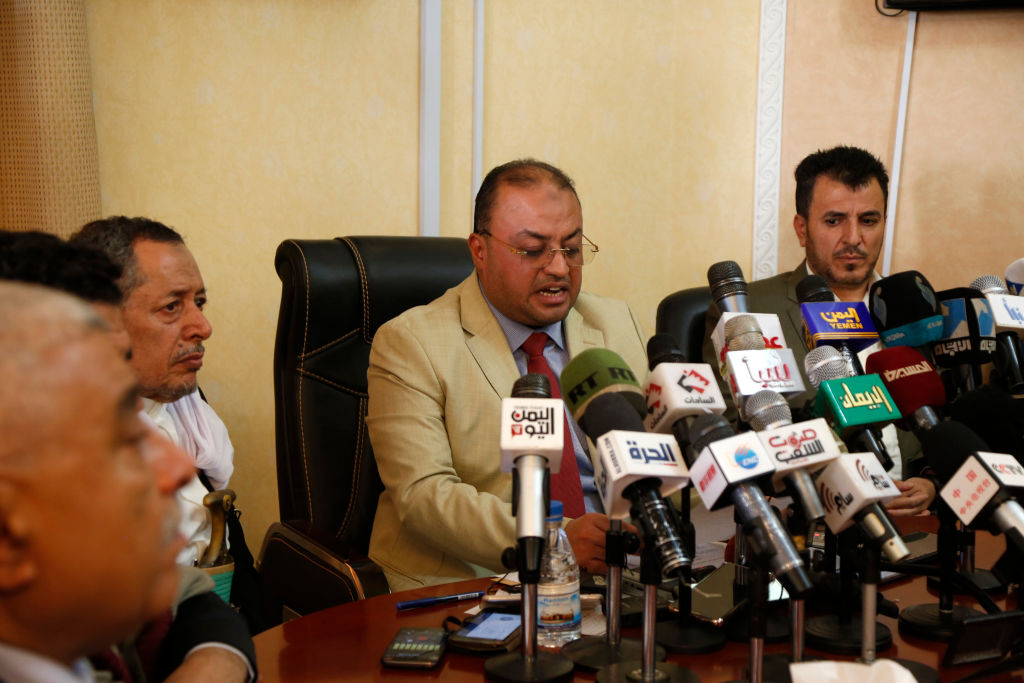
Rebel negotiator Mohammed Abdelsalam (C) holds a press conference together with members of the delegation following the peace consultations taking place at Johannesberg Castle in Rimbo, north of Stockholm, Sweden, on December 13, 2018. - Yemen's government and rebels have agreed to a ceasefire in flashpoint Hodeida, where the United Nations will now play a central role, the UN chief said. (Photo by Jonathan NACKSTRAND / AFP) (Photo credit should read JONATHAN NACKSTRAND/AFP via Getty Images)
  • التحليل
  • From Stockholm to Riyadh: Breaking the Yemen peace process deadlock

    Over the past 14 months, there have been moments when it seemed like progress was being made toward de-escalation in Yemen, but there have also been significant setbacks as well. Peace efforts thus far have been largely fragmented and frail, and two primary lessons from the past failures have become clear.

    February 13, 2020

    A fight for survival in a new landscape: Can Yemen’s GPC recover after Saleh?
    Yemen's ex-president Ali Abdullah Saleh gives a speech addressing his supporters during a rally as his General People's Congress party, marks 35 years since its founding, at Sabaeen Square in the capital Sanaa on August 24, 2017.
  • التحليل
  • A fight for survival in a new landscape: Can Yemen’s GPC recover after Saleh?

    Since the death of its founder Ali Abdullah Saleh on Dec. 4, 2017, the General People’s Congress (GPC) — Yemen’s dominant political party for the past four decades — has faced a test in attempting to reunify its divided wings in Riyadh, Cairo, Abu Dhabi, and Sanaa amid a shifting strategic landscape. The GPC’s factions have competed over the party leadership, failed to elect a transitional leader, and exchanged accusations following the Saudi-brokered meeting in Jeddah in July 2019. Nevertheless, Abu Dhabi and Riyadh’s attempts to revive Saleh’s damaged old political vehicle continue, both politically and militarily.

    February 4, 2020

    The Houthis are consolidating power
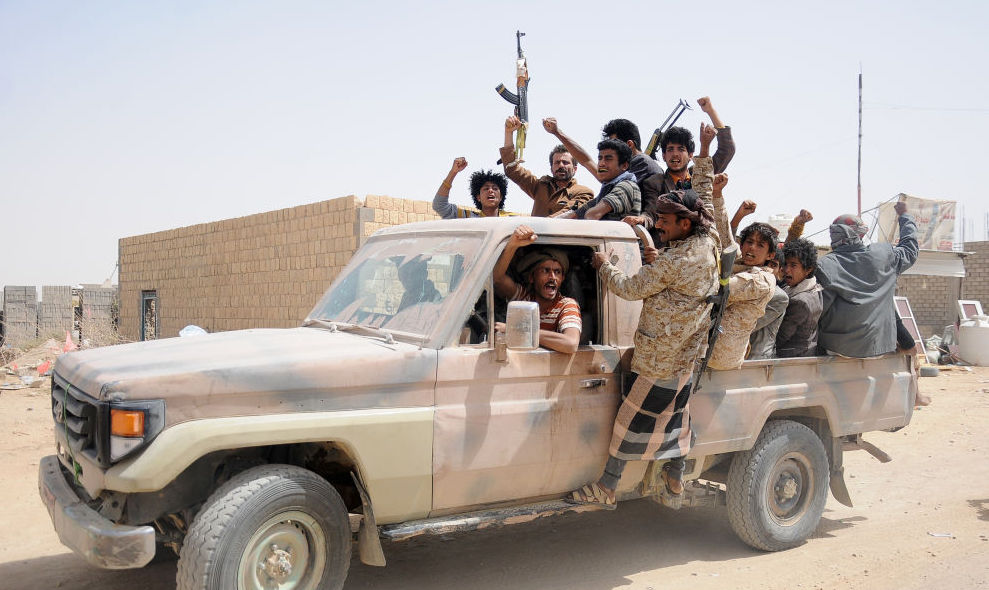
    Houthi followers hold their guns during a tribal gathering against the continued war and blockade on October 03, 2019 in Sana'a, Yemen
  • التحليل
  • The Houthis are consolidating power

    Absent international pressure, the Iran-backed Houthis have no reason to stop expanding

    January 30, 2020

    The Bab el-Mandeb Strait: Regional and great power rivalries on the shores of the Red Sea
    People hold Chinese and Djiboutian national flags as they wait for the arrival of Djibouti's President Ismail Omar Guellehas before the launching ceremony of new 1000-unit housing contruction project in Djibouti, on July 4, 2018. - The new 1000-unit construction project by the Ismail Omar Guelleh Foundation for Housing is financially supported by China Merchant, the operation parther of newly inaugurated Djibouti International Free Trade Zone (DITTZ) with Djibouti Ports and Free Zones Authority, to build ba
  • التحليل
  • The Bab el-Mandeb Strait: Regional and great power rivalries on the shores of the Red Sea

    The Bab el-Mandeb Strait (“Gate of Tears” in Arabic) forms a vital strategic link in the maritime trade route between the Mediterranean Sea and the Indian Ocean via the Red Sea and the Suez Canal. On one side of the narrow strait lies the Arabian Peninsula. On the other is the Horn of Africa, a fragile region that has been plagued for decades by high levels of violence and instability within and across borders, and which in recent years has served as a launching pad for terrorism, piracy, human trafficking, and smuggling operations.

    The ties that bind: The South Caucasus and the Middle East
    Turkish Foreign Affairs Minister Mevlut Cavusoglu (C), Minister of Foreign Affairs of Iran, Javad Zarif (R) and Azerbaijani Minister of Foreign Affairs, Elmar Mammadyarov (L) pose for a photo prior the tripartite meeting of foreign ministers of Turkey, Azerbaijan and Iran in Istanbul, Turkey on October 30, 2018.
  • التحليل
  • The ties that bind: The South Caucasus and the Middle East

    As neighboring regions, the South Caucasus and the Middle East are inextricably intertwined — so much so that the former is sometimes even considered part of the Greater Middle East. While geographical proximity is the strongest driver of interconnectivity between the two regions, geopolitics, business ties, and energy interests also link countries from the South Caucasus and the Middle East and form the basis for important bilateral and regional relationships.

    January 24, 2020

    Iran’s “harsh revenge”: Is blocking the Strait of Hormuz really a plausible option?
    Iranian soldiers take part in the
  • التحليل
  • Iran’s “harsh revenge”: Is blocking the Strait of Hormuz really a plausible option?

    In the immediate aftermath of the assassination of Gen. Qassem Soleimani, head of the Islamic Revolutionary Guard Corps – Quds Force, on Jan. 3, Ayatollah Ali Khamenei warned the U.S. of Iran’s “harsh revenge.” There has been much speculation around the timing, location, and the type (or form) of Iran’s promised revenge. Amin Mohseni-Cheraghlou takes a closer look at the impact of the widely discussed strategy of blocking the Strait of Hormuz.

    January 23, 2020

    Yemen’s Stockholm Agreement one year on: Imaginary progress?
    Yemen's foreign minister Khaled al-Yamani (L) and the head orebel negotiator Mohammed Abdelsalam (R) shake hands under the eyes of United Nations Secretary General Antonio Guterres (C), during peace consultations taking place at Johannesberg Castle in Rimbo, north of Stockholm, Sweden, on December 13, 2018.
  • التحليل
  • Yemen’s Stockholm Agreement one year on: Imaginary progress?

    Just over a year ago, the international community rejoiced in the revival of the UN-led Yemen peace process with the conclusion of the Stockholm Agreement between the Yemeni government and the Houthi insurgency (Ansar Allah), brokered by UN Special Envoy Martin Griffiths. Although the deal marked the first political breakthrough in the peace process since the collapse of Geneva and Kuwait talks under Griffith’s predecessor, the ensuing hurdles in implementation meant that hopes for its success were short-lived. In evaluating the progress on the agreement’s three key components — covering prisoner exchange, Hodeida, and Taiz — it quickly becomes clear that the truism that implementing peace agreements is far more important, and difficult, than concluding them still rings true.

    January 22, 2020

    Foreign policy and commercial interests drive closer UAE-Syria ties
    The United Arab Emirates embassy is pictured in the Syrian capital Damascus on December 27, 2018 after its reopening, the latest sign of efforts to bring the Syrian government back into the Arab fold
  • التحليل
  • Foreign policy and commercial interests drive closer UAE-Syria ties

    On Dec. 2, a series of public statements from Emirati and Syrian officials brought widespread attention to the UAE’s rapprochement with Syria. In a video circulated by Russian state media outlet RT, the UAE’s charge d’affaires in Syria, Abdul-Hakim Naimi, praised the “wise leadership” of Syrian President Bashar al-Assad and hailed the Syria-UAE relationship as “solid, distinct, and strong.” Syrian Deputy Foreign Minister Faisal Mekdad responded enthusiastically to Naimi’s comments by praising the UAE for standing by the Syrian government in its war against terrorism.

    January 21, 2020

    Where will Iran hit next? Cyber
    A billboard bearing a portrait with the black mourning ribbon of slain Iranian military commander Qasem Soleimani (L) and Iraqi paramilitary chief Abu Mahdi al-Muhandis hangs on a main road in the Iranian capital Tehran on January 4, 2020, one day after Soleimani and other members of the pro-Iranian Iraqi paramilitary group Al-Hashed Al-Shaabi were killed in a US air strike near Baghdad international airport.
  • التحليل
  • Where will Iran hit next? Cyber

    Following the recent escalation in U.S.-Iran tensions, the threat of Iranian cyberattacks is likely to intensify in the near to medium term. There are three possible fronts where Iran might look to carry out cyber operations: targeting the energy infrastructure of America’s Gulf allies; deploying malware against U.S. private sector companies; and launching disinformation campaigns that would aim to influence public opinion in both the Middle East and the U.S. 

    Oman’s new era
    Vice President of Turkey Fuat Oktay offers his condolences to Oman's new Sultan Haitham bin Tariq Al Said over the death of longtime ruler Qaboos bin Said al Said at the Al Alam Palace in Muscat, Oman on January 12, 2020.
  • التحليل
  • Oman’s new era

    The announcement of Sultan Qaboos bin Said al-Said’s passing on Jan. 10 marked the end of an era. Now that the Arab world lost its longest-serving leader, none of the Gulf states has a ruler that was on the throne when the Gulf Cooperation Council (GCC) was established in 1981. Most Omanis have never known another leader and this transition period, marked by three days of mourning, is an emotional time for those in the sultanate.

    January 13, 2020

    The intra-GCC competition over the Palestinian heart
    Palestinian President Mahmoud Abbas (L) meets Saudi Arabian King Salman bin Abdulaziz al-Saud (R) in Riyadh, Saudi Arabia on October 15, 2019.
  • التحليل
  • The intra-GCC competition over the Palestinian heart

    Since 2017 three separate blocs have emerged within the Gulf. Driven by the region’s divisions, rival power centers, and conflicting interests, the Gulf states are playing an ever-greater role in Palestinian affairs.

    December 18, 2019