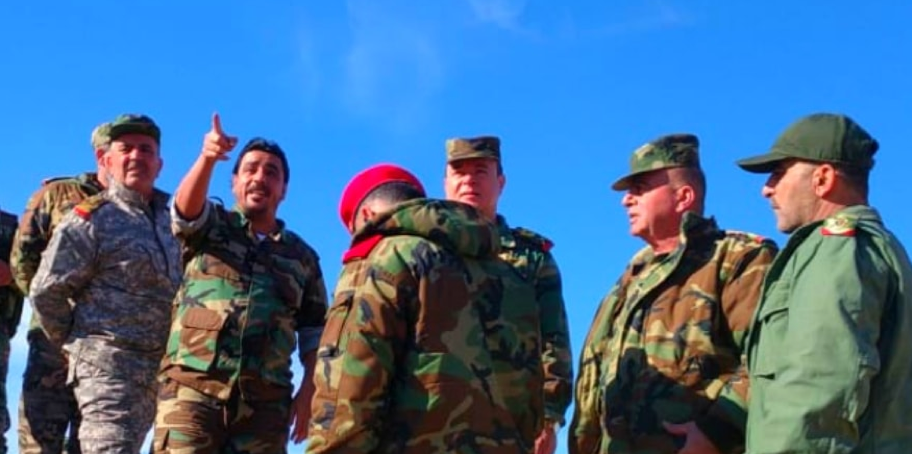
Five months into his job as commander of regime forces in Deir ez-Zor, Maj. Gen. Nizar Khader appears to have skillfully gained control over the diverse tapestry of loyalist forces in the region. Khader’s return to power in the east quickly put an end to the deadly disputes that had plagued the governorate’s security forces for years. He then launched a nearly three-month campaign, coordinated between Syrian, Iranian, and Russian forces, to push ISIS cells back into the province’s hinterlands, securing the crucial highway connecting Deir ez-Zor with Palmyra and Damascus to the west. His success, while impressive, will face its second major test soon as ISIS prepares for a potential Ramadan offensive.
Repairing regional and global relationships through cyber diplomacy
Under mounting pressure to define and execute its foreign policy to “restore U.S credibility,” the Biden administration needs to carefully consider its focal points in the Middle East, especially in light of the region’s recent realignment following the signing of the Abraham Accords. Luckily, through cyber diplomacy and norm setting, the administration can restore its credibility without abandoning its core ideals, while also nurturing relationships in the Middle East and beyond. Such cyber diplomacy could involve both engaging with partners to strengthen rules-based frameworks around acceptable state behavior in cyberspace and using cyber to leverage wider diplomatic aims.
The cyclical futility of governance by TikTok in the Middle East
When headlines flashed this month about the Peshawar High Court’s decision in Pakistan to yet again ban the controversial video-sharing app TikTok, you might have been tempted to scroll away in boredom. After all, who hasn’t banned TikTok these days?
The data centers industry: The GCC’s new oil fields
Close observers of policy trends in the GCC will notice that digital transformation and data governance are becoming vital issues in the region. Over the last decade, Gulf countries have introduced ambitious plans to digitally transform their public and private sectors, with the goal of providing reliable, rapid, and efficient public and private services.
Political risk vs. risk to force: How policy decisions impact risk and capability in partner operations
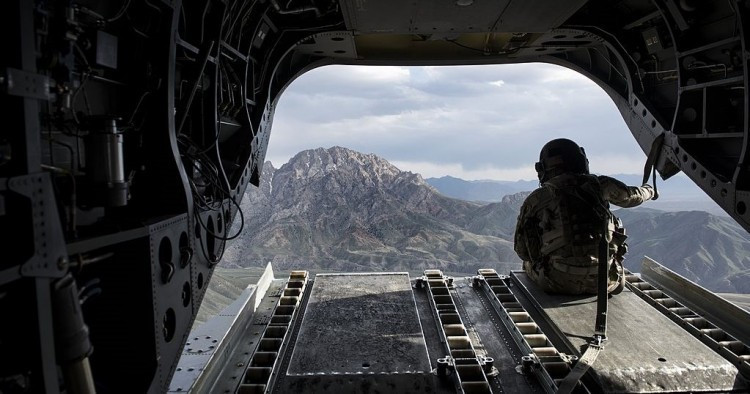
Operation Inherent Resolve (OIR) is the U.S. military’s name for the international intervention to defeat ISIS in Syria and Iraq starting in 2014. While OIR has been a success, it has necessarily been imperfect. Throughout the campaign, cost-benefit calculations made by policymakers led to missed opportunities and possibly a longer conflict. These decisions will have lasting repercussions that could undermine the hard-won victory against ISIS, as well as the ability to partner in future interventions. In particular, the United States mishandled its partner relationships in the war to defeat ISIS. Political considerations apparently won out against supporting and sustaining the SDF, our military partner forces.
The geopolitics of space: Why did the UAE send a probe to Mars?
On Feb. 9, 2021, the UAE made history when its Hope Probe reached Mars and communicated back to Earth. This made it just the sixth member of the elite group of countries that have reached the Red Planet, and the first Arab nation to do so. The UAE stressed that the Mars mission is a success for all Arabs and this significant scientific feat positions Abu Dhabi not just as a leader in the Middle East, but also as an important global player in space.
Chinese Technology in the Middle East: A Threat to Sovereignty or an Economic Opportunity?
Recent moves by Chinese tech giants have raised concerns in Washington about Beijing’s technological outreach to developing nations. To stem the international growth of these companies, the U.S. has discouraged countries from adopting Chinese technologies through efforts like promoting the Clean Network Initiative. Countries across the globe often must choose between Chinese or Western technology, and these choices have broad implications.
Definitional doom: How Iran and Israel derail legal application in cyberspace
Despite the importance of cyberattacks, little has been written about the relationship between these attacks and the applicable law. States are still struggling with controversies involving definitions, even though there is wide applicability of both laws and norms in this context. As a result, cyberspace remains relatively anarchic and the continued controversies have impeded further progress. Although the global discussion has only just begun, it is clear that the rising prevalence of state-led cyber operations warrants a thoughtful, innovative, and immediate regulatory response. Pressure has been building on the governments of the Middle East to join the conversation as their relevance and power in the cyber domain grows.
A decade on, the Syrian crisis is far from over and the US must step up
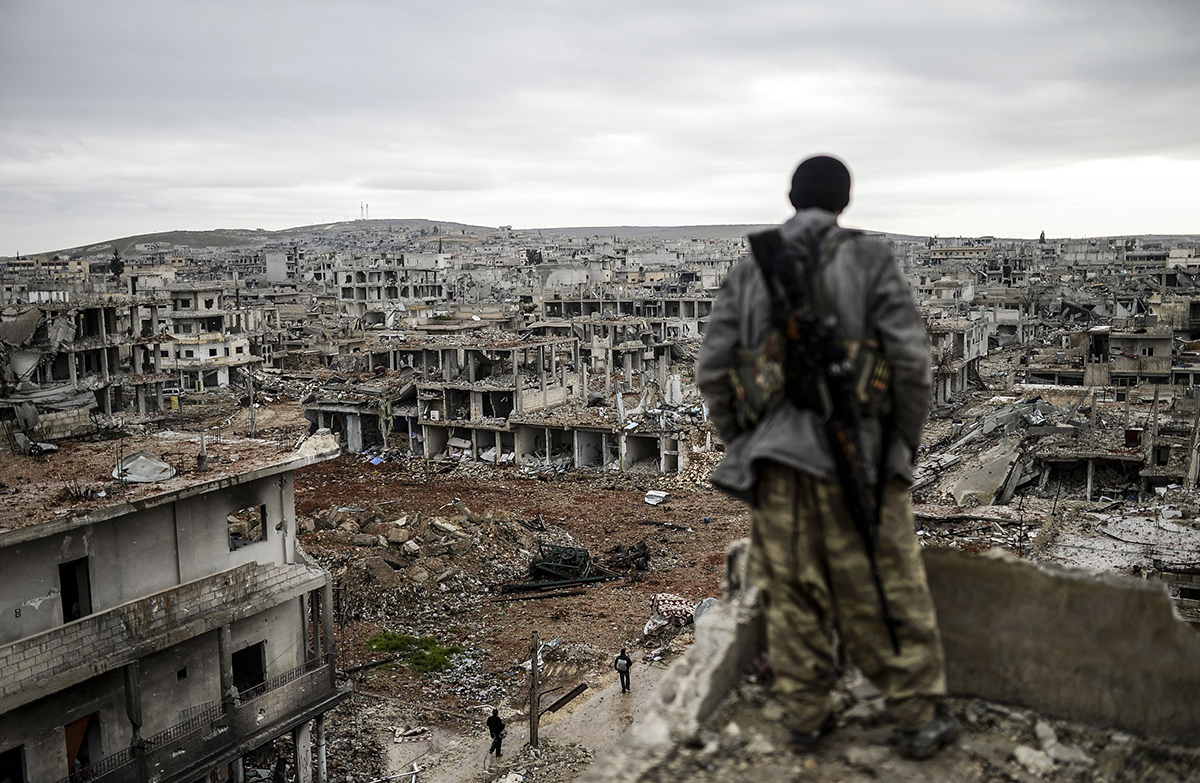
As Syrians mark the 10-year anniversary of the 2011 uprising this week, it remains inescapably true that the country’s debilitating crisis is far from over. After a decade of conflict that was initiated and driven by an utterly ruthless regime and reinforced and diplomatically protected by its Russian and Iranian allies, Syria is broken.
ISIS and the Assad regime: Strategy and counter-strategy in Syria’s Badia
It has been more than a month since the launch of military operations by Syrian regime forces and their allies, with air support from the Russian air force, in the Syrian Badia — the country’s expansive central desert region — in an attempt to eliminate ISIS cells deployed there. To date, however, these operations have not yielded any tangible results.
Cyber violence against women is defined as a form of gender-based violence (GBV) carried out through digital means. The COVID-19 pandemic has drastically heightened the risk and incidence of violence against women both online and offline: the Australian eSafety Commissioner reported a 50% increase in domestic and cyber violence reports since March 2020. Globally, Facebook remains the most common platform for gendered violence online, followed closely by Instagram and WhatsApp. These developments show that special consideration must be given to the role of digital platforms in facilitating violence against women, and that policy solutions regarding violence against women must also consider the online context where that violence often takes place and escalates in plain sight.
Middle East cyber priorities for the Biden administration
To promote stability in the Middle East and safeguard its interests, the new administration should adopt policies designed to limit damaging activities in cyberspace, support cyber norms in conjunction with strong cooperation agreements, recognize the obstacles to creating a NATO-like regional security alliance, and implement policies restricting the misuse of U.S. technologies by allies to commit human rights violations and spy on their own people.