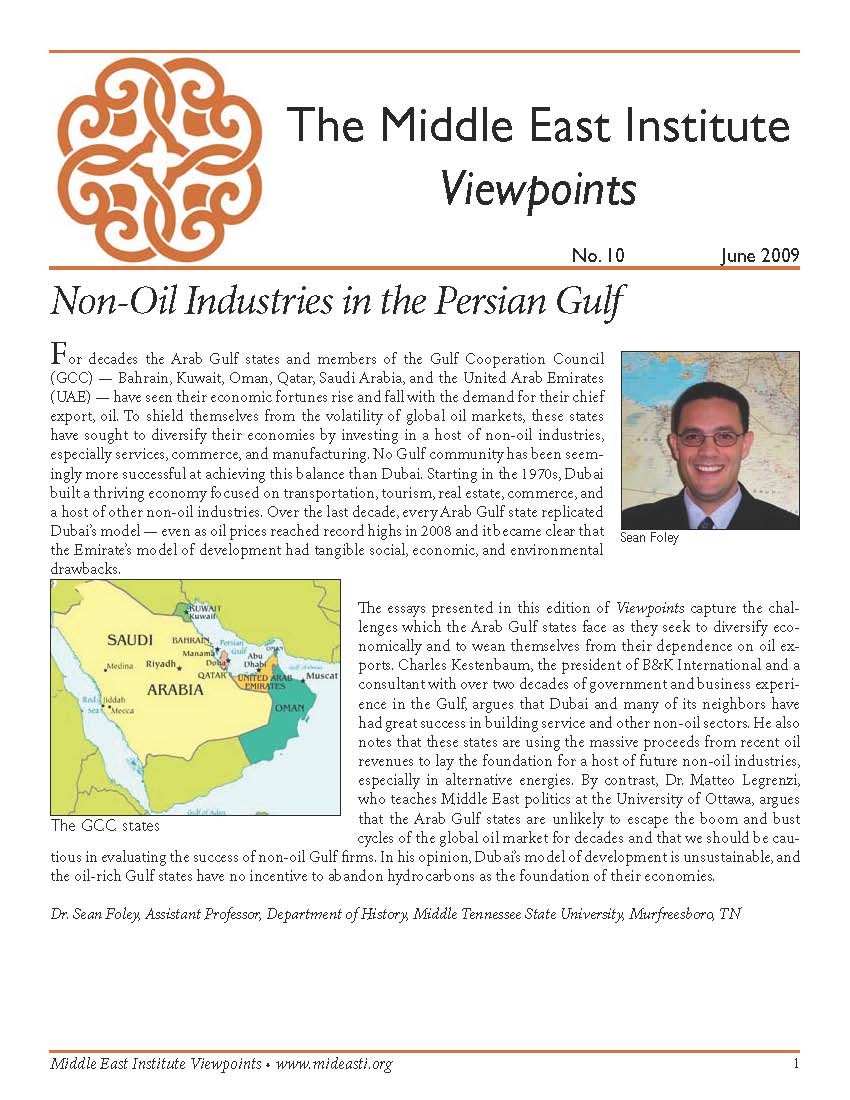
Introduction to Non-Oil Industries in the Persian Gulf
Originally posted June 2009
The Wealth Management Industry in the Middle East: Boon or Bust?
Introduction

Saudi Professor Faces Charges After Fighting for Free Speech
This Opinion was first published on Al-Monitor.com on June 28, 2012
What are the limits of free speech and open dissent in the Kingdom of Saudi Arabia? They are often unclear and seemingly arbitrary, but there is no doubt that Dr. Mohammad al-Qahtani, a professor and activist, went well beyond them, and he knew it. He was hardly surprised when Saudi prosecutors, finally fed up with his vociferous denunciations of the regime, hit him with a long list of criminal charges. He had predicted it, and in the context of Saudi Arabia, he was asking for it.
Saudi Arabia Moves Closer to A New Generation of Leaders
This Opinion first appeared in Al-Monitor on June 16, 2012
The death Saturday (June 16) of Saudi Crown Prince Nayef bin Abdul Aziz is likely to have little short-term impact on the economic or political life of the kingdom or on its international relations. But it does accelerate the inevitable transition to a new generation of rulers who may have very different ideas about how the al-Saud should rule their people, deal with their neighbors and manage the critical relationship with the United States.
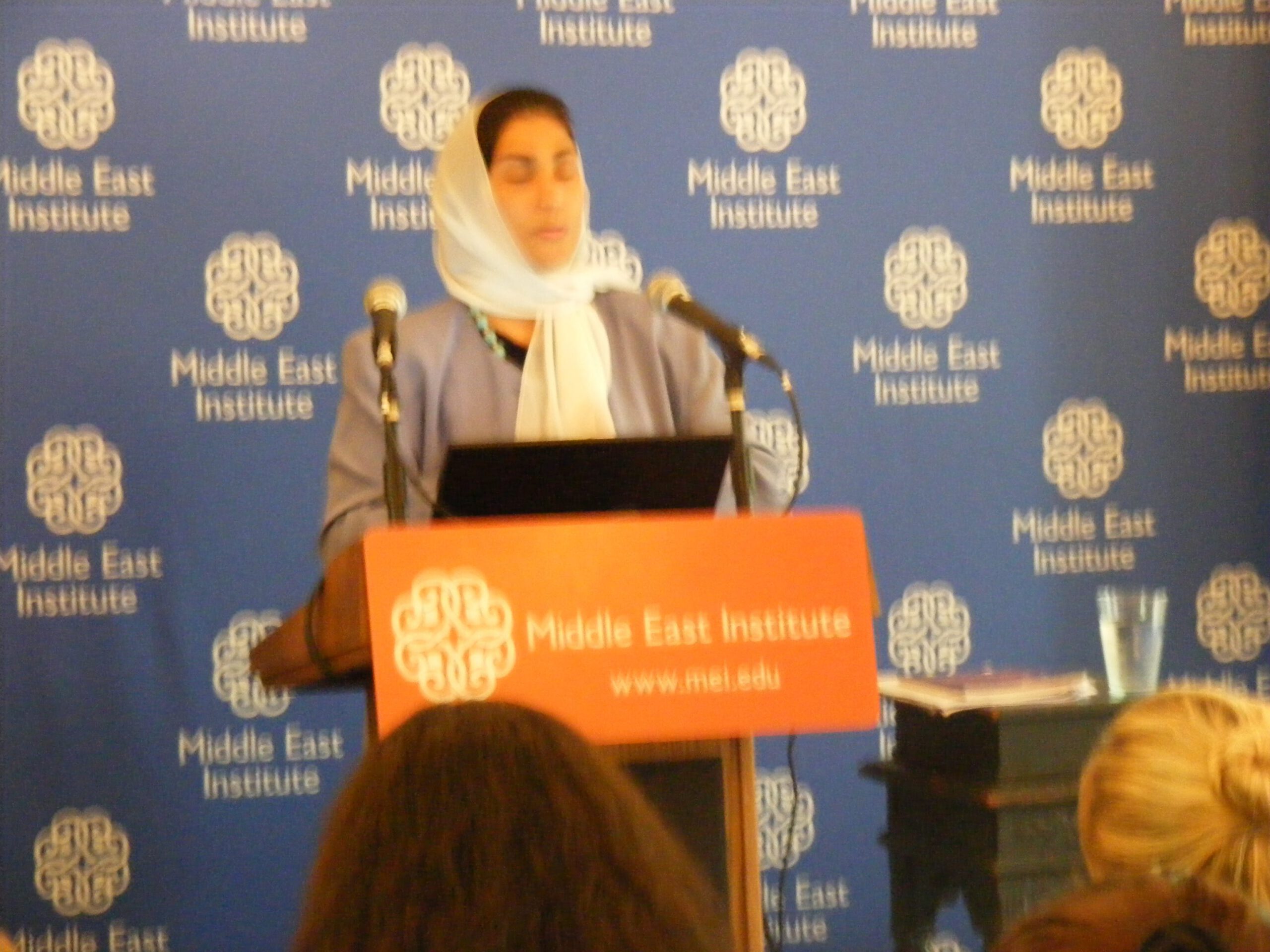
Saudi Women in a Time of Change
The Middle East Institute is pleased to host poet, writer and activist Nimah Nawwab for a conversation about Saudi women in an era of unprecedented change in the Middle East. Despite the many advances of the Arab Spring, the region continues to face mounting social, political, and economic challenges. In Nawwab's native Saudi Arabia, these challenges form the basis for her art and activism.
Saudi Women in a Time of Change
Podcast for Saudi Women in a Time of Change, 26 April, 2012
Saudi Women in a Time of Change
Podcast for Saudi Women in a Time of Change, 26 April, 2012
Saudi Women in a Time of Change
Podcast for Saudi Women in a Time of Change, 26 April, 2012
Saudi Women in a Time of Change
Podcast for Saudi Women in a Time of Change, 26 April, 2012
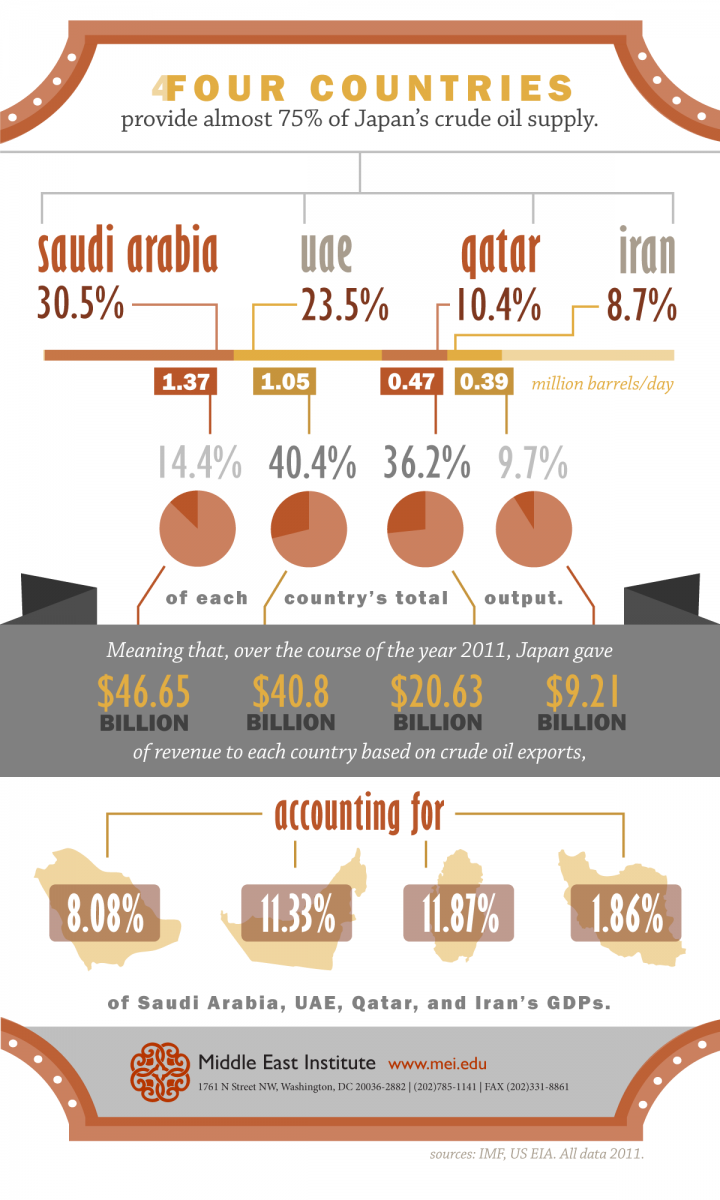
Infographic: Oil, Numbers, and Democracy
This infographic explains one facet of the argument posed in MEI Scholar Zubair Iqbal‘s recent article The Economic Determinants of Arab Democratization, posted March 13.
Click the image to enlarge
The Economic Determinants of Arab Democratization
- Introduction.
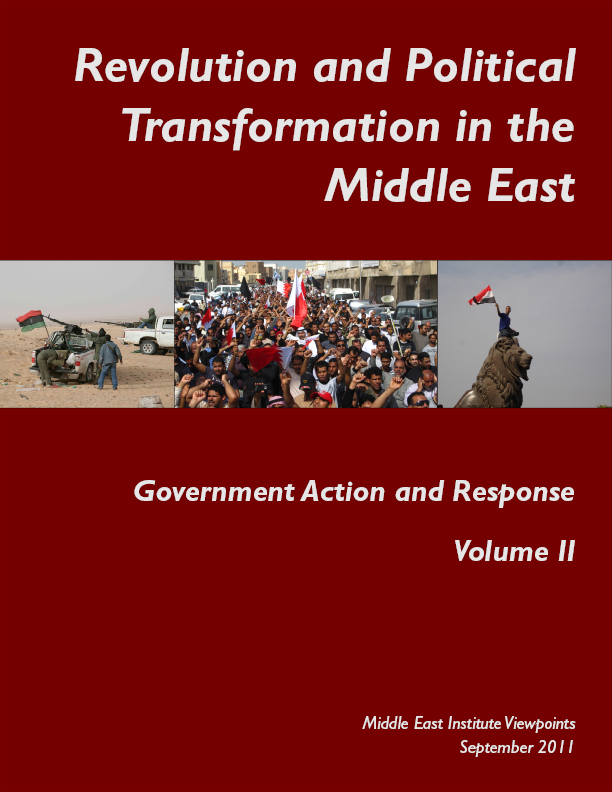
Introduction to Revolution and Political Transformation in the Middle East: Government Action and Response
Originally posted September 2011
On August 21, 2011, rebel forces in Libya rolled into the capital Tripoli, seemingly finishing off months of armed combat and foreign intervention and bringing down yet another Arab head of state. At the same time, sporadic but violent repression of protests in Syria continues, while other states remain calm or have seen their protest movements fizzle. We open this second volume of our series, Revolution and Political Transformation¸ at a time of uncertainty and transition for the region.
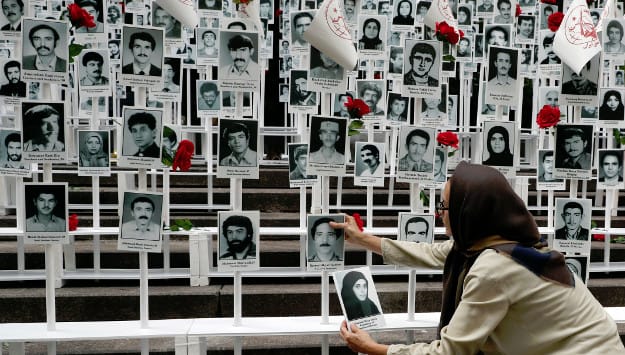
Saudi Arabia on the Edge: The Uncertain Future of an American Ally
Of all the countries that are vital to the strategic and economic interests of the United States, Saudi Arabia is the least understood by the American people. Today's Saudis, far better informed than previous generations, are looking for new political institutions that will enable them to be heard, but these aspirations conflict with the kingdom's strict traditions and with the House of Saud's determination to retain power. Meanwhile, the country wishes to remain under the protection of American security but still clings to a system that is antithetical to American values.
Saudi Women Shatter the Lingerie Ceiling
This Opinion first appeared in the New York Times’ Sunday Review section on January 21, 2012