Rebuilding the U.S.-Egyptian Strategic Relationship
President Obama’s decision to lift the freeze on delivery of military aid to Egypt was the right thing to do to shore up a key strategic alliance in a region where risks to U.S. security are multiplying rapidly. The United States needs Egypt’s help in confronting terrorist and conventional threats in the region, in maintaining Arab-Israeli stability, and as a key player in Arab diplomacy and coalition building.
Turkey’s Balancing Act between Iran and Saudi Arabia
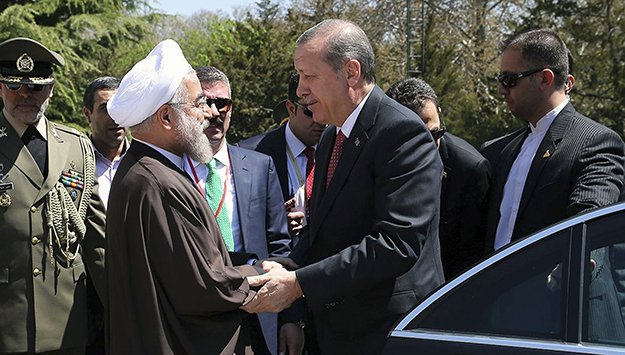
Turkish Foreign Minister Mevlut Cavusoglu, reiterating Turkey’s support for a diplomatic solution over the use of force regarding Iran’s nuclear program, welcomed the interim deal between Tehran and the world powers. Turkey’s slowing economy may be among the first to reap economic benefits from the deal, and Ankara’s longtime quest to become an energy hub could finally be realized. Yet the deal could also pose a challenge to Ankara’s Iraq and Syria policies and its recent rapprochement with the Saudis.
In Turkey today, as President Recep Tayyip Erdogan and Prime Minister Ahmet Davutoglu wrestle over who governs, the political uncertainty they are creating may be a ground tremor about to generate an earthquake. The earthquake, however, may not only be political in nature; it may also be economic.
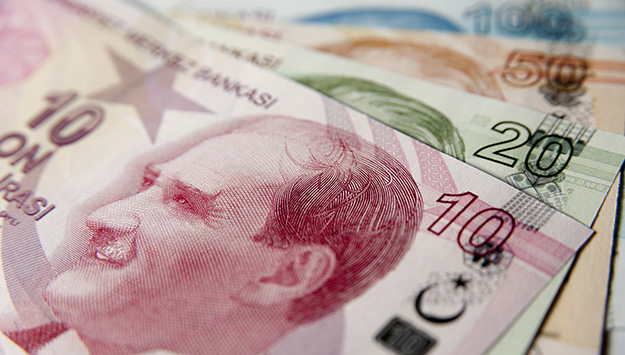
Turkey’s remarkable economic growth is now in jeopardy. Its economy is drifting, beset by contrary winds of economic policies and political wrangling. There is a clear track forward, but to reach the next level of prosperity, the government must undertake a major new effort.
The Middle East in China’s Silk Road Visions: Business as Usual?
Chinese President Xi Jinping’s 2013 proclamation of the Silk Road Economic Belt (“One Belt, One Road”) and Twenty-First Century Maritime Silk Road initiatives provided an overarching framework for understanding China’s strategic priorities over the coming decade. The land-based and sea-based Silk Roads will link Asia and Europe via the Middle East and Central Asia through a series of transcontinental railroads, pipelines, ports, airports, and other infrastructure projects.
The Hashd: Redrawing the Military and Political Map of Iraq
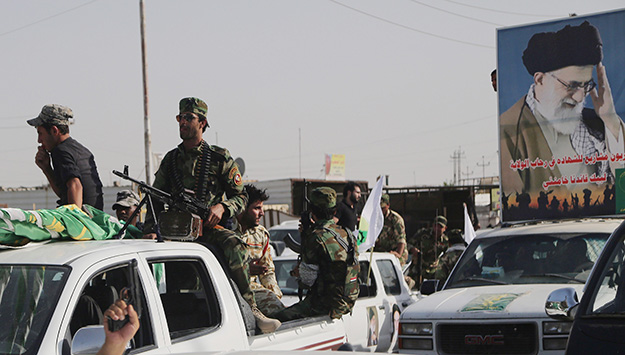
Al-Hashd al-Sha‘bi—also known as the Popular Mobilization Units, the Shi‘i militias, or simply “the Hashd”—has joined Iraqi security forces and the Kurdish peshmerga to spearhead Iraq’s ongoing offensive against ISIS. The coordinated assault has scored significant successes in various parts of Diyala, Babil, and Salah al-Din, including the recapture of Tikrit. With this string of recent triumphs, the Hashd has provided a potent rallying point for a reinvigorated sense of Iraqi nationalism, albeit one with distinctly Shi‘i overtones.
In Chapter 4 of “Rocky Harbors: Taking Stock of the Middle East in 2015,” published by the Center for Strategic & International Studies, Paul Salem chronicles and analyzes the shifting fortunes of political Islam in the region.
In the past four decades, the greatest achievements of American diplomacy were probably the Camp David Accords and the Dayton Agreement. Camp David led to the end of the perpetual state of war between Israel and Egypt. Dayton ended the carnage of the war in the Balkans.
Too often, historians of Sino-Arab relations do not engage in a meaningful dialogue with the political scientists, economists, and anthropologists who are the most vocal commentators on China’s increasing role in the region. Today’s China, with its growing wealth and unprecedented ability to project political and economic power abroad, may appear at first glance to bear little resemblance to the China of the 1950s, when the Communist government of Mao Zedong was reaching out for the first time to the other countries of the developing world. Nevertheless, one can identify several continuities that have long informed China’s interactions with the Arab world. First, Beijing insists that its foreign policy is based on the same ironclad commitment to nonintervention in the affairs of other sovereign countries that it articulated in the 1950s. Second, China has long held special meaning for Arab politicians and intellectuals who wish to use the example of China to promote authoritarian order in their own societies. Finally, the Chinese government has relied on Chinese Muslims to mediate its relations with other Islamic countries for nearly a century. It is only by recognizing these longstanding hallmarks of Sino-Arab relations that commentators can fully appreciate the complexities of China’s interactions with the Arab world in the twenty-first century.
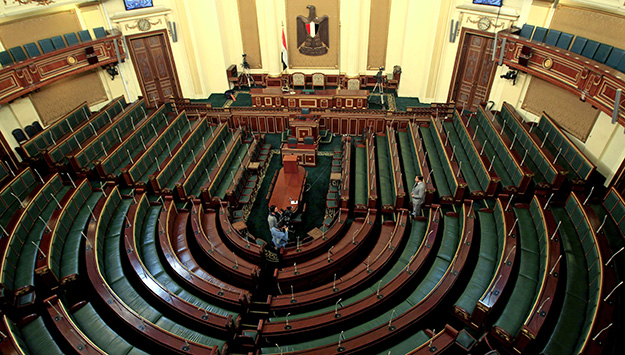
In March, Egypt’s Supreme Administrative Court suspended the country’s long-awaited parliamentary elections,[1] originally scheduled to begin March 21.
Egypt is not out of the dark, but there is reason to be hopeful. The nation’s energy market reforms and consistent debt repayments have won the attention and approval of international energy companies and investors in the form of significant investment in the Egyptian energy sector. New upstream (exploration and production) oil and gas contracts, a recent increase in renewable energy ventures, and dozens of additional preliminary agreements in both the hydrocarbon and utility sectors are proof of the improved investment climate.
Robert Baer’s See No Evil presents a firsthand account of the life of a CIA case officer in the war on terror. From recruiting agents in the volatile Bekaa Valley in Lebanon to wiretapping Abu Nidal students in France, Baer provides a fascinating description of his CIA service.
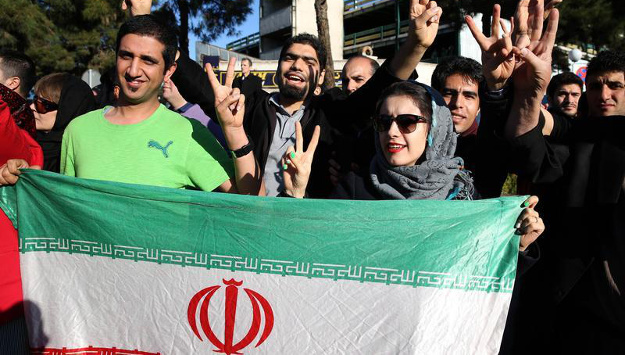
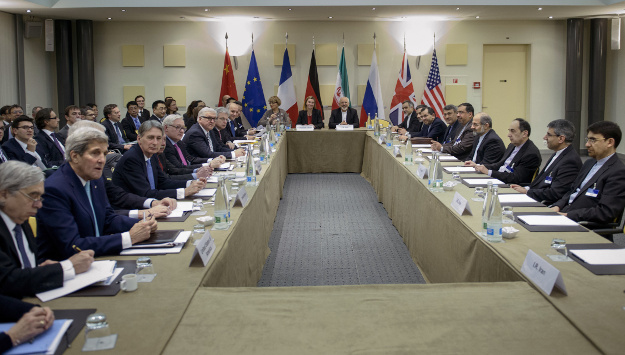
Iran’s foreign minister, Javad Zarif, was on his way back to Tehran from Lausanne as accolades began to pile up. At the airport, he received a rapturous reception, as if the Team Melli, Iran’s national soccer team, had beat Germany.
Will the Nuclear Deal Help or Harm Regional Stability?
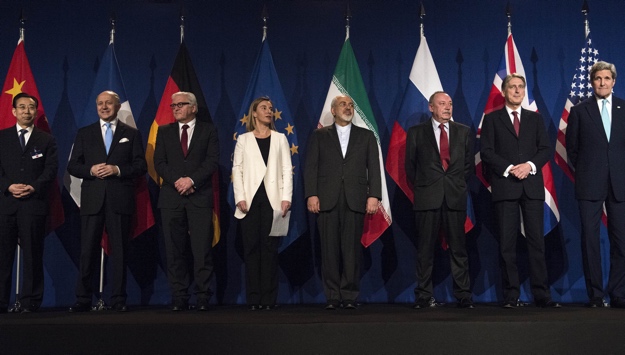
As the United States and other world powers pursued nuclear negotiations with Iran over the past 18 months, the Middle East descended into one of the worst periods of chaos and proxy conflict in its modern history, with Iran engaged aggressively in many of the region’s hotspots. Most leaders in the region fear that a nuclear deal with Iran will abet its aggressive interventionism and lead to further geopolitical and sectarian confrontation. But could the agreement—if it is completed—also create conditions for rebuilding stability?
The great trading routes connecting medieval Eurasia by land and sea brought Islam, like Buddhism centuries earlier, to China. Somewhere between 20 and 40 million Muslims—reliable data remains elusive—now live in China. They acknowledge a variety of official and unofficial ethnic identities due to the diverse origins of Islam in China as well as the complexities of modern Chinese ethnic policies. The architecture of China’s mosques, both historic and modern, reflects this diversity. This essay examines the development of mosque architecture in southern China, in the old central capitals, and in the Xinjiang Uighur Autonomous Region from earliest times up to the present. In the twenty-first century, modern construction techniques allow patrons to choose from a variety of styles and materials as they design mosques to reflect a particular version of Islamic identity.

 Robert Baer’s See No Evil presents a firsthand account of the life of a CIA case officer in the war on terror. From recruiting agents in the volatile Bekaa Valley in Lebanon to wiretapping Abu Nidal students in France, Baer provides a fascinating description of his CIA service.