This text has been translated by AI and may contain errors.
Skip to Content

Research & Commentary Results

Filter by
1207 Results
A ‘New Normal’ in GCC-Asia Health Cooperation?
Middle East Institute
  • Analysis
  • A ‘New Normal’ in GCC-Asia Health Cooperation?

    Medical tourism is an important form of cooperation in the health sector between the Gulf Cooperation Council (GCC) countries and Asia. The increasing flow of patients from the Gulf to Asian for medical treatment in recent years has been underpinned by a feature of GCC countries’ healthcare systems that is unique, namely government sponsorship of overseas medical treatment. This article discusses the immediate impact and possible implications of the Coronavirus pandemic for GCC-Asia health cooperation.

    July 28, 2020

    Linking the past to the future: Economic diversification and tourism in Oman
    Photo by GIUSEPPE CACACE/AFP via Getty Images
  • Analysis
  • Linking the past to the future: Economic diversification and tourism in Oman

    Oman’s new ruler, Sultan Haitham, only has a short timeframe in which to aggressively diversify the country’s economy and reduce its dependency on hydrocarbon exports. This already difficult task is further complicated by the twin challenges of the global coronavirus pandemic and low oil prices, both of which limit the government’s fiscal room for maneuver. One obvious sector that Oman should consider expanding rapidly is its tourism industry.

    July 23, 2020

    The future of Oman and its new leader
    Middle East Institute
  • Podcast
  • The future of Oman and its new leader

    Jerry Feierstein, Karen Young, and Dania Thafer join host Alistair Taylor to discuss the political, economic, and foreign policy challenges facing the sultanate and its new ruler, Sultan Haitham bin Tariq, who ascended to the throne following the death of Sultan Qaboos, Oman’s long-time ruler, in early January.

    July 23, 2020

    Positioning the Provinces Along China’s Maritime Silk Road
    Middle East Institute
  • Analysis
  • Positioning the Provinces Along China’s Maritime Silk Road

    China’s Belt and Road Initiative (BRI) is a central policy framework with decentralized initiatives. Under the BRI’s Silk Road Economic Belt (SREB) and the Maritime Silk Road (MSR), China’s inland provinces and coastal peers have been obliged to implement the top-down national strategy while at the same time having been granted the latitude to interpret the strategy to suit their commercial interests. This article looks at how Fujian and Jiangsu provinces have sought to position themselves along the Maritime Silk Road with respect to their relations with Middle Eastern partners.

    OPEC+ cautiously increasing production
    Photo by Omar Marques/SOPA Images/LightRocket via Getty Images
  • Commentary
  • OPEC+ cautiously increasing production

    So far, Saudi Arabia’s push for OPEC+ restraint appears to be working. If projections of a gradual demand recovery in 2020 are accurate, the Saudis should be able to reaffirm their centrality as market stabilizers.

    July 17, 2020

    Washington’s response to counterrevolutionary agendas in Libya
    Photo by Amru Salahuddien/Xinhua via Getty Images
  • Analysis
  • Washington’s response to counterrevolutionary agendas in Libya

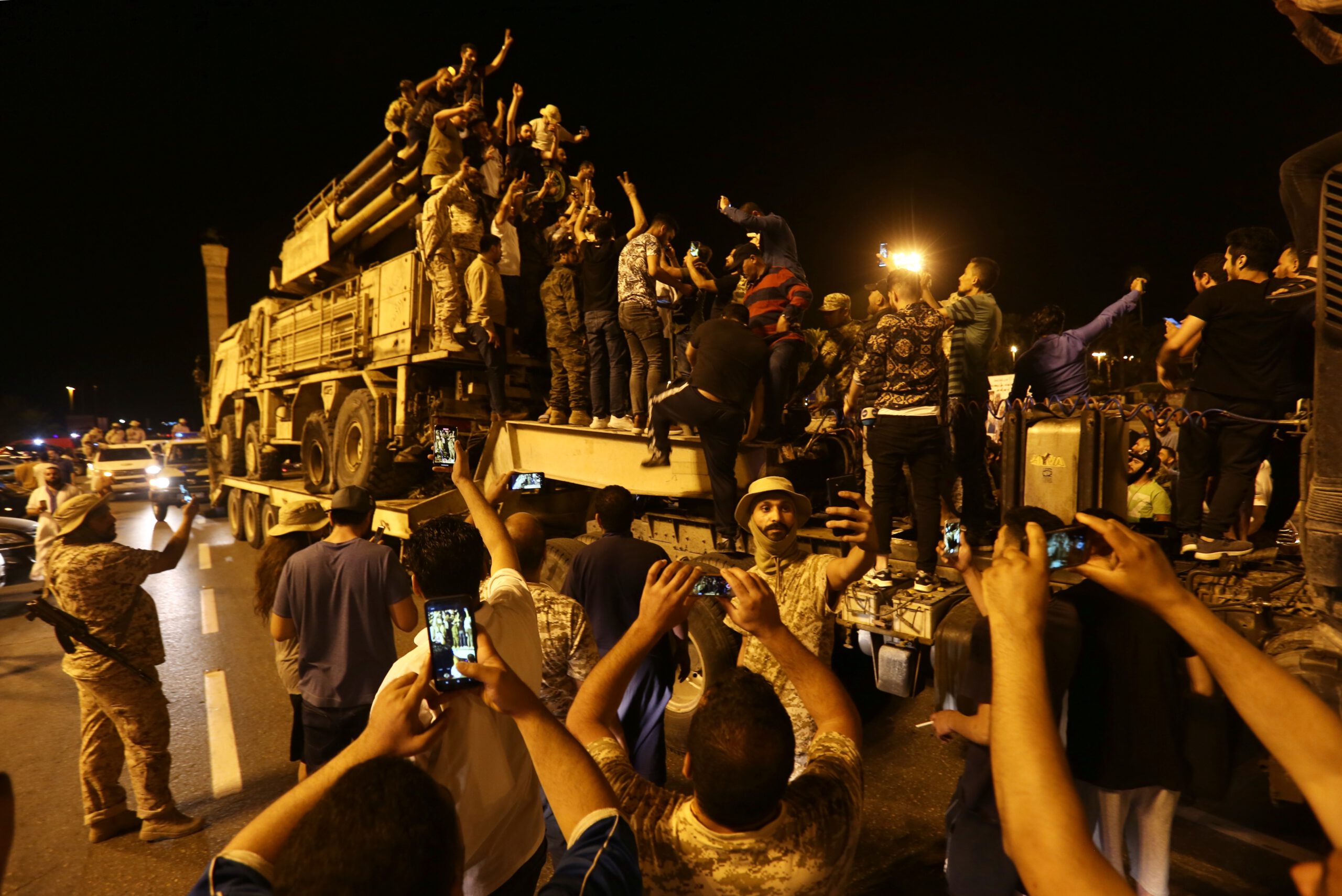
    Throughout Donald Trump’s presidency, the U.S. has largely retreated from a leadership role in the MENA region, resulting in Washington mostly outsourcing its Libya foreign policy to Egypt, Russia, and Washington’s partners in NATO and the GCC. Yet the U.S. diplomatic establishment is growing frustrated with the beleaguered North African country’s ongoing turmoil, as Washington increasingly sees Egypt and the UAE as undermining American interests in Libya.

    July 15, 2020

    The eastern Mediterranean heats up as conflicts over energy move onshore
    Photo by Mustafa Kamaci/Anadolu Agency via Getty Images
  • Analysis
  • The eastern Mediterranean heats up as conflicts over energy move onshore

    Not too long ago, the Mediterranean was described as “NATO’s lake” — a sleepy backwater in a world dominated by conflict. Today, Israel’s quarrels with Lebanon, Palestine, and Syria are viewed — and minimized — as legacy conflicts, overshadowed by a new and unstable strategic environment centered upon competing visions of offshore energy and security in the eastern Mediterranean.

    July 14, 2020

    Defusing a “floating bomb”: Yemen’s impending Safer disaster
    Photo by Hani Al-Ansi/picture alliance via Getty Images
  • Analysis
  • Defusing a “floating bomb”: Yemen’s impending Safer disaster

    Having given Yemen’s Houthi rebels control over the ports of Hodeida governorate on humanitarian grounds as part of the December 2018 Stockholm Agreement, the international community has failed to address the looming environmental, economic, and political threats presented by the decaying Safer oil tanker sitting offshore — a “floating bomb” waiting to explode.

    July 9, 2020

    COVID-19 in Yemen: A disaster rarely comes alone
    Photo by NABIL HASAN/AFP via Getty Images
  • Analysis
  • COVID-19 in Yemen: A disaster rarely comes alone

    Since Yemen was first hit by the coronavirus in April, the southern port city of Aden has gone on to become the epicenter of COVID-19 in the country. While the number of cases and deaths remains low, the situation on the ground in Yemen is far more complex than the official numbers suggest.

    July 9, 2020

    Saudi Arabia and the outlook for OPEC+
    Photo by Yegor AleyevTASS via Getty Images
  • Analysis
  • Saudi Arabia and the outlook for OPEC+

    When OPEC+ ministers hold their next monthly meetings on July 14-15, the Saudis are likely to be a strong voice pushing for the continuation of production limits, for both economic and political reasons.

    July 8, 2020

    From Dependents To Allies: America's Gulf Relations Need Reform
  • Analysis
  • From Dependents To Allies: America's Gulf Relations Need Reform

    During three major crises, each happening under a different administration, the U.S.-Gulf partnership failed to effectively address the security concerns of the Gulf states. While no partnership is perfect, such major and persistent breakdowns in coordination among longstanding security partners are uncommon, and can be deadly if left unresolved.

    July 7, 2020

    Yemen’s botched pandemic response and fragile conflict dynamics allow COVID-19 to spread undetected
    Photo by AHMAD AL-BASHA/AFP via Getty Images
  • Analysis
  • Yemen’s botched pandemic response and fragile conflict dynamics allow COVID-19 to spread undetected

    On April 2, 2020, the Houthi version of Saba News Agency in Sanaa announced the first coronavirus case in Yemen, but shortly afterwards it retracted the news and the deputy chairman of the agency’s board of directors was fired. Many Yemenis had hoped the Saudi-led coalition’s blockade of the country and its resulting isolation might have helped to prevent an outbreak.

    June 30, 2020

    Gulf regimes may oppose annexation, but they helped bring it about
    Photo by AHMAD GHARABLI/AFP via Getty Images
  • Analysis
  • Gulf regimes may oppose annexation, but they helped bring it about

    Leaders of Arab Gulf regimes now decry the attempt to implement the vision of the Israeli Right, which aims to prevent the establishment of a Palestinian state. But it is exactly the policies of the Arab Gulf regimes, through their normalization of ties with Israel at the expense of the Palestinians, that directly contributed to the rise of the Israeli Right and made this annexation more likely.

    June 24, 2020

    Mohammed bin Salman marks 1,000 controversy-filled days as crown prince
    Photo by MANDEL NGAN/AFP/Getty Images
  • Commentary
  • Mohammed bin Salman marks 1,000 controversy-filled days as crown prince

    As MbS approaches three years as Saudi Arabia’s crown prince and, in the eyes of many, the de facto ruler of the kingdom, he remains an enigmatic figure on the world stage.

    June 22, 2020