تمت ترجمة هذا النص بواسطة الذكاء الاصطناعي وقد يحتوي على أخطاء.
تخطي إلى المحتوى

Research & Commentary Results

تصفية حسب
826 Results
The Iraq-SAMHSA Partnership to Strengthen Behavioral Health Studies
معهد الشرق الأوسط
  • التحليل
  • The Iraq-SAMHSA Partnership to Strengthen Behavioral Health Studies

    Originally posted September, 2011

    For nearly eight years — since May 2004 — the Substance Abuse and Mental Health Services Administration (SAMHSA) of the US Department of Health and Human Services (HHS) has partnered with the Iraqi Ministry of Health to help Iraq re-establish its behavioral health service system. HHS and SAMHSA have learned much from this effort about improving behavioral health services in the US, particularly for Muslim populations and for persons experiencing extended trauma.

    September 1, 2011

    Implications of the Iraq-SAMHSA Initiative for the Delivery of Behavioral Health Services in the United States
    معهد الشرق الأوسط
  • التحليل
  • Implications of the Iraq-SAMHSA Initiative for the Delivery of Behavioral Health Services in the United States

    Through the collaboration between Iraq and the Substance Abuse and Mental Health Services Administration (SAMHSA) of the US Department of Health and Human Services (HHS), US providers have learned a great deal about improving behavioral health services, including trauma services, from their Iraqi colleagues since 2004.[1] Two of the many implications for US behavioral health services resulting from this partnership are directly relevant to shaping services for both returning veterans, and refugees and immigrants from the Middle East:

    September 1, 2011

    Turkey's Kurdish Challenge
    معهد الشرق الأوسط
  • التحليل
  • Turkey's Kurdish Challenge

    F. Stephen Larrabee, Distinguished Chair in European Security at the RAND Corporation, and Gonul Tol, Executive Director of the Middle East Institute’s Center for Turkish Studies, highlight the importance of drafting a new civilian constitution to solve Turkey’s Kurdish issue.

    Joining the Global Oil Sector: Challenges and Opportunities for Iraq
    معهد الشرق الأوسط
  • Video
  • Joining the Global Oil Sector: Challenges and Opportunities for Iraq

    The Middle East Institute is proud to host Ben Lando, Iraq Bureau Chief of the Iraq Oil Report, which provides business, political and security analysis on Iraq. Lando will discuss Iraq's potential within the global oil sector, as well as the political and security concerns that could affect oil supply, growth, security and policy in Iraq now and in the future. Lando will also touch upon relations between Iraq and its neighbours, as well as key domestic issues such as the Arab-Kurdish conflict.

    April 28, 2011

    Joining the Global Oil Sector: Challenges and Opportunities for Iraq
    معهد الشرق الأوسط
  • Video
  • Joining the Global Oil Sector: Challenges and Opportunities for Iraq

    The Middle East Institute is proud to host Ben Lando, Iraq Bureau Chief of the Iraq Oil Report, which provides business, political and security analysis on Iraq. Lando will discuss Iraq's potential within the global oil sector, as well as the political and security concerns that could affect oil supply, growth, security and policy in Iraq now and in the future. Lando will also touch upon relations between Iraq and its neighbors, as well key domestic issues such as the Arab-Kurdish conflict.

    April 28, 2011

    Protracted Mass Displacement in Afghanistan and Iraq
    معهد الشرق الأوسط
  • Video
  • Protracted Mass Displacement in Afghanistan and Iraq

    The Middle East Institute, in partnership with the Fondation Pour le Recherche Strategique, is proud to host Dr. Susanne Schmeidl and Dr. Geraldine Chatelard for a discussion of situations of protracted mass displacement in Afghanistan and Iraq. Funded by the European Commission, the project aims to generate policy recommendations that will strengthen transatlantic cooperation to respond to the refugee crises in the above-mentioned countries. The event will feature the findings of the two project team leaders, based on more than two dozen field-research papers.

    March 1, 2011

    Sadr's Return
    معهد الشرق الأوسط
  • التحليل
  • Sadr's Return

    This Commentary first appeared in the American Interest's Middle East Blog on January 13, 2011.

    January 24, 2011

    America's War on Terror After Iraq and Afghanistan
    معهد الشرق الأوسط
  • Video
  • America's War on Terror After Iraq and Afghanistan

    The Middle East Institute hosts a lecture and discussion with Mark N. Katz, examining the impact of the current and future US withdrawals from Iraq and Afghanistan on Islamic radicals. Katz argues that the US withdrawals from both countries will lead radicals to conclude they have defeated the US in the "War on Terror" and that US regional strength is on the decline. This, he argues, will spur Islamic radicals to seek further gains elsewhere.

    January 19, 2011

    Iraq's Nobel No Show Suggests Democracy in the Balance
    معهد الشرق الأوسط
  • التحليل
  • Iraq's Nobel No Show Suggests Democracy in the Balance

    An earlier version of this Commentary first appeared in the American Interest on December 10, 2010

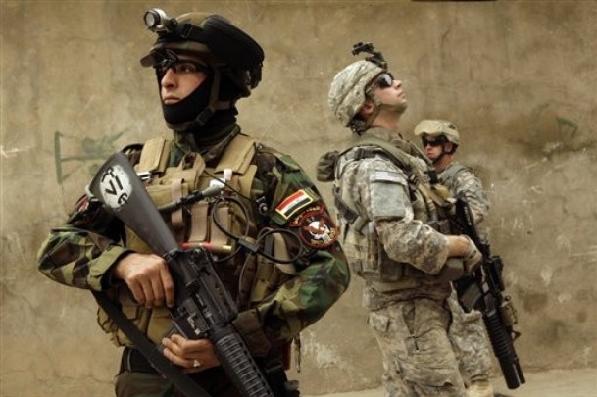
    Iraq, the newest democracy in the Middle East, turned down an invitation to attend the December 10 investiture ceremony for the Chinese Nobel Peace Prize laureate Liu Xiaobo. It thus kept company with a litany of repressive governments that declined invitations to the ceremony, including Afghanistan, Cuba, Egypt, Iran, Kazakhstan, Morocco, Pakistan, Russia, Sudan, Saudi Arabia, Serbia, Tunisia and Venezuela.

    December 22, 2010

    Turkey's Dual Track Approach Toward the Kurdistan Regional Government
    معهد الشرق الأوسط
  • التحليل
  • Turkey's Dual Track Approach Toward the Kurdistan Regional Government

    Turkey’s policy toward the Kurdistan Regional Government (KRG) in northern Iraq has undergone an important shift since 2009. Only a few years ago, Turkey did not recognize Iraq’s Kurdish Regional Government and refused to meet with its representatives in any official capacity due to its fear that recognition would embolden Turkey's own Kurdish minority to demand similar home-rule status.

    The End of the Iraqi Government Impasse?
    معهد الشرق الأوسط
  • التحليل
  • The End of the Iraqi Government Impasse?

    The government formation stalemate in Iraq—well into its seventh month and counting—may at last be nearing an end. The next few weeks could seal a deal between rival electoral blocs that will produce the next national government.

    Two scenarios with very different outcomes appear to be jockeying for rail position in the race to produce the next Prime Minister.

    September 27, 2010

    Where Does the US Stand After Its Retreat from Iraq?
    معهد الشرق الأوسط
  • التحليل
  • Where Does the US Stand After Its Retreat from Iraq?

    This piece first appeared as a op-ed in The National on August 30, 2010

    The last American combat troops rolled across the Kuwaiti border from Iraq on August 19, nearly two weeks ahead of schedule. The Obama administration has spoken of this milestone as a promise fulfilled and the first major step toward bringing a “responsible” end to the war in Iraq, setting the stage for the final withdrawal of American troops at the end of next year.

    September 1, 2010

    Culture as a Tool of War
    معهد الشرق الأوسط
  • Video
  • Culture as a Tool of War

    The Middle East Institute is proud to host Rochelle Davis, professor of Anthropology at the Center for Contemporary Arab Studies in the School of Foreign Service at Georgetown University, to discuss US military conceptions of culture and the war in Iraq.

    July 27, 2010

    US Interest Wanes in the Mission that Remains in Iraq
    معهد الشرق الأوسط
  • التحليل
  • US Interest Wanes in the Mission that Remains in Iraq

    This Commentary first appeared as an op-ed in The National, July 25, 2010.

    After the March 2003 invasion of Iraq by United States and coalition forces, a short but sharp war, and the declaration of “Mission Accomplished” aboard an American aircraft carrier, Iran felt isolated and encircled on all sides by US might. Not so today.

    Tehran has closely observed US travails in Iraq over the years, and watched with satisfaction as the US began withdrawing its forces in anticipation of a full withdrawal by the end of 2011.

    July 25, 2010

    Introduction to The State of the Arts in the Middle East: Volume VI: Creative Arab Women
  • التحليل
  • Introduction to The State of the Arts in the Middle East: Volume VI: Creative Arab Women

    Creative Arab Women is the sixth edition of the MEI Viewpoints series on the State of the Arts in the Middle East. The 14 essays in this collection offer a glimpse into the rich and varied cultural output of Arab women in the region and the diaspora. Partly reminiscences and partly calls to action, they are essays of survival and empowerment that add a deeply personal dimension to the subject of the role of Arab women as cultural producers. MEI is grateful to Dr.

    July 1, 2010