تمت ترجمة هذا النص بواسطة الذكاء الاصطناعي وقد يحتوي على أخطاء.
تخطي إلى المحتوى

Research & Commentary Results

تصفية حسب
3296 Results
The Biden Administration and the Middle East: Policy Recommendations for a Sustainable Way Forward
Photo by Jim Lo Scalzo/EPA/Bloomberg via Getty Images
  • التحليل
  • The Biden Administration and the Middle East: Policy Recommendations for a Sustainable Way Forward

    In a new policy briefing book, entitled The Biden Administration and the Middle East: Policy Recommendations for a Sustainable Way Forward, MEI scholars tackle a large number of country-specific and region-wide issue areas, laying out both the abiding U.S. interests and specific recommendations for Biden administration policies that can further U.S. interests amid a region in turmoil.

    March 10, 2021

    How is Iran responding to Biden’s policy shift on Yemen?
    Photo by Hani Al-Ansi/picture alliance via Getty Images
  • التحليل
  • How is Iran responding to Biden’s policy shift on Yemen?

    On Feb. 4, President Joe Biden announced the end of U.S. support for the Saudi Arabia-led coalition’s offensive military operations in Yemen. This decision fuelled optimism about a U.S. return to negotiations over the JCPOA with Iran. Instead of engaging with the United States, Iran has supported the Houthi-orchestrated Marib offensive and stepped up its diplomatic efforts in Yemen.

    March 9, 2021

    Iranian and Saudi women: Overcoming comparative suffering?
    الصورة من ATTA KENARE/AFP عبر Getty Images
  • التحليل
  • Iranian and Saudi women: Overcoming comparative suffering?

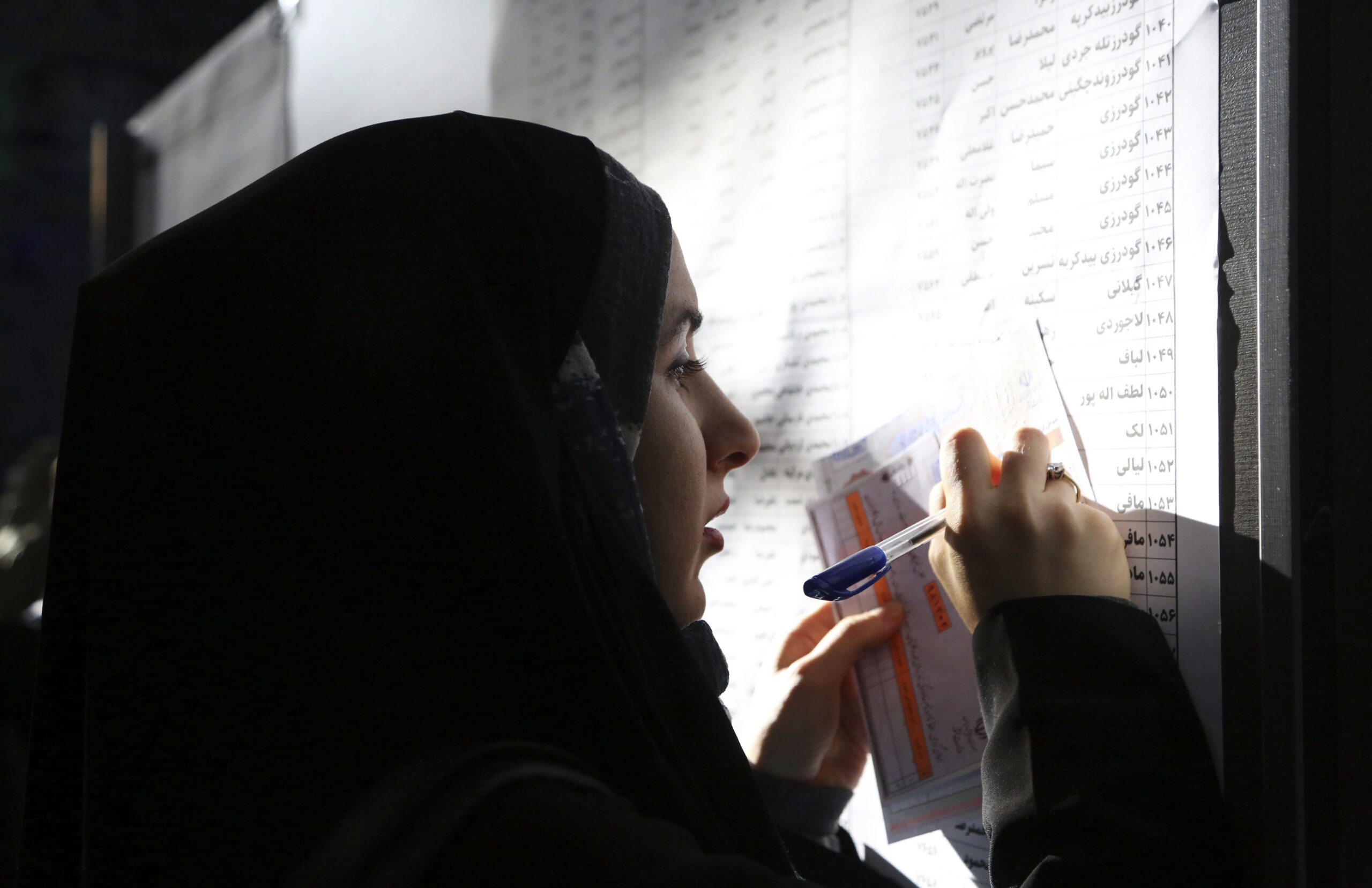
    For many decades, Iran and Saudi Arabia have been bitter rivals, but not over women. If there was a competition, it was only over whose government could impose more limitations on their female population.

    March 8, 2021

    In the face of Islamic laws, Iranian women are reappropriating Ancient Persian culture
  • التحليل
  • In the face of Islamic laws, Iranian women are reappropriating Ancient Persian culture

    Iran is an Islamic country where, according to official statistics, over 99% of the citizens are Muslim. Even though the state in Iran advocates for Islamic laws and regulations for all citizens, over 60% of Iranians identified themselves as non-Muslim according to a survey in June 2020 by the research institute “the Group for Analyzing and Measuring Attitudes in Iran” (GAMAAN). Only 32.2% of the 40.000 interviewed identified themselves as Shi‘a Muslim; 5% as Sunni Muslim; 22.2% as non-religious; 8.8% identified themselves as atheist; 7.1% as spiritual and 7.7% as Zoroastrian.

    March 3, 2021

    The source of Netanyahu’s opposition to the JCPOA
    Photo by ABIR SULTAN/POOL/AFP via Getty Images
  • التحليل
  • The source of Netanyahu’s opposition to the JCPOA

    The understandings reached between Washington and Jerusalem half a century ago establish the critical context for the Biden administration’s current effort to restore the JCPOA, which Israeli Prime Minister Benjamin Netanyahu fiercely opposed during its adoption by the U.N. Security Council in July 2015 and which he still bitterly contests today.

    March 3, 2021

    What will the Middle East look like in 2030? An Israeli Perspective
  • التحليل
  • What will the Middle East look like in 2030? An Israeli Perspective

    The following article addresses the question of how the Middle East might develop in the coming decade. Long-term and detailed strategic predictions are a thankless task and are often doomed to failure. Therefore, this article refrains from attempts at prophecy but deals instead with “thinking about the future.” It opens with an analytical framework for scenario development, supplemented by “trends impact” and “horizon scanning.” The second section studies “the futures of the past,” in terms of what we might learn about the pitfalls of future projection and scenario-building from those outlining possible futures for 2020 from years past. Then, on the basis of the first two sections, four scenarios elaborate some distinctly different pathways that the Middle East might take to 2030. Finally, the article concludes with several key takeaways for Israeli decision makers.

    March 1, 2021

    Why Biden shouldn’t seek to deprive Iran of conventional deterrence
    الصورة من مورتزا نيكوبزل/نورفوتو عبر غيتي إيمدجز
  • التحليل
  • Why Biden shouldn’t seek to deprive Iran of conventional deterrence

    Earlier in February, Iran’s minister of intelligence, Mahmoud Alavi, signaled that if the U.S. continues provoking the country, Tehran might lash out like a “cornered cat” and consider the nuclear option. Will Joe Biden’s late reentry into the JCPOA and the expected resulting increase in tensions influence Iran’s strategic logic on nuclear weapons? A look back at the history of Iran’s decision making on the issue suggests that shifts in military threat assessments are as important as technical developments when it comes to Tehran’s nuclear strategy.

    February 25, 2021

    Iran’s cyber future
    الصورة من ATTA KENARE/AFP عبر Getty Images
  • التحليل
  • Iran’s cyber future

    Iran’s attempts to achieve cyber dominance both within the MENA region and around the world have been well documented, particularly its efforts to spread pro-Iranian messaging and “tell Iran’s story.” This strategy is shaped by the challenging international context facing Tehran, which is suffering economically under U.S. sanctions and largely constrained from purchasing weapons under a recently expired U.N. arms embargo.

    February 23, 2021

    Preventing the next crisis in U.S.-Israeli relations
    Photo by DEBBIE HILL/AFP via Getty Images
  • التحليل
  • Preventing the next crisis in U.S.-Israeli relations

    There was little daylight between Washington and Jerusalem during the four years of Donald Trump’s presidency. The new U.S. administration under President Joe Biden appears poised — based on staffing decisions and declared policies — to revert to a U.S. policy in the Middle East that more closely resembles that of Obama. Meanwhile, Netanyahu, who fought bitterly and publicly against Obama’s policies regarding the Israeli-Palestinian conflict and the Iran nuclear issue, remains at the helm in Israel. The stage may be set for a sequel of the acrimonious relationship between Jerusalem and Washington.

    February 23, 2021

    Palestinian Refugees: Myth vs Reality
  • التحليل
  • Palestinian Refugees: Myth vs Reality

    On January 14, 2021, outgoing Secretary of State Mike Pompeo tweeted about Palestinian refugees, proclaiming “(less than) 200,000 Arabs displaced in 1948 are still alive and most others are not refugees by any rational criteria.” A month earlier, on December 11, a group of 22 Republican members of Congress sent a letter to President Trump requesting that he instruct the Bureau of Population, Refugees and Migration to declassify a report on the approximate number of Palestinian refugees, with the intention of redefining and disenfranchising millions of Palestinian refugees of their refugee status. The intent behind the request is made evident by the letter, which states, “The issue of the so-called Palestinian ‘right of return’ of 5.3 million refugees to Israel as part of any ‘peace deal’ is an unrealistic demand, and we do not believe it accurately reflects the number of actual Palestinian refugees

    February 22, 2021