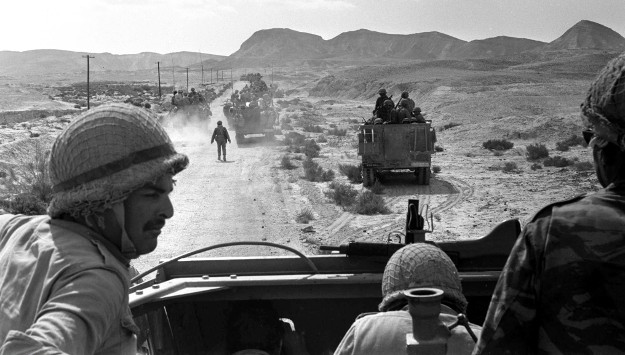
My day job is as a Professor of Israel Studies at the University of Maryland; every fall I teach a large course entitled “Fundamental Questions of the Israeli/Palestinian Conflict.” A few years ago I was lecturing about the 1973 Yom Kippur War and explained that, as I see it, the war was essentially as a draw, in which Egypt and Israel both lost and won.
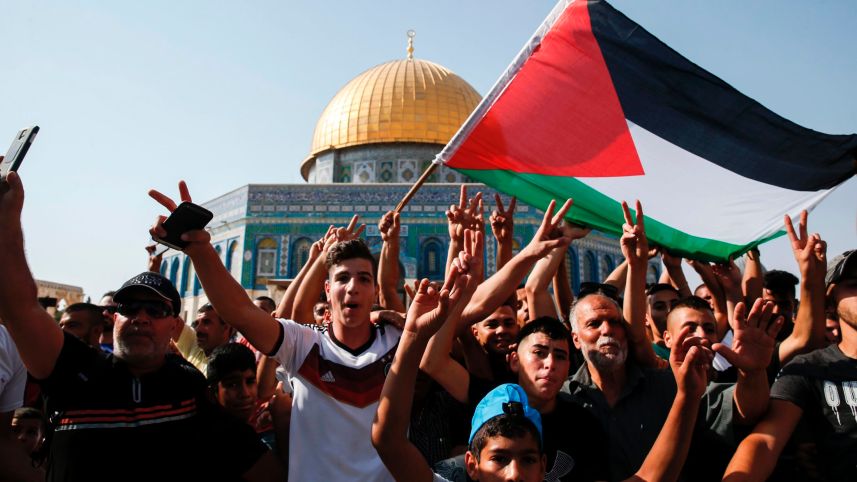
Netanyahu's Shrewd Political Game Behind Jerusalem Violence
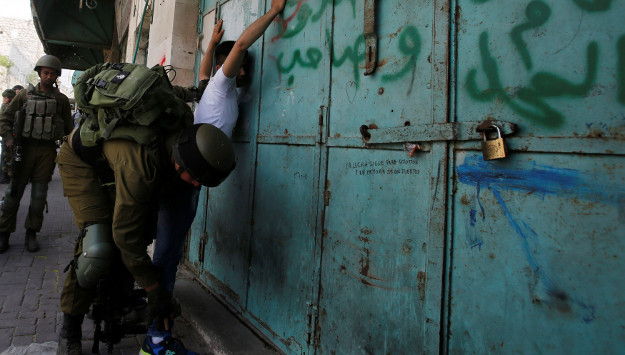
Jerusalem’s Old City is a tinderbox that could set off a regional conflagration. This is a demonstrably true statement: when Ariel Sharon, then an opposition politician, stood surrounded by security guards on the steps in front of the Dome of the Rock in September 2000, and proclaimed that it would remain in Israeli hands forever, the consequence of his populist blustering was the Second Intifada.
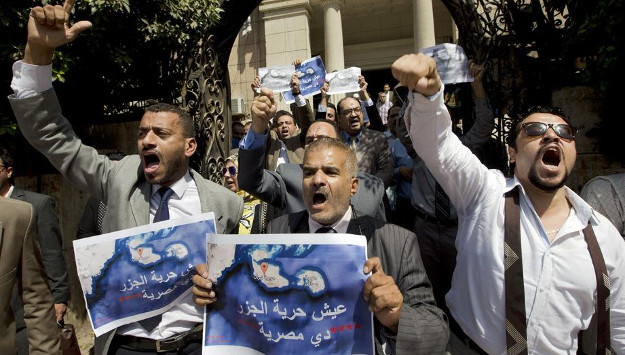
Red Sea Islands Deal Undermines Arab Peace Initiative
The Saudi-led Arab Peace Initiative is losing its value in the wake of Egypt’s decision to return the Red Sea islands of Tiran and Sanafir to Saudi Arabia, and the latter’s participation as a security guarantor of the Egypt-Israel peace treaty.
Last month, the Egyptian parliament, bucking widespread public and institutional opposition, acknowledged Saudi sovereignty over the islands.
Most attention has focused on the dispute over sovereignty, which has been under Egyptian administration for more than half a century. But the real significance of the deal lies elsewhere.
U.S. Absent as Israel-Palestine Violence Escalates | Monday Briefing
In this week’s Monday Briefing, MEI experts Eran Etzion, W. Robert Pearson, Charles Lister, Alex Vatanka, and Randa Slim weigh in on the implications of Israel-Palestinian violence for U.S. foreign policy, Turkish involvement in the Gulf crisis, al-Qaeda’s response to the U.S. decision to terminate support for a program arming anti-Assad Syrian rebels, confrontational U.S. policy towards the Iran nuclear deal, and a former Iraqi Prime Minister’s power play.
Yemenite pop music has seen a resurgence. The band A-Wa (pronounced “ai-wah,” informal Arabic for “yes!”) and their infectious blend of Yemenite folk, electronic, and hip-hop music can be heard all over the world—from Cairo taxi cabs to Dubai pool parties and Parisian nightclubs. The band, whose mission is to elevate Yemenite music on the international stage, is composed of three Israeli sisters of Yemenite heritage.
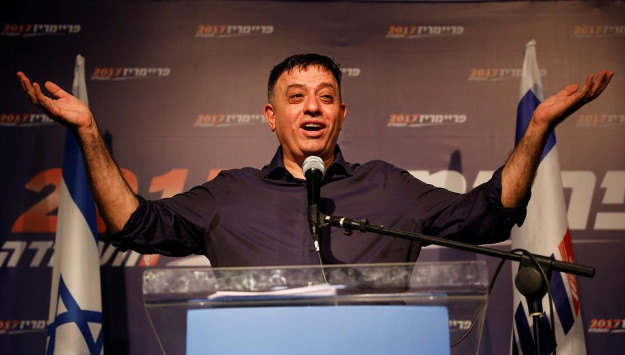
Avi Gabbay, the new leader of Israel’s Labor party, stormed through his first primaries with surprising ease. Fifty-two percent of the 30,000 actual voters decided to crown the new contender, who only joined their party seven months ago. Gabbay, a former minister for environmental protection in Netanyahu’s government and a member of the center-right “Kulanu” (“All of Us”) party, had resigned in May 2016, citing “wrongdoings” in connection with the government’s natural gas policies.
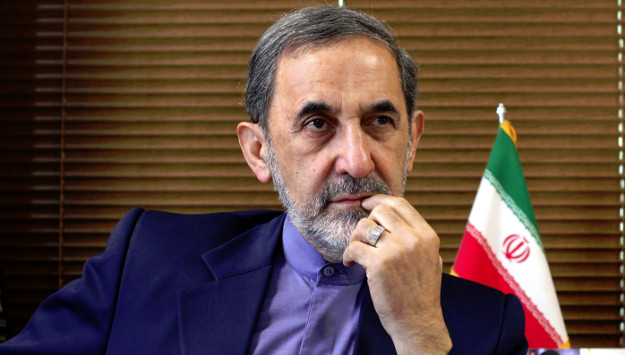
Iran’s Islamic Azad University Plans to Open New Branches in Lebanon and Iraq
Iran’s Islamic Azad University (IAU) plans to open new branches in Lebanon and Iraq, according to Ali Akbar Velayati, the head of the university’s board of founders and an influential political figure in the Islamic Republic.
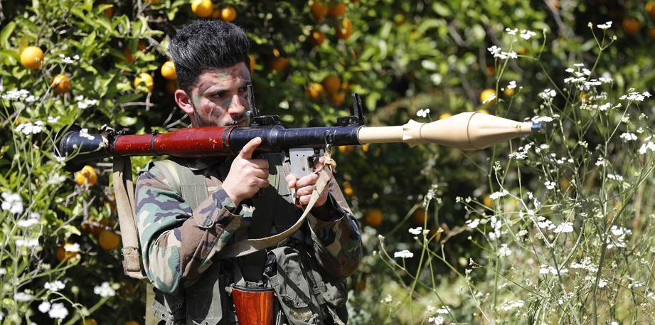
Israel and Hezbollah have recently raised the profile of their long quiescent front across the Blue Line border. Warnings have increased that a conflict will soon engulf Lebanon, and perhaps even draw in the United States. Hezbollah’s leader Hassan Nasrallah has threatened to attack Israel’s nuclear reactor at Dimona and Israeli chemical installations in Haifa.
It is said that a picture is worth a thousand words, presumably for what it depicts, but what is the value of what a picture doesn’t show? To some, it is nothing; for others, it is everything.
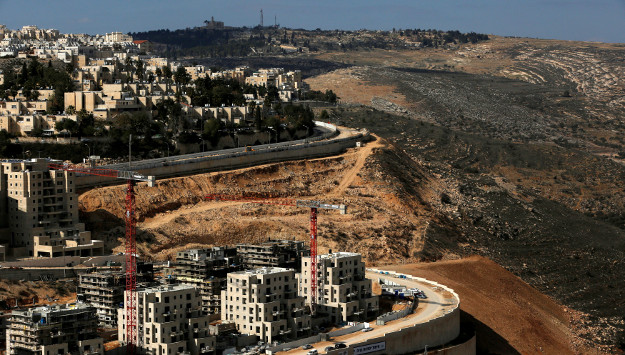
Israel to Announce Settlement Expansion | Monday Briefing
In this week’s Monday Briefing, MEI experts Yousef Munayyer, Randa Slim, and Paul Salem provide analysis on recent and upcoming events including Israel’s expected announcement of new settlement expansion, the escalating risk of a clash between U.S.-backed and pro-Iranian forces in southeastern Syria, and Lebanon’s efforts to pass a reformed election law.
The election of Emmanuel Macron is certainly bad news for terrorist organizations in the Middle East. At the same time, it is unlikely that France will modify its attitude in regards to larger regional challenges, for instance, the ongoing Syrian civil war, the Israeli-Palestinian conflict, or the cold war between Iran and Saudi Arabia.
Monday Briefing: Chances for MidEast Peace Remote under Trump
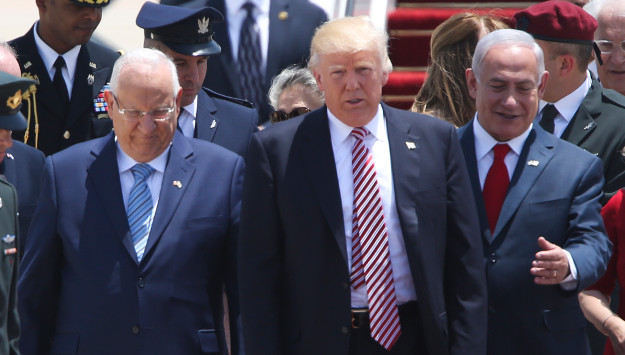
In this week’s Monday Briefing, MEI experts Yousef Munayyer, Alex Vatanka, Jonathan M. Winer, and Marvin G. Weinbaum provide analysis on recent and upcoming events including President Trump’s trip to Israel and the prospects for a peace process, the reelection of Iranian President Hassan Rouhani, Russia’s planned naval drill off the coast of Libya this week, and the Afghan Taliban’s decision to reject peace talks.