Will US sanctions bring Iran back to the negotiating table?
In this week’s Monday Briefing, MEI experts Ahmad Majidyar, Gerald Feierstein, and Charles Lister provide analysis on the first batch of U.S. sanctions on Iran, leaked emails that may undermine the Trump administration’s Mideast peace plan, and the assassination of a Syrian military scientist.
Will US sanctions bring Iran back to the negotiating table?
In this week’s Monday Briefing, MEI experts provide analysis on Secretary Pompeo’s speech on Iran, Erdogan’s decision to lift Turkey’s state of emergency, the cease-fire in Gaza, Iran’s continued threat in Syria, Trump’s tweets on Iran, and Vice President Dostum’s return to Afghanistan.
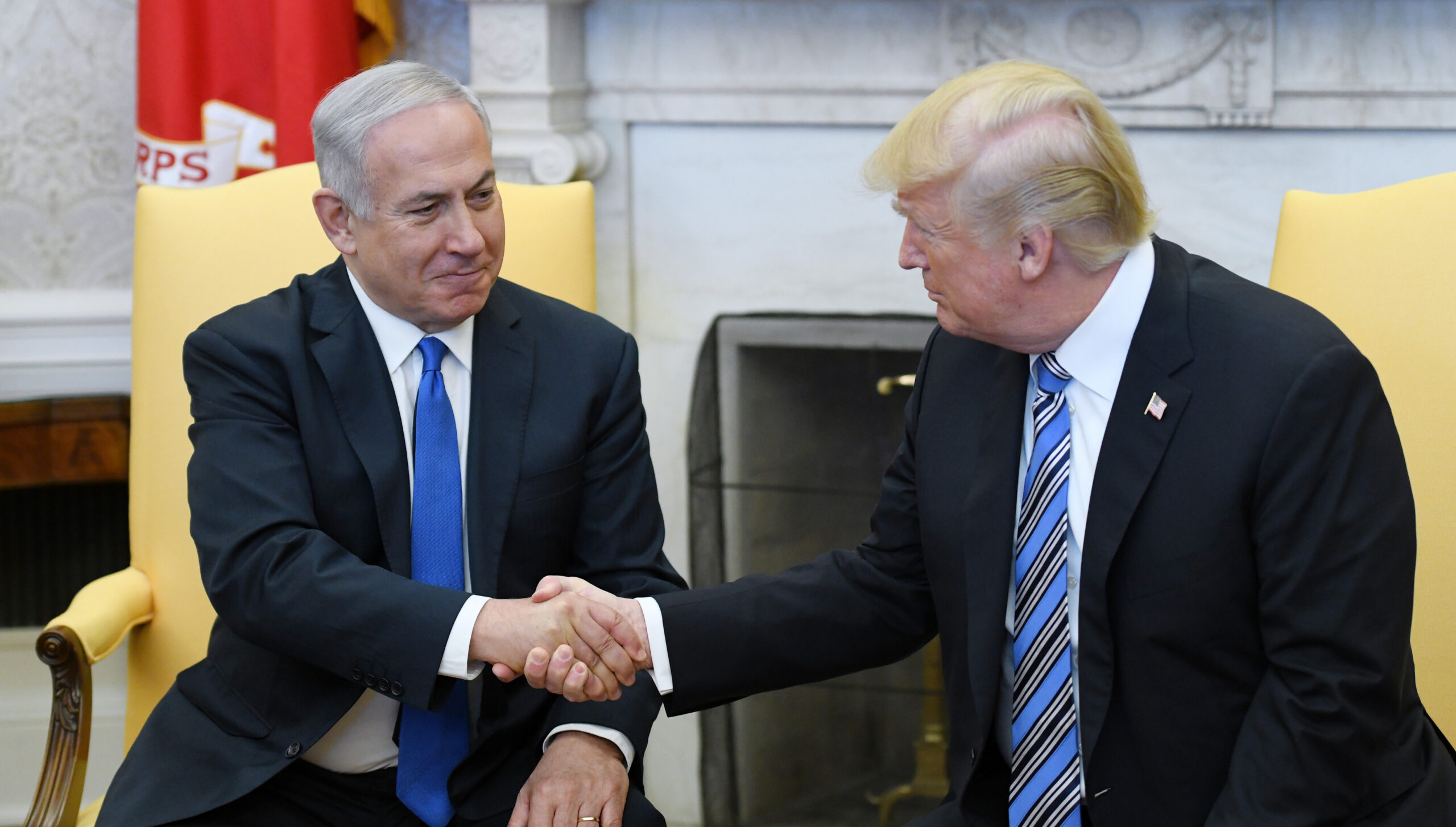
Netanyahu's ambition a test for US-Israel relations
After U.S. Vice President Mike Pence laid out the Trump administration’s agenda in a speech earlier this year before Israel’s parliament, the Knesset, one attendee asked, “was that the messiah or the vice president of the United States?”
This article aims to put a spotlight on the status of Judaism in China and the actors who promote its agendas. It discusses Chinese and Israeli attempts to promote Judaism within China. And it shows that Chinese authorities, owing to domestic and foreign policy considerations, appear committed to leaving the status of the Jewish religion within the country unchanged.
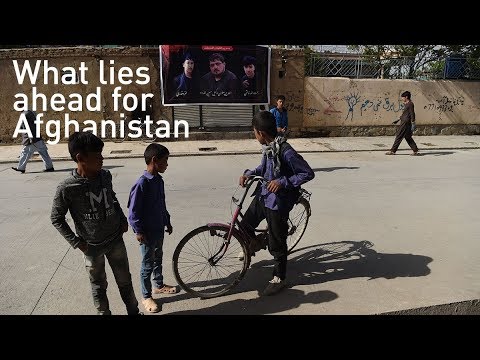
What lies ahead for Afghanistan: the various scenarios
The way forward in Afghanistan seems as unclear as it has ever been. An outright military victory against the Taliban and other insurgent groups appears to be unachievable. The prospect of insurgents overrunning the country soon appears similarly unlikely. At the same time, a negotiated peace seems presently improbable. At least on terms outlined by the Kabul government and international community, the Taliban shows little interest in reconciliation.
Hamas supports Gaza’s protest movement—and that’s a good thing
My first in-depth conversation on nonviolence with Hamas leader Khaled Meshaal came in the months before the Arab Spring uprisings, when the latter was still chairman of Hamas’s politburo.
Sitting in his Damascus office, Meshaal underscored that Hamas was open to any strategy that would advance Palestinian self-determination, including nonviolence—“if it would work.”
Sino-Israeli Security Relations: In America’s Shadow
Much has been written about the Sino-Israeli relationship, mainly regarding political and economic ties. However, the security dimension of the relationship has received comparatively less attention. This article discusses Sino-Israeli security relations in an effort to shed light on their roots, substance and prospects despite Israel’s commitment to its relations with the United States.
Trump’s Jerusalem decision destabilizing West Bank and Gaza | Monday Briefing
In this week’s Monday Briefing, MEI experts Nathan Stock, Alex Vatanka, Ruba Husari, and Gonul Tol provide analysis on recent and upcoming events including the fallout from President Trump’s decision to recognize Jerusalem as Israel’s capital, Iran’s diplomatic efforts with Europe to keep the nuclear deal alive, how Iran’s other trading partners are responding to U.S. warnings of sanctions, and Britain’s efforts to cultivate closer ties with Turkey.
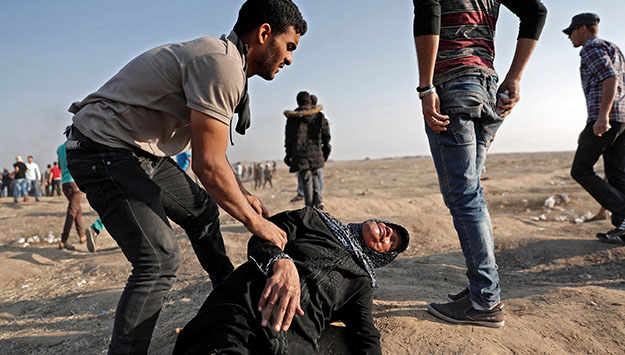
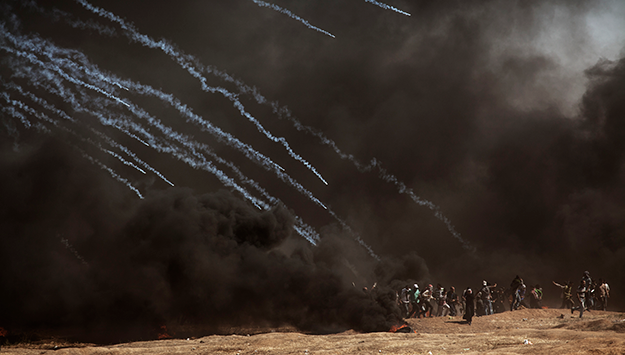
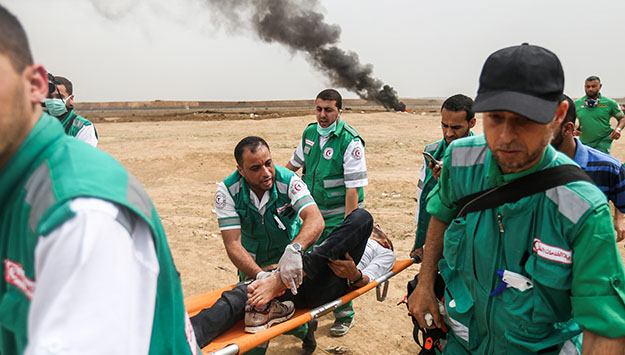
In recent weeks, mass demonstrations in Gaza, near the Israel-Gaza fence, have resulted in large numbers of casualties, reportedly 44 dead and several thousand wounded.
In this week’s Monday Briefing, MEI experts Charles Lister, Gerald Feierstein, W. Robert Pearson, and Marvin G. Weinbaum provide analysis on recent and upcoming events including the escalating deterrence between Israel and Iran, Pompeo’s pressure to resolve the Gulf crisis, Turkey’s increasing isolation, and the Pashtun protests in Pakistan.
In this week’s Monday Briefing, MEI experts Gonul Tol, Paul Salem, Nathan Stock, Alex Vatanka, Gerald Feierstein, and Marvin G. Weinbaum provide analysis on recent and upcoming events including upcoming snap elections in Turkey, Lebanon’s Free Patriotic Movement party, protests in Gaza, the future of the Iran nuclear deal, Yemeni peace talks, and the ISKP attack on Shiite Hazaras.
Amb. Robert Ford and Charles Lister join host Paul Salem to discuss last week’s U.S. airstrikes in Syria in response to the Assad government’s ongoing use of chemical weapons, what the Trump administration is signaling about America’s plans there, and the escalating standoff between Israeli and Iranian forces in the country.
In this week’s Monday Briefing, MEI experts Charles Lister, Gonul Tol, Paul Salem, Alex Vatanka, and Marvin G. Weinbaum provide analysis on recent and upcoming events including the Syria strikes, Turkey’s Assad paradox, the Arab League summit, EU’s view of the Iran nuclear deal, and clashes along the Afghanistan-Pakistan border.