This text has been translated by AI and may contain errors.
Skip to Content

Research & Commentary Results

Filter by
1407 Results
Saudi makes cautious moves in Yemen, but remains far from a settlement
Saudi soldiers stand guard as a Saudi air force cargo plane, carrying aid, lands at an airfield in Yemen's central province of Marib, on February 8, 2018.
  • Commentary
  • Saudi makes cautious moves in Yemen, but remains far from a settlement

    The Saudis made their first cautious moves to disentangle themselves from Yemen but remain far from any settlement. In response to an earlier announcement of a unilateral ceasefire by the Houthis on the fifth anniversary of their entrance into Sanaa, Saudi Crown Prince Mohammad bin Salman said that a settlement in Yemen would be far easier if the Houthis abandoned their Iranian backers. His comments come after the Saudis announced a partial ceasefire covering some areas in Yemen, but Saudi planes attacked Houthi positions in northern Yemen along the border as if to emphasize that it is only a partial ceasefire.

    September 30, 2019

    The Syria Study Group gets the problem right, but falls short on solutions
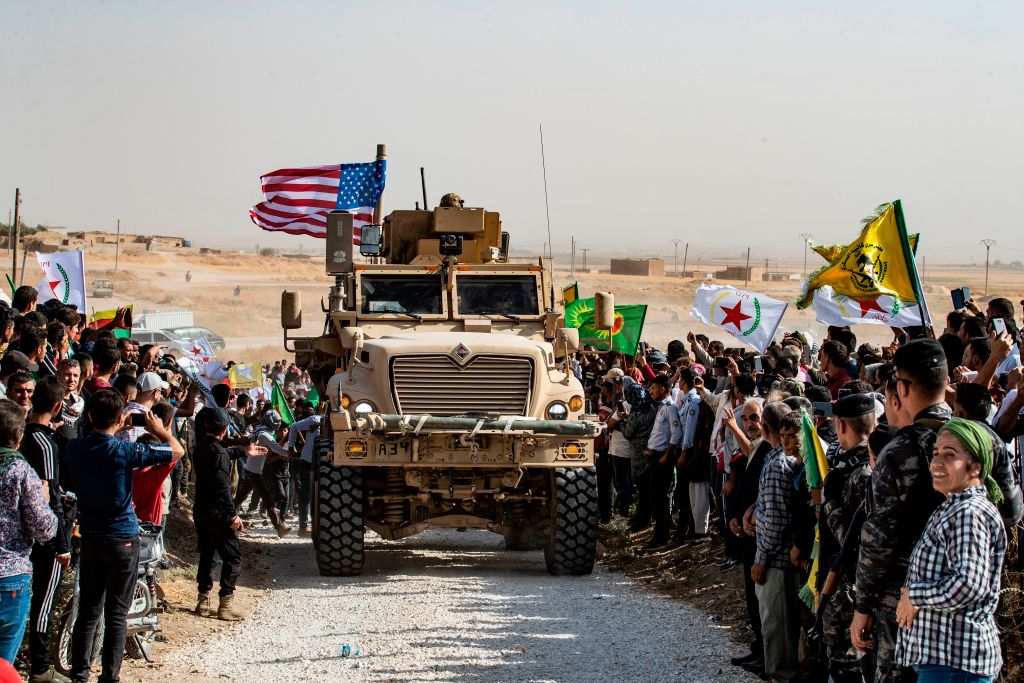
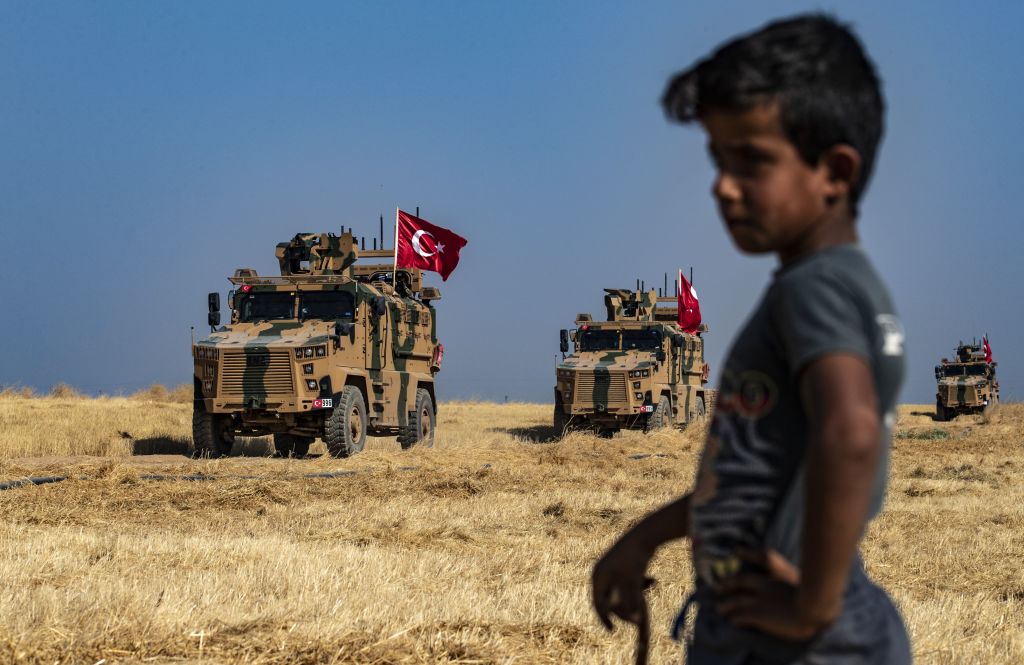
    A US military convoy takes part in joint patrol with Turkish troops in the Syrian village of al-Hashisha on the outskirts of Tal Abyad town along the border with Turkish troops, on September 8, 2019.
  • Commentary
  • The Syria Study Group gets the problem right, but falls short on solutions

    In its final report, the congressionally-mandated Syria Study Group (SSG) provided a bleak but wholly realistic assessment of the state of the crisis in Syria. When it comes to policy prescriptions, however, the SSG falls short. Despite clearly identifying the “means and ends” gap as one of two core problems with U.S. policy in Syria, the “recommendations” suggested by the SSG differ little, if at all, from those already in place.

    The UN deliberately (albeit mistakenly) accorded sovereignty to post-Gadhafi Libya’s economic institutions
    Libya's General National Congress (GNC) deputy president Saleh al-Makhzoum (C-R), the new national government head, Prime Minister, Fayez al-Sarraj (C) and the head of the Tobruk-based House of Representatives Mohammed Ali Shoeb (C-L) celebrate after signing a deal on a unity government on December 17, 2015, in the Moroccan city of Skhirat.
  • Analysis
  • The UN deliberately (albeit mistakenly) accorded sovereignty to post-Gadhafi Libya’s economic institutions

    The crux of today’s Libya problem in international foreign policy lies in an underappreciated UN misstep in the most important international treaty concerning Libya, the 2015 Skhirat Agreement, and the decision to vest sovereignty in the heads of independent and semi-independent sub-state institutions like the Central Bank of Libya. The negative implications of this decision must now be addressed and it is time to move onto something new, after Skhirat.

    September 26, 2019

    What’s next after the sudden death of the Afghan peace process?
     Afghan workers move ballot boxes to trucks getting ready for the Presidential elections in five days in Kabul, Afghanistan on September 23, 2019.
  • Analysis
  • What’s next after the sudden death of the Afghan peace process?

    In the end, it all fell apart rather quickly. Instead of a long-awaited announcement about the details of a U.S.-Afghan Taliban peace deal, on Sept. 7 President Donald Trump tweeted that the talks were off, adding shortly afterwards that the Afghan peace process was “dead.” Only days earlier, Washington’s special representative for Afghanistan, Zalmay Khalilzad, had announced a draft agreement had been reached after nine rounds of gruelling negotiations.

    September 25, 2019

    For Saudi Arabia, what now?
  • Analysis
  • For Saudi Arabia, what now?

    Riyadh has military options for retaliating against Iran. The Trump administration needs to persuade Saudi leaders not to use them.

    September 23, 2019

    US considers a second cyber attack on Iran
    he seals of the U.S. Cyber Command, the National Secrity Agency and the Central Security Service greet employees and visitors at the campus the three organizations share March 13, 2015 in Fort Meade, Maryland.
  • Commentary
  • US considers a second cyber attack on Iran

    The Trump administration is reportedly considering launching another cyber attack against Iran to deter it from further aggression in the region.

    September 23, 2019

    How Libya’s economic structures enrich the militias
    Members of the Tripoli Protection Force, an alliance of militias from the capital city, patrol an area south of the Libyan capital on January 18, 2019, during clashes with the Seventh Brigade group from the town of Tarhuna.
  • Analysis
  • How Libya’s economic structures enrich the militias

    Largely overlooked in international policymaking toward Libya’s current conflict is the role of corruption as a key driver of violence, as opposed to merely its byproduct. The high-level debate on Libya at the UN General Assembly (UNGA) in late September and the proposed follow-on international conference to be hosted by Germany in October or November are the perfect opportunities to correct this oversight.

    September 23, 2019

    From regime change to rapprochement? Turkey’s shifting Syria policy
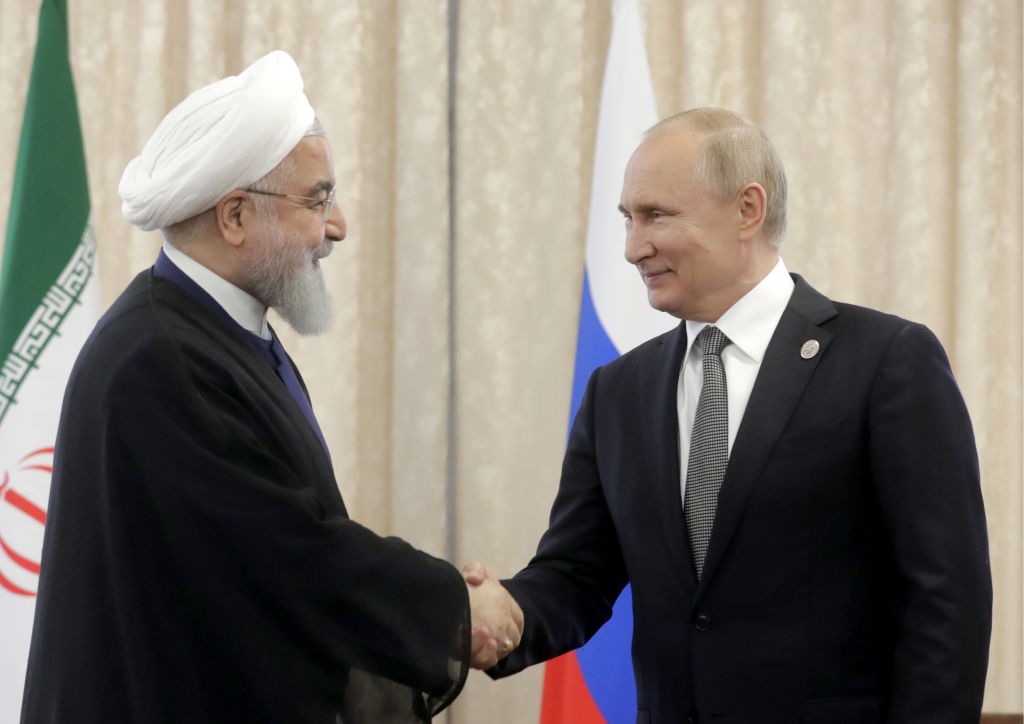
    President of Turkey Recep Tayyip Erdogan (C), President of Russia Vladimir Putin (L) and President of Iran Hassan Rouhani (R) shake hands as they pose for a photo after a joint press conference following the Turkey-Russia-Iran trilateral summit at Cankaya Mansion in Ankara, Turkey on September 16, 2019.
  • Analysis
  • From regime change to rapprochement? Turkey’s shifting Syria policy

    At a trilateral summit in Ankara earlier this week, President Recep Tayyip Erdogan sat back and ate treats as Iranian President Hassan Rouhani told the world that efforts to topple the Assad regime have failed. The scene was a stark reminder of how far Turkey’s Syria policy has shifted.

    An attack against all in the Middle East
    Smoke billows from an Aramco oil facility in Abqaiq about 60km (37 miles) southwest of Dhahran in Saudi Arabia's eastern province on September 14, 2019.
  • Analysis
  • An attack against all in the Middle East

    Saudi Arabia is under direct assault, and America’s response is muted. Despite U.S. President Donald Trump’s verbal threats against Iran, which is behind the attack, he’s not seriously contemplating using force. What’s most urgent now for U.S. policymakers is how to prevent this from happening again and how to most effectively defend U.S. partners from aggression in this still vital part of the world.

    September 19, 2019

    New leadership and new challenges for Saudi Arabia's oil industry
    Saudi and Foreign investors stand in front of the logo of Saudi state oil giant Aramco during the 10th Global Competitiveness Forum on January 25, 2016, in the capital Riyadh. The an annual event brings together high-ranking Saudi officials and world business leaders. / AFP / Fayez Nureldine (Photo credit should read FAYEZ NURELDINE/AFP/Getty Images)
  • Analysis
  • New leadership and new challenges for Saudi Arabia's oil industry

    Saudi Arabia surprised the global oil and gas industry earlier this month by reshuffling its top two energy positions. Long-serving technocrat Khalid al-Falih was ousted as chair of Saudi Aramco one day and as head of the Ministry of Energy the next.

    September 17, 2019

    Russia, Iran, and the competition to shape Syria’s future
    Russian President Vladimir Putin (L) and Iranian President Hassan Rouhani (R) attend the trilateral summit to discuss progress on Syria, between the Presidents of Turkey, Russia and Iran on November 22, 2017 in Sochi, Russia.
  • Analysis
  • Russia, Iran, and the competition to shape Syria’s future

    One important dynamic that is not acknowledged enough is the intensifying competition between Russia and Iran to determine the future shape of Syria and their position in it. While the very real competitive dynamic between Moscow and Tehran will never transition to hostility, it is beginning to have a very real effect on the evolution of major aspects of the crisis — from active conflict theaters, to the structures of the state, control over resources, and the prospect of intra-state conflict on Syrian soil.

    Is it too late to save Lebanon from financial collapse?
    A demonstrator argues with riot police guarding the entrance of the Lebanese Central Bank during a protest by retired Lebanese army and security personnel as part of a preemptive strike against austerity measures in the 2019 draft state budget that might affect their retirement wages.
  • Analysis
  • Is it too late to save Lebanon from financial collapse?

    Things seem to be going from bad to worse for Lebanon’s economy. On Aug. 23 Fitch downgraded its credit rating to CCC, meaning both it and Moody’s now rate the country’s bonds as junk. Ten days later, on Sept. 2, Lebanon’s top officials and bankers declared the country was in a state of economic emergency and said emergency measures would be taken.

    September 6, 2019

    A shifting development paradigm for the Middle East and North Africa
    A picture taken on December 12, 2017 shows an elevated view of al-Attaba district on the edge of downtown Cairo, Egypt.
  • Analysis
  • A shifting development paradigm for the Middle East and North Africa

    Economic development paradigms have shifted focus over past decades: from minimizing imports to encouraging exports as the path to prosperity. Individual countries in the Middle East and North Africa (MENA) have had little success under either paradigm — the result being stagnant economies and high unemployment, especially among young people. Perhaps now is the time for MENA countries to follow a different path and focus on harnessing the power of their collective domestic demand to foster economic development.

    September 5, 2019