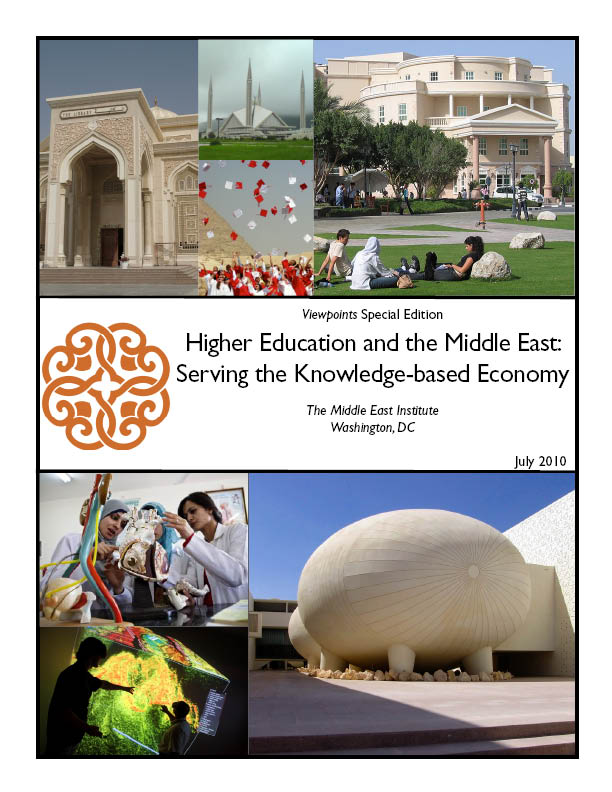
Higher Education and the Middle East: Serving the Knowledge-based Economy
This is the first of three volumes examining the internationalization of higher education and the Middle East. The 12 essays included in this volume explore some of the changes that are taking place and the challenges that lie ahead as Middle Eastern countries seek to build sustainable higher education systems and strengthen their economies. Within the dynamic global higher education landscape, is the Middle East a stagnant backwater or a center of creative initiative? What are, and should be the roles of foreign partners and providers?
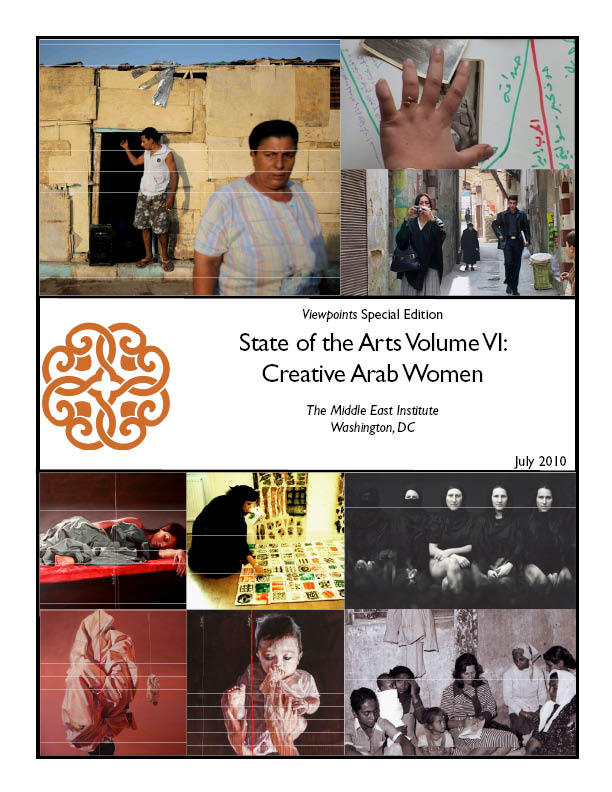
Introduction to The State of the Arts in the Middle East: Volume VI: Creative Arab Women
Creative Arab Women is the sixth edition of the MEI Viewpoints series on the State of the Arts in the Middle East. The 14 essays in this collection offer a glimpse into the rich and varied cultural output of Arab women in the region and the diaspora. Partly reminiscences and partly calls to action, they are essays of survival and empowerment that add a deeply personal dimension to the subject of the role of Arab women as cultural producers. MEI is grateful to Dr.
United States Will Pay a Heavy Price for the Gaza Flotilla Incident
Asserting its need to be secure from future terrorism launched from Gaza, Israel used force last week to maintain a blockade that has been creating a humanitarian cataclysm for the people of Gaza. In the early days following the attack on the aid flotilla, the Israeli military interpretation of events dominated much of the popular media coverage in the United States. Gradually, though, attention shifted to the incident’s negative impact on Israel’s international standing and the security implications of continued international and regional uproar.
Turkey and the Middle East: Ambitions and Constraints
Hugh Pope, Turkey/Cyprus Project Director for the International Crisis Group (ICG), discussed the issue of recent speculation regarding Turkey’s “shift away from the West.”
Turkey and Israel: What Lies Behind the Recent Volte Face
In recent months, the Israeli-Turkish relationship, strong and stable during the 1990s, has been placed under severe pressure. Tensions began in January 2009 when Israel launched military operations in Gaza, later prompting Turkish Prime Minister Recep Tayyip Erdogan to walk out of a televised debate with Israeli President Shimon Peres following a heated exchange over the issue.
This Commentary first appeared as an op-ed on BitterLemons-International.org, October 22, 2009
Syria could not be more ecstatic at the row that has recently developed between Turkey and Israel. Turkey, once among Israel's staunchest allies, now sees eye-to-eye with Syria regarding the difficulties in dealing with Israel and Israel's abusive treatment of Palestinians.
Liberal Enclaves: A Royal Attempt to Bypass Clerical Power
Within the first months of ‘Abdullah’s term as King, the Saudi government pursued a number of policies to improve the Kingdom’s economic profile. Saudi Arabia became a member of the World Trade Organization (WTO) and the limits were raised on foreign stakes in sectors such as banking, telecommunications services, wholesale, retail, and franchising. These reforms were intended to answer the economic priorities of diversifying from dependence on oil revenues, finding jobs for young Saudis, and opening up foreign investment.
Even Saudi film production has revived recently, following the move of Saudi Television empires such as Rotana and ART to cinematic production. This comes after more than two decades of suppression by conservative Islamist groups who prohibited film screenings to Saudi citizens. In 2005, the Kingdom saw the opening of the first movie theatre in Riyadh, followed by the release of a couple of Saudi films with Saudi actors. The first Saudi production was Zelal Assamt (2006), followed by the film Keif al Hal.
It was in the summer of 1979 that Islam in Saudi Arabia became all about women. At the urging of ‘Abd al-‘Aziz bin Baz, then chair of the Department of Religious Guidance, Legal Rulings, and Propagation of the Faith, Interior Minister Prince Nayf sent a letter to government offices asking for cooperation in curbing practices offensive to Islamic principles. At the top of the list of condemnable behaviors were unsuitably dressed foreign women shopping or eating out in public.