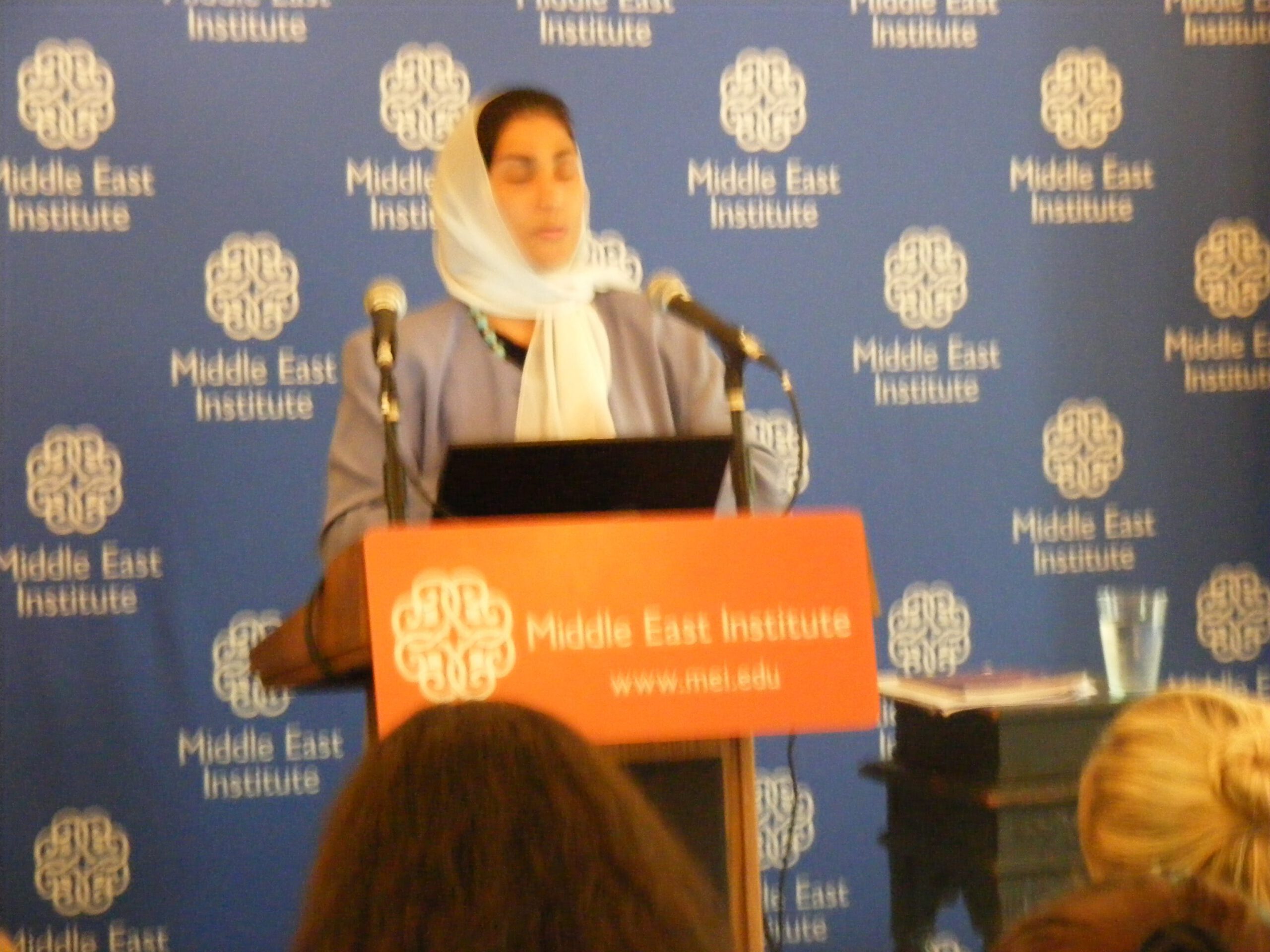
The Middle East Institute is pleased to host poet, writer and activist Nimah Nawwab for a conversation about Saudi women in an era of unprecedented change in the Middle East. Despite the many advances of the Arab Spring, the region continues to face mounting social, political, and economic challenges. In Nawwab's native Saudi Arabia, these challenges form the basis for her art and activism.
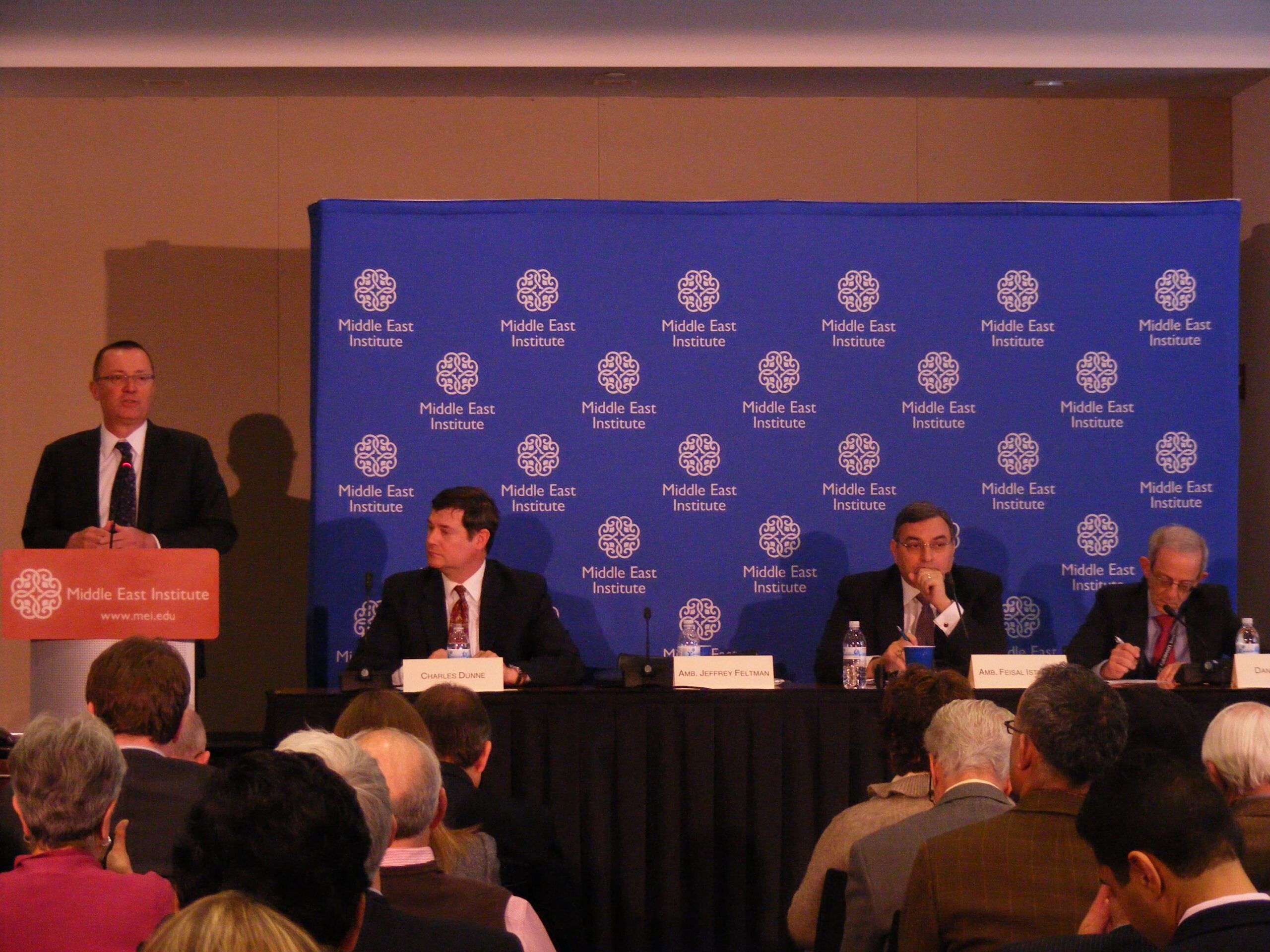
Panelists will explore both the challenges and opportunities presented by the transition of the U.S.-Iraqi partnership from a mainly military to a diplomatic one. What sort of working relationship is emerging between the U.S. and Iraqi governments? What kind of cooperation is taking place in the areas of domestic and regional security, diplomacy, trade, energy, and reform? How has the troop drawdown affected U.S. influence in Iraq and the region in general? Feltman, Istrabadi and Serwer will explore strategies and policies resulting from the new bilateral dynamics.
A View From the Gulf: A Discussion of Gulf Politics and Security
The Middle East Institute is proud to host Gulf Research Center experts Abdulaziz Sager, Mustafa Alani, and Christian Koch for an examination of recent developments in the Gulf in the wake of the Arab Spring. The speakers will address the crises in Yemen and Bahrain, US-Gulf relations and the question of reform in the region.
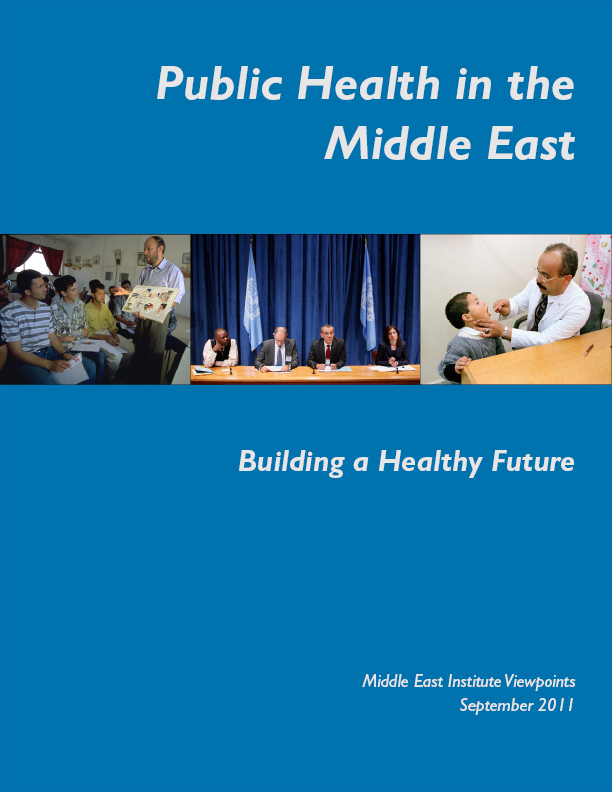
Introduction to Public Health in the Middle East: Building a Healthy Future
Originally posted September, 2011
The flow of ideas, people, and commerce across national boundaries has been occurring with breathtaking rapidity in the broader Middle East, as elsewhere. These increasingly dense exchanges have generated new threats and vulnerabilities that have tended to impact women, children, and the poorest members of society disproportionately. They also have given people more resources and opportunities with which to shape their lives and their futures.
Reflections on the Role of American Universities in the Middle East
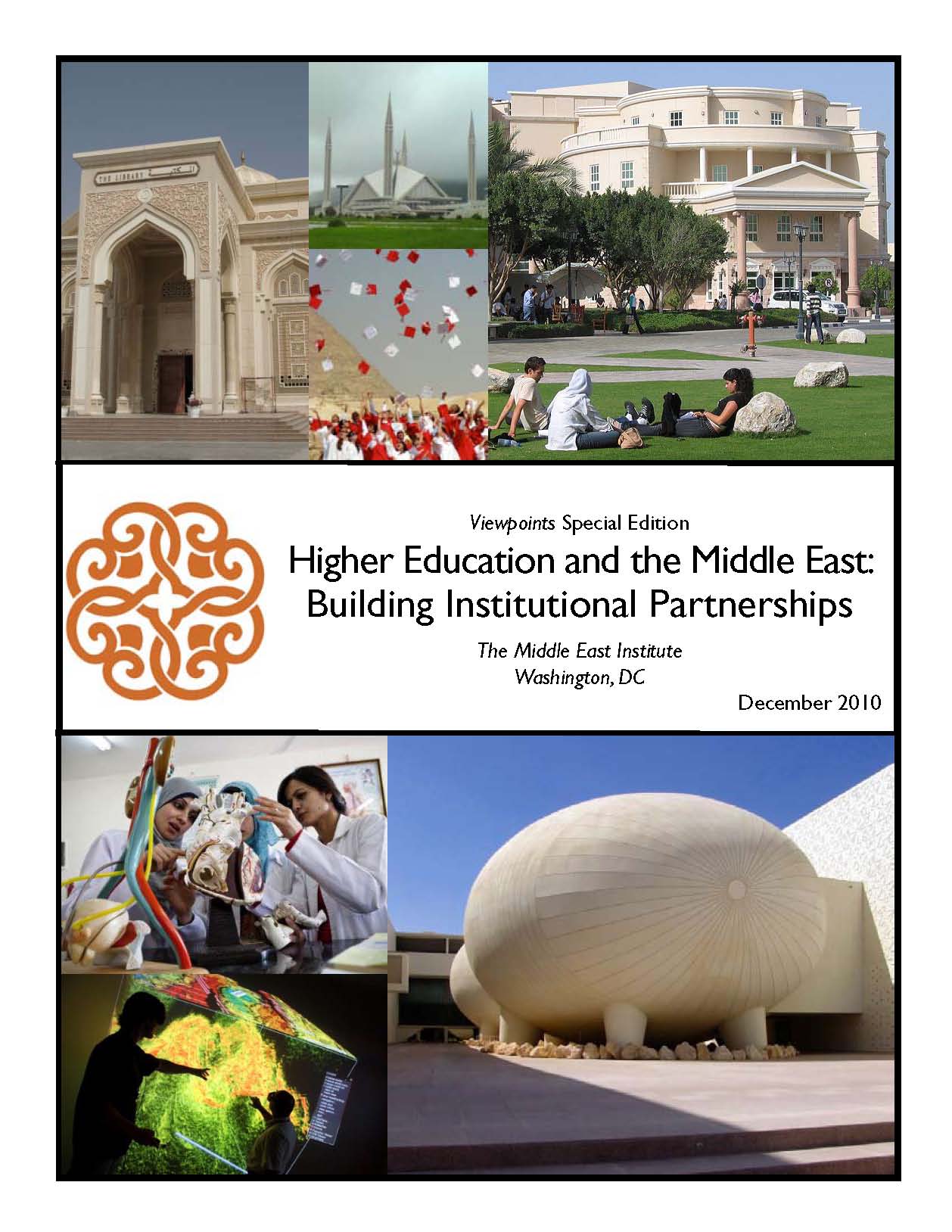
American higher education has been present in the region since 1866, when the American University of Beirut set the precedent for successful localization by planting roots and adapting to local society. Today, Arab governments themselves often direct and fund the cross-cultural educational export process, with far-reaching economic and social goals. For example, Qatar's U.S. branch campuses are an integral part of its broad education reform strategy designed to transform the country into a knowledge producing society. The UAE, in contrast, has adopted a business-model view of U.S.
Saudi Arabia on the Edge: The Uncertain Future of an American Ally
Of all the countries that are vital to the strategic and economic interests of the United States, Saudi Arabia is the least understood by the American people. Today's Saudis, far better informed than previous generations, are looking for new political institutions that will enable them to be heard, but these aspirations conflict with the kingdom's strict traditions and with the House of Saud's determination to retain power. Meanwhile, the country wishes to remain under the protection of American security but still clings to a system that is antithetical to American values.
Western Education in the Gulf: The Costs and Benefits of Reform
Originally posted July 2010
Educational reform from the West has arrived on a grand scale in the Gulf, particularly in higher education. American, Canadian, Australian, and British universities are being established throughout the region. In addition, Western-style methodologies and best-practices are being employed. Although there are considerable benefits to adopting Western models of education, such reform does not come without a price.
Tertiary Education in the Gulf: "A Colossal Wreck, Remaining Boundless and Bare?"
Originally posted July 2010
… “My name is Ozymandias, king of kings:
Look on my works, ye Mighty, and despair!” Nothing beside remains. Round the decay Of that colossal wreck, boundless and bare The lone and level sands stretch far away.[1]