The Human Story Behind Gaza: Jaser AbuMousa on the Costs of Survival for Palestinians
Brian sits down with MEI Senior Fellow Jaser AbuMousa to assess the situation on the ground in Gaza three years after October 7 and a year into the ceasefire. Drawing on his own personal experience, Jaser explores the toll that the war and continued destruction have taken on Gaza’s residents, the implications of the recent Israeli and US elections, and the difficult path forward.
The Unavoidable Neighbor: Managing Iran Beyond the War
Gulf states and their partners are increasingly looking beyond their most immediate interests of containing the war with Iran. While recent talks between Saudi Arabia, Turkey, Pakistan, and Iran have kept de-escalation on the agenda, a broader regional security framework and non-aggression pact has also emerged, envisioning a longer-lasting solution to regional conflicts. The talks have yet to produce a settlement, but they reflect a growing recognition that Gulf security cannot depend entirely on Washington. Iran will still be there, and its neighbors will have to find ways of living with it.
Israelis turned out in their highest numbers in decades on October 27 for the country’s first election since the Hamas attacks of October 7, 2023. Prime Minister Benjamin Netanyahu’s bloc lost 15 seats and its Knesset majority, but Gadi Eisenkot’s opposition bloc also fell short, leaving Arab parties, with a record 19 seats, potentially decisive in forming the next government. MEI Senior Fellow Natan Sachs joins hosts Alistair Taylor and Matthew Czekaj to unpack the results, the coalition math, and what comes next for Israel’s security policy, the wider region, and US-Israeli relations.
Since 1967, Israeli settlements in the West Bank have been a contested feature of the Israeli-Palestinian conflict. The ultimate disposition of the settlements and ongoing activity related to their growth have repeatedly defied agreement in negotiations over a resolution to the conflict.
The Houthis are a political-military faction and Zaydi religious movement founded in northwestern Yemen in the 1980s. A key member of Iran’s Axis of Resistance with links to other militant organizations in the Arabian Peninsula and the Horn of Africa, the group has continued to pose a threat to Western interests on a global scale.
The India-Middle East-Europe Economic Corridor (IMEC) is a proposed multinational infrastructure initiative aimed at upgrading connectivity between the three regions through integrated trade, energy, and digital networks. Announced at the G20 summit in New Delhi in September 2023, IMEC is envisioned partially as a counterweight to China’s international infrastructure project, the Belt and Road Initiative.
After a decade of post-Arab Spring isolation, Turkey’s leaders have recognized that their ambition to position the country as an agenda-setter on the world stage requires active engagement in all directions. President Recep Tayyip Erdoğan’s consolidation of executive authority has centralized foreign policy decision-making and tied it to his domestic political priorities, transforming the country’s revisionist approach to one shaped primarily by personal and pragmatic interests.
Land Grab in Sherpur: Monuments to Powerlessness, Impunity, and Inaction
Originally posted December 2009
In September 2003, armed police and bulldozers violently ejected around 250 people from land in central Kabul and demolished their homes to make way for the lavish mansions of the freshly empowered elite.[1] Sherpur, as the area is known, lies in the shadow of the diplomatic enclave and as such is some of the most valuable land in the capital.
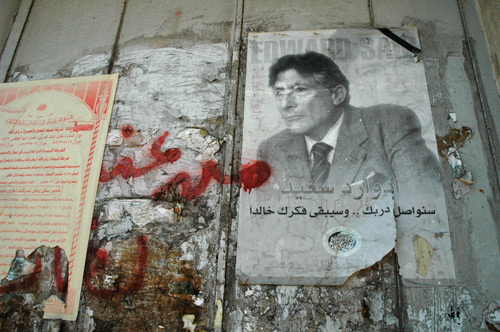
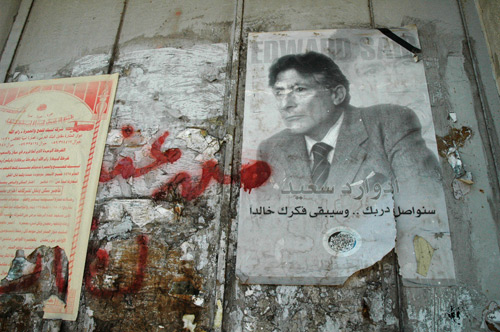
I had heard of Edward Said long before I discovered the world of theory and read Orientalism in the early 1990s, more than a decade after the book was published to great acclaim. I remember being vaguely intrigued by the public presence of a man with an English-Arab name. In a sort of fateful irony, Said’s parents seemed to have baptized their son to live across cultures, to be out of place, as Said wrote toward the end of his life. But it was the name’s hint of Arabness that first caught my attention.
There are at least two unexamined axioms in Edward Said’s Orientalism: first, the primacy of the political in Orientalist discourse, and secondly the importance in that discourse of the intellectual and the literary (using “literary” in a high cultural sense). The first will not be discussed here, though it seems doubtful. The second deserves thinking about, and it is that which is discussed here.
Intimidating, Assassinating, and Leading: Two Early Mujahidin Commanders Reflect on Building Resistance Fronts
Originally posted December 2009
Saleh Mohammad and Ezzatullah Atif[1] were among the angry young Afghans who, in the first three years after the 1978 coup, drove their government out of the countryside. Mobilizing the youth of their areas into clandestine networks and then refashioning these into jabhas (resistance fronts) was their first experience of leadership. Their successful mobilization laid the foundations of the war of attrition, which eventually defeated the Soviet Union and toppled its client government.
Mullah Omar Wants You! Taliban Mobilization Strategies or Motivations for Joining the Insurgency
Originally posted December 2009
The Taliban insurgency in Afghanistan seemingly benefits from an unlimited reservoir of “foot soldiers” ready to take up the fight against the Afghan government and its international military supporters. The foot soldiers’ motivation is often attributed to ideology, poverty, and/or a lack of education. However, the ability of the Taliban insurgency to mobilize recruits is complex and driven by a mix of political, economic, and social factors.
Repeating History: Parallels between Mujahidin Tactics and Afghanistan’s Current Insurgency
Originally posted December 2009
Since 1747, all of the invaders or occupiers of Afghanistan have made almost the same mistakes. All were obliged to leave Afghanistan, resulting in the downfall or demise of their empires. In general, Afghans are independent thinkers and believe their own way of life to be the best. Interfering in their day-to-day affairs brings animosity and hatred against their would-be rulers, occupiers, and invaders. Nor do Afghans accept the imposition of rulers or types of government which would clash with their basic values.
Charting a Course for a Better Future: Responding to the Crimes of the Past
Originally posted December 2009
Thirty years of war have taken an enormous toll on all aspects of Afghan society whose traditional social fabric has broken down, giving rise to a new generation of political and military elites. The cycles of violence over the past three decades have included massive human rights abuses by all parties, leaving a legacy of pent-up grievances and profound feelings of injustice.
Respect for Afghanistan’s sovereignty is a sine qua non condition to restoring the country to normalcy. The fact that a country expects and demands that its sovereignty be respected should not be misconstrued as a refusal to engage the outside world — as a sign that the country is drifting towards some type of chauvinistic nationalism.
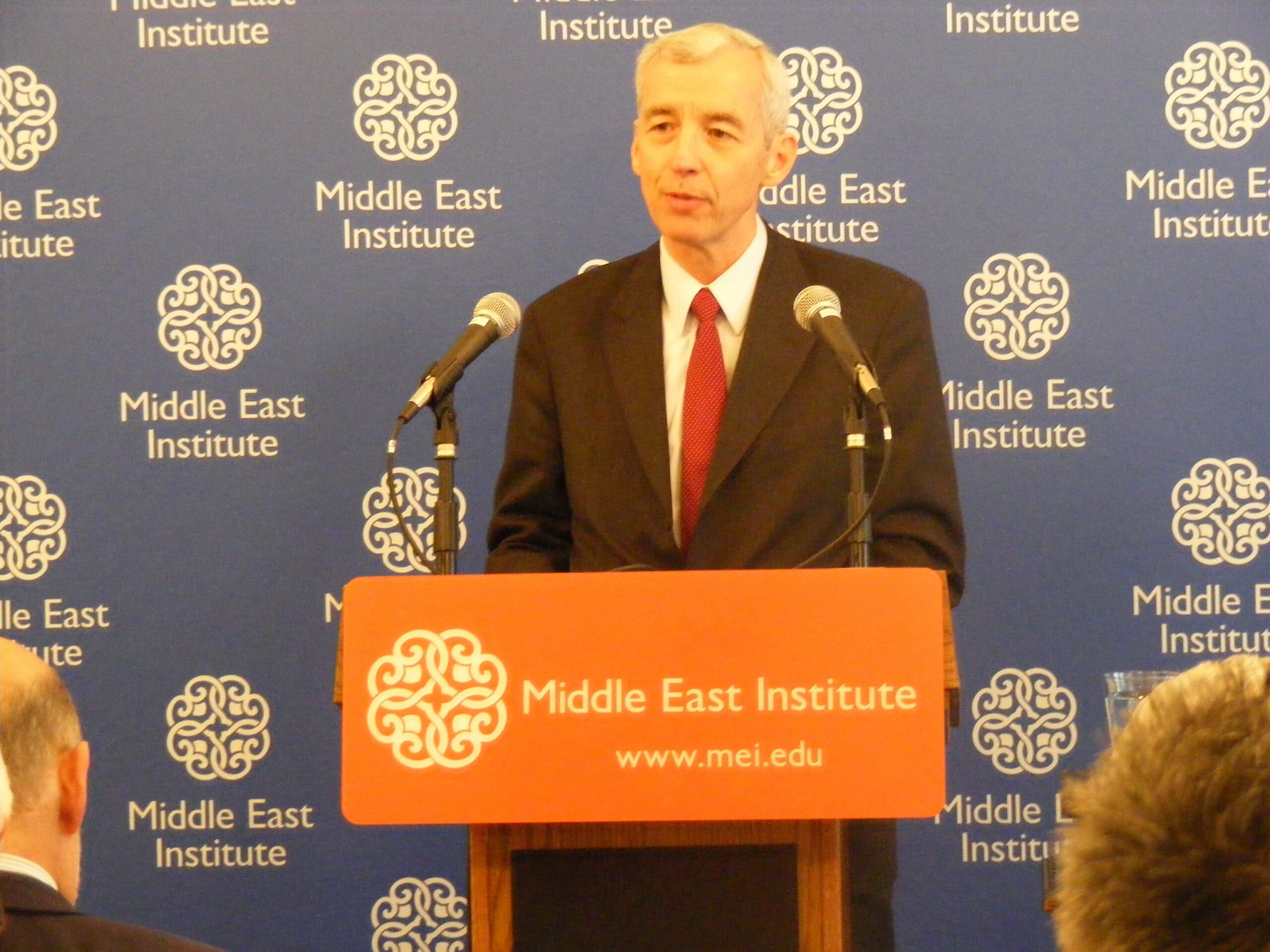
The Middle East Institute is proud to host Georgetown University professor Paul Pillar for a discussion about Iran and how best to address its nuclear ambitions. Pillar argues that the acceptable range of opinion on Iran has narrowed around the idea that all options, including a military strike, must be pursued to prevent the country from acquiring nuclear weapons. And yet, Pillar argues, if the combination of nuclear talks and sanctions do not yield the outcome the West and Israel seek, containment is preferable to war.
تُعد المجلة الرئيسية لمعهد الشرق الأوسط أقدم مطبوعة محكّمة مكرّسة لدراسة الشرق الأوسط الحديث، وتغطي المجلة الرئيسية في المعهد السياسة والمجتمع والثقافة في المنطقة.