After decades of political setbacks, Iran’s former Revolutionary Guards commander has returned to the center of power. Is he an incidental beneficiary of war, or have observers underestimated him all along?
The Human Story Behind Gaza: Jaser AbuMousa on the Costs of Survival for Palestinians
Brian sits down with MEI Senior Fellow Jaser AbuMousa to assess the situation on the ground in Gaza three years after October 7 and a year into the ceasefire. Drawing on his own personal experience, Jaser explores the toll that the war and continued destruction have taken on Gaza’s residents, the implications of the recent Israeli and US elections, and the difficult path forward.
The Unavoidable Neighbor: Managing Iran Beyond the War
Gulf states and their partners are increasingly looking beyond their most immediate interests of containing the war with Iran. While recent talks between Saudi Arabia, Turkey, Pakistan, and Iran have kept de-escalation on the agenda, a broader regional security framework and non-aggression pact has also emerged, envisioning a longer-lasting solution to regional conflicts. The talks have yet to produce a settlement, but they reflect a growing recognition that Gulf security cannot depend entirely on Washington. Iran will still be there, and its neighbors will have to find ways of living with it.
Since 1967, Israeli settlements in the West Bank have been a contested feature of the Israeli-Palestinian conflict. The ultimate disposition of the settlements and ongoing activity related to their growth have repeatedly defied agreement in negotiations over a resolution to the conflict.
The Houthis are a political-military faction and Zaydi religious movement founded in northwestern Yemen in the 1980s. A key member of Iran’s Axis of Resistance with links to other militant organizations in the Arabian Peninsula and the Horn of Africa, the group has continued to pose a threat to Western interests on a global scale.
The India-Middle East-Europe Economic Corridor (IMEC) is a proposed multinational infrastructure initiative aimed at upgrading connectivity between the three regions through integrated trade, energy, and digital networks. Announced at the G20 summit in New Delhi in September 2023, IMEC is envisioned partially as a counterweight to China’s international infrastructure project, the Belt and Road Initiative.
After a decade of post-Arab Spring isolation, Turkey’s leaders have recognized that their ambition to position the country as an agenda-setter on the world stage requires active engagement in all directions. President Recep Tayyip Erdoğan’s consolidation of executive authority has centralized foreign policy decision-making and tied it to his domestic political priorities, transforming the country’s revisionist approach to one shaped primarily by personal and pragmatic interests.
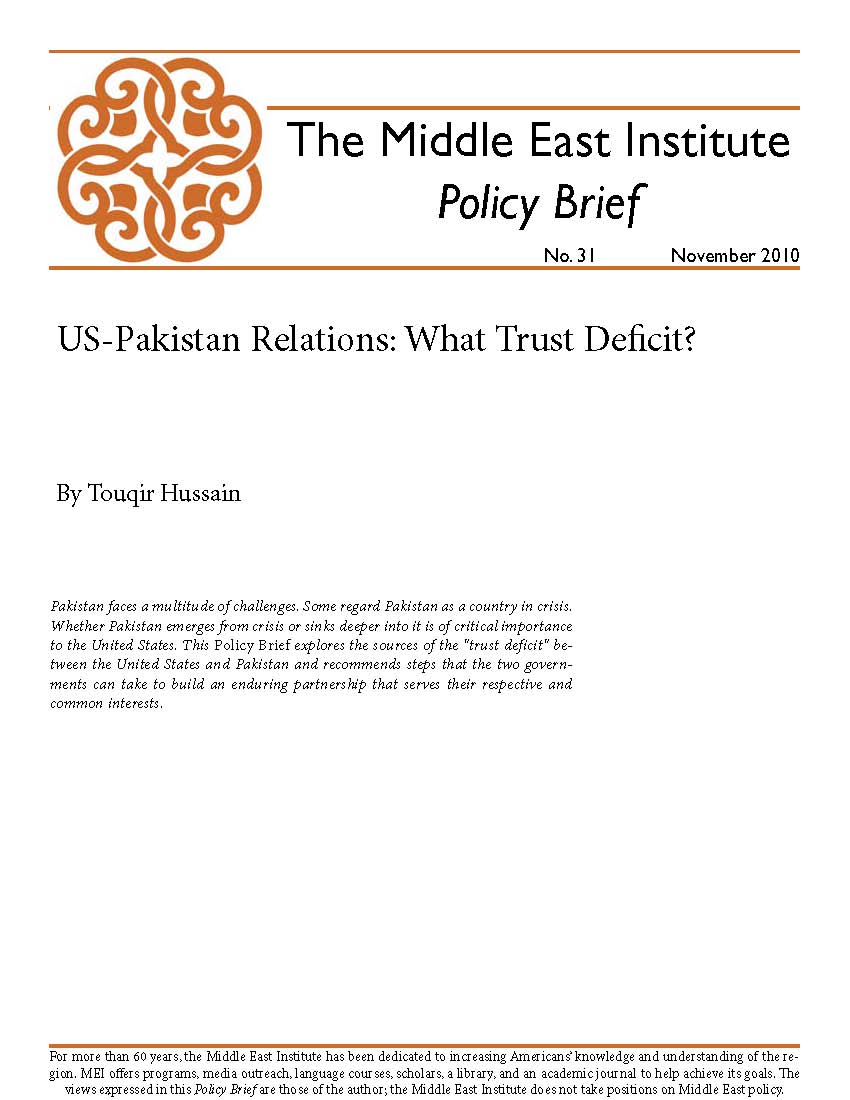
With Pakistan caught up in four wars during the past nine years — the Afghanistan war, the War on Terror, the insurgency in the tribal areas, and the wave of terrorism unleashed by the Tehrik-i-Taliban (TTP) and the Punjabi Taliban in the rest of the country — it has often been said that the country is facing an existential threat. If this was a cliché before, it is no more so after the catastrophic floods. Pakistan had been living dangerously in the past, but the wars and floods threaten to wash away its future.
Turkey's Dual Track Approach Toward the Kurdistan Regional Government
Turkey’s policy toward the Kurdistan Regional Government (KRG) in northern Iraq has undergone an important shift since 2009. Only a few years ago, Turkey did not recognize Iraq’s Kurdish Regional Government and refused to meet with its representatives in any official capacity due to its fear that recognition would embolden Turkey's own Kurdish minority to demand similar home-rule status.
*This article was first published in November 2010 by Jane's Islamic Affairs Analyst.
The second half of 2010 witnessed a flurry of interaction between Iranian diplomats and their African counterparts. Not all the buzz has been beneficial to Tehran, as was most recently demonstrated by the Republic of the Gambia’s 22 November decision to break its ties with Iran, but the overall activity nonetheless reflects the increasing emphasis Tehran is putting on closer relations with countries on the continent.
A Generation in Crisis: Lebanon's Jobless University Graduates
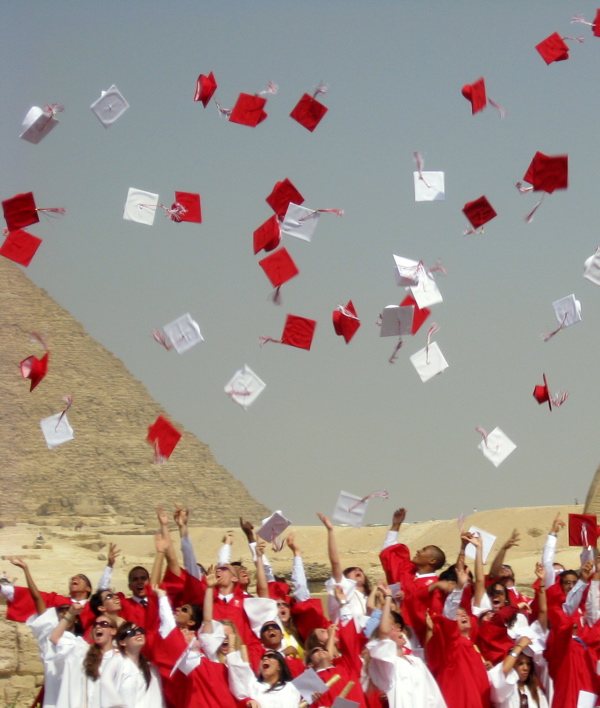
Unemployment is one of the major manifestations of the global economic crisis that began to plague many countries around the globe, beginning in 2007. Developing nations with weak economies and fragile political states were among the hardest hit. In Egypt, one can find PhDs driving taxies. No country can afford, either politically or economically, such well-educated traffic guides. Higher education graduate unemployment rates in Lebanon are high and are unlikely to be reduced soon.
In a January 1943 published letter which would ultimately lead to the creation of the historic United Negro College Fund (UNCF), Dr. Frederick Patterson of Tuskegee University wrote that the “nominal contribution of one dollar per person” could be enough to help improve the educational standards of young disenfranchised African-American children around the United States for generations to come.
Empowering Under-served and Vulnerable Populations: Bidoon and Beyond
Since the very inception of the United Arab Emirates (UAE) in 1972, education has been viewed as a primary tool for building a knowledge-age economy for this young desert nation.
Leadership in the Middle East: The Story of Women in Lebanon
Leila Saad and Emily Nasrallah are Lebanese women whose impact on women has been remarkable and yet not well-known. Leila has established schools on six continents while Emily is the most frequently included female author in Lebanese textbooks. In most regions, leaders in politics, business, education, and literature arise from among those who have the educational qualifications for entry positions. From there, outstanding people demonstrate the ambition, character, and knowledge to move into leadership positions.
Struggling for the Center: Teacher-Centered vs. Learner-Centered Practices in Palestinian Higher Education
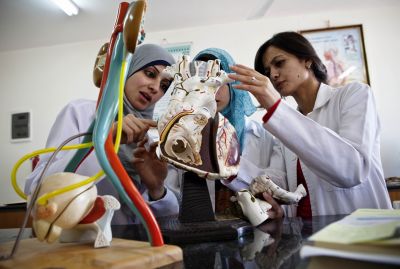
Alongside the struggle for an independent Palestine, not to mention the internal power struggles between the rival Fatah and Hamas movements, another struggle — largely absent from local news headlines and talk on the streets — is unfolding in classrooms in Palestinian higher education. Faculty are pushing back against the hegemony of teacher-centered instruction and embracing, in principle if not in practice, the global movement toward learner-centered pedagogy.
Women’s education in the Arab world has increased substantially in the last several decades, both in absolute terms and relative to men. However, when looking at the Arab world, understanding that there are vast differences culturally, politically, and socially among the countries is essential. This essay looks at the Gulf Cooperation Council (GCC) countries, where women share a similar cultural and socio-economic context.
Private Contractors in Conflict Zones: The Good, the Bad and the Strategic Impact
In Iraq and Afghanistan, the United States has vastly expanded its use of contractors in conflict zones without serious consideration of their strategic impact. While the presnece of contractors is not new, the number and types of tasks they are executing is. This discussion will examine what is good about contractors, what problems they cause and then the largely unexamined strategic impact of contractors — both armed and unarmed — on current and future conflicts. It concludes with policy recommendations for the use of contractors in future conflicts.
تُعد المجلة الرئيسية لمعهد الشرق الأوسط أقدم مطبوعة محكّمة مكرّسة لدراسة الشرق الأوسط الحديث، وتغطي المجلة الرئيسية في المعهد السياسة والمجتمع والثقافة في المنطقة.