Bonus Episode: Previewing Israel’s First Post-October 7 Election
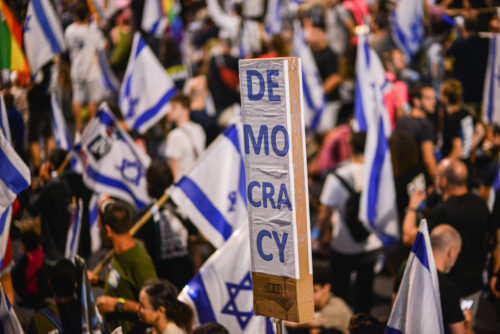
Israel is preparing to hold what may be its most consequential election in decades. On October 27, Prime Minister Benjamin Netanyahu will face his first electoral test since October 7, 2023. In this bonus episode of Middle East Focus, we present the audio from a recent MEI webinar, hosted in Israel on the eve of the vote. Senior Fellow Natan Sachs is joined by Dr. Shira Efron, Distinguished Chair for Israel Policy and senior fellow at the RAND Corporation, and Neri Zilber, veteran journalist and Financial Times correspondent. They explore what’s at stake in this historic election and how different outcomes could reshape Israel’s domestic politics and the wider region.
Israel Was Built on Hope. This Election May Be Our Last Chance to Save It
Israel’s national anthem, Hatikva, means “the hope.” Israel is not just another country, but the culmination of a 2,000-year-old dream of national redemption. The rebirth of the Jewish people’s ancestral homeland, just three years after the Holocaust, was a miraculous triumph of hope over all odds.
Today, that hope has been shattered and the elections on October 27 have become the most consequential in Israel’s history.
Washington says it doesn’t know who runs Iran. Tehran insists its leadership is united. MEI Senior Fellow Alex Vatanka joins hosts Alistair Taylor and Matthew Czekaj to sort out where the truth lies. They look at the small circle of political and military figures now steering the war effort in Tehran: who they are, how they make decisions, and how unified they really are. They also discuss the current state of US-Iran negotiations, the role of the upcoming midterm elections in the United States, and how the Islamic Republic is preparing for a potential renewal of conflict afterward.
Since 1967, Israeli settlements in the West Bank have been a contested feature of the Israeli-Palestinian conflict. The ultimate disposition of the settlements and ongoing activity related to their growth have repeatedly defied agreement in negotiations over a resolution to the conflict.
The Houthis are a political-military faction and Zaydi religious movement founded in northwestern Yemen in the 1980s. A key member of Iran’s Axis of Resistance with links to other militant organizations in the Arabian Peninsula and the Horn of Africa, the group has continued to pose a threat to Western interests on a global scale.
The India-Middle East-Europe Economic Corridor (IMEC) is a proposed multinational infrastructure initiative aimed at upgrading connectivity between the three regions through integrated trade, energy, and digital networks. Announced at the G20 summit in New Delhi in September 2023, IMEC is envisioned partially as a counterweight to China’s international infrastructure project, the Belt and Road Initiative.
After a decade of post-Arab Spring isolation, Turkey’s leaders have recognized that their ambition to position the country as an agenda-setter on the world stage requires active engagement in all directions. President Recep Tayyip Erdoğan’s consolidation of executive authority has centralized foreign policy decision-making and tied it to his domestic political priorities, transforming the country’s revisionist approach to one shaped primarily by personal and pragmatic interests.
MEI Senior Fellow Brian Katulis engages friends, colleagues, and policy experts in casual conversations on the most important happenings in the Middle East.
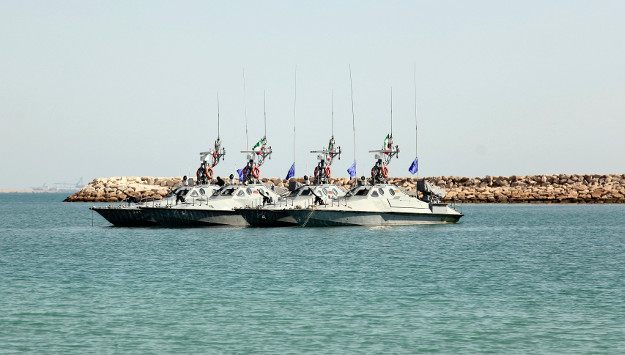
Iran dispatches flotilla of warships to international waters
A flotilla of the Iranian Navy warships has left the country’s southern port of Bandar Abbas to conduct “routine missions” and project power in international waters, particularly in the Gulf of Aden the Iranian media reported. The Navy’s 50th fleet comprises Shaheed Naqdi and Bayandor destroyers and a logostic combat warship called Tonb.
Erdogan’s advisor: Iran shows support for Turkey but tries to stab it in the back
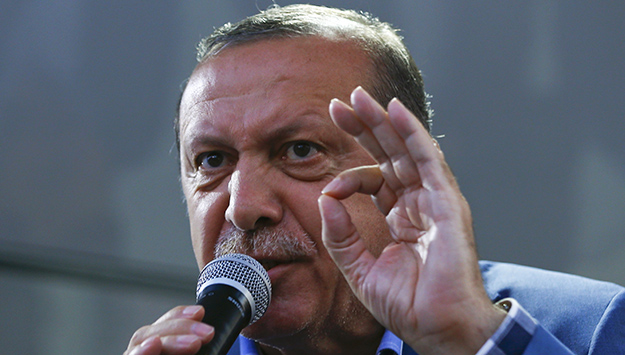
Iran is a state that shows support for Turkey and then tries to stab it in the back, a senior adviser to Turkish President Recep Tayyip Erdogan has said. Ilnur Cevik, who is also a columnist with pro-government Daily Sabah, added that although Tehran has not publicly opposed Turkey’s Olive Branch Operation in the Syrian northern town of Afrin, it is trying to sabotage the Turkish offensive secretly and undermines Ankara’s efforts to facilitate peace in the war-torn Arab country.
Few noticed it amid the usual frenzy over something President Donald Trump did, but the United States is now committed to staying in Syria for the long haul—with unforeseen consequences for America’s role in a turbulent and dangerous Middle East.
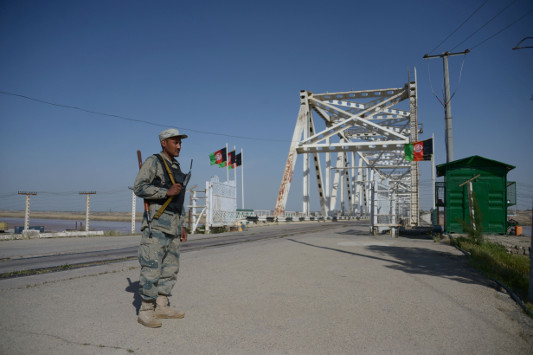
The Afghan conflict is so intractable that it continues to resist any kind of resolution. But Afghanistan’s northern neighbor, Uzbekistan, wants to try its hand. An international ministerial conference titled “Afghanistan–path to a peaceful future” is scheduled in Tashkent for late March 2018.
Karroubi to Khamenei: Take responsibility for failures of past 30 years
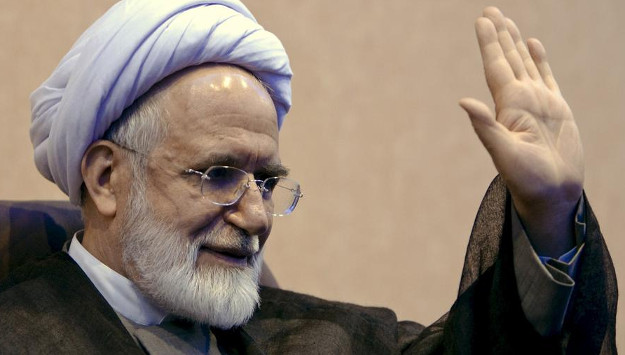
In a strong rebuke of Iran’s Supreme Leader, a leading reformist leader has said that Ayatollah Ali Khamenei is responsible for the country’s growing political, social, and economic problems. “You have been the head of state for three decades, yet you still speak from the stance of an opposition,” Mehdi Karroubi, who has been under house arrest for the past seven years, wrote to Khamenei in an open letter. He bluntly told the supreme leader to take responsibility for his leadership failures instead of blaming others.
Indonesia and Tunisia: Democracy as a Distinctive Link
Not until the early 1950s did ties develop between newly independent Indonesia and Tunisia, then still a French protectorate. Importantly, those ties were based mainly in politics, and not in religion. At the time, the Tunisian national movement, led by Habib Bourguiba, seems to have regarded Indonesia as an inspirational model of anti-colonial struggle. Bourguiba was also attracted to the idea of “non-alignment” advanced by Indonesian President Ahmed Sukarno Indonesia, among others. Today, more than six decades after having achieved independence, Tunisia again stands at a watershed in its political development — transitioning from an authoritarian to a democratic system. These circumstances have given the relationship between Indonesia and Tunisia a fresh tailwind.
Kuwaitis investing in Iranian financial firms losing their money
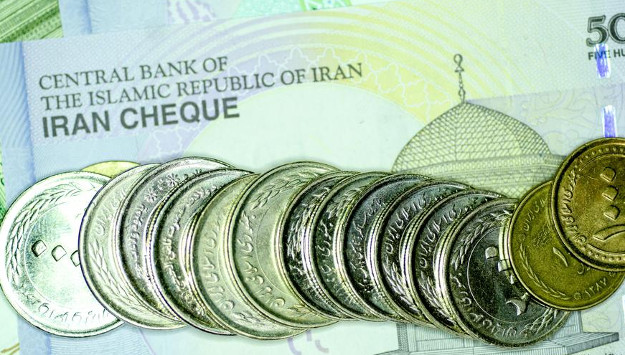
Kuwaiti citizens have lost hundreds of millions of dollars as a result of the collapsing investment firms in Iran, Kuwait’s al-Qabas Arabic daily reported. According to the paper, a sizeable number of Kuwaitis have invested in Iran’s investment institutions that offer returns of more than 20 percent, which is significantly lower than the profit offered by Kuwaiti banks and investment schemes.
Iran-backed Iraqi militias may send reinforcements to Syria
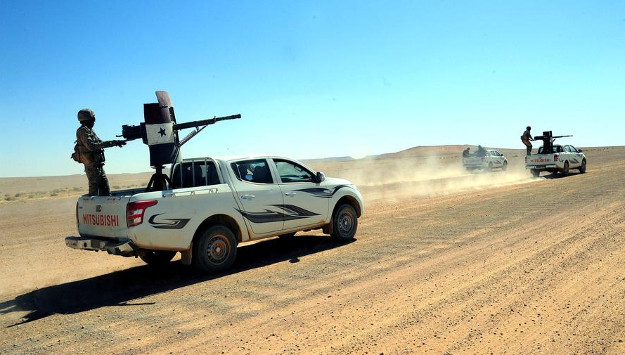
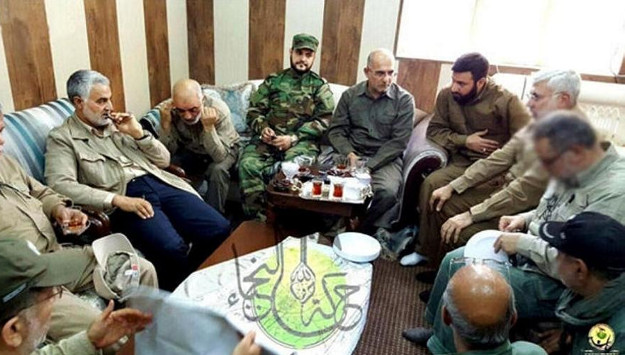
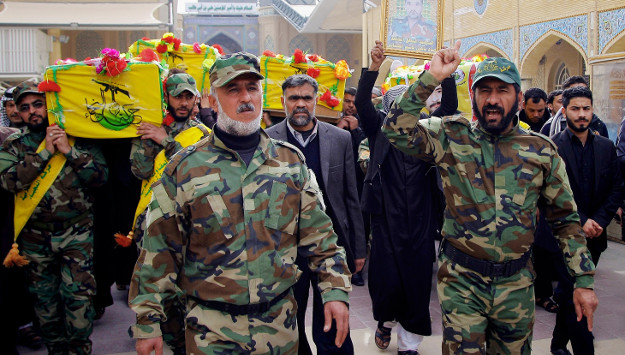
The chief commander of Iraq’s Popular Mobilization Units has said that the paramilitary forces are ready to go to Syria to fight ISIS and defend Iraq’s borders, Iranian and Lebanese media reported. Abu Mahdi al-Muhandis, the deputy chairman of Hashd al-Shaabi (PMUs), further stressed that his forces will “respond forcefully” to any potential ISIS attack originating from Syria. “We cannot remain passive vis-à-vis the Syrian-Iraqi border and attacks carried out by Daesh [ISIS] in Syria,” he added.
Harakat al-Nujaba claims US troops targeted its militiamen in Iraq
The secretary general of Harakat al-Nujaba, an Iranian-sponsored Iraqi militia group fighting in Syria and Iraq, alleges that the US military has targeted the organization’s forces in Iraq, Lebanon’s al-Mayadeen and Iran’s
As the slow wheels of government inch toward policies that lead to cleaner air, Egyptian drivers could be provided with faster results by an unlikely partner—Chinese auto companies.
Taliban attacks spell further trouble for strained U.S.-Pakistan ties | Monday Briefing
In this week’s Monday Briefing, MEI experts Marvin G. Weinbaum, Charles Lister, Paul Salem, and Ahmad Majidyar provide analysis on recent and upcoming events including the recent Taliban attacks in Afghanistan, upcoming Syria talks in Sochi, the crackdown on competition in Egypt’s presidential campaign, and U.S. and European reconsideration of the Iran nuclear deal.
President Trump’s decision to recognize Jerusalem as Israel’s capital and to relocate the U.S. embassy there was met with Arab and international censure. The United Nations General Assembly voted 128 to 9, with 35 abstentions, for a resolution demanding that the United States rescind this declaration. Human rights groups decry the decision as a death knell for the two-state solution.
Lebanon issues arrest warrant for Iran-backed Iraqi militia commander
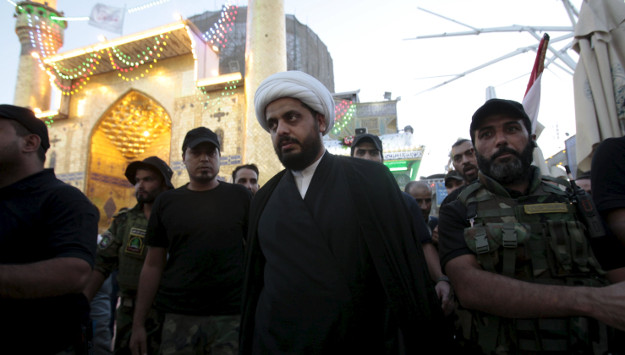
Lebanese judicial authorities have issued an arrest warrant for Qais al-Khazali, the leader of Iran-backed Iraqi militia group called Asa’ib Ahl al-Haq, Iran’s Fars News Agency reports. Quoting Lebanese sources, Fars added that the Lebanese Army and General Security Directorate have also ordered all relevant authorities to arrest the Iraqi militia commander if he reenters Lebanon. They allege that Khazali last year had entered Lebanon illegally.
The oldest peer-reviewed publication dedicated to the study of the modern Middle East, MEI’s flagship journal covers politics, society, and culture in the region.