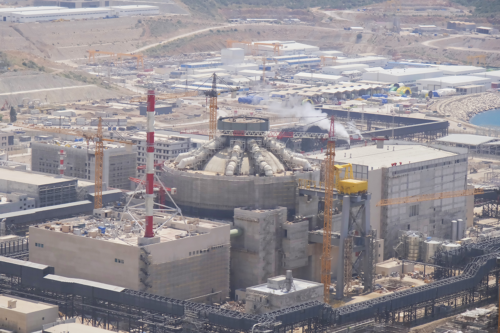
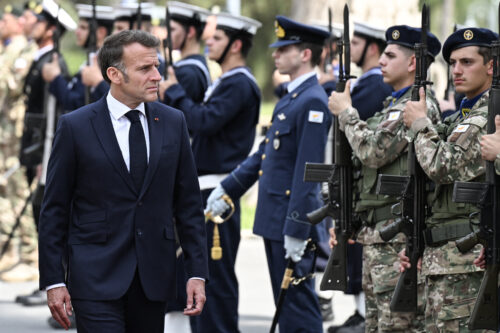
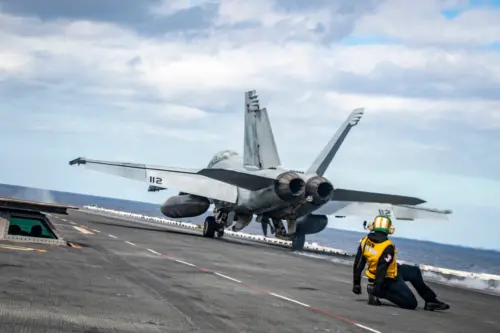
As a result of the Iran war, Turkish thinking about nuclear weapons appears to be shifting. Iran’s emergent ability to threaten regional states (and possible determination to acquire a nuclear weapon itself), growing concern about Israeli aggressiveness, doubts about US security guarantees, and greater Saudi nuclear autonomy are all pushing Ankara to consider a future nuclear option.
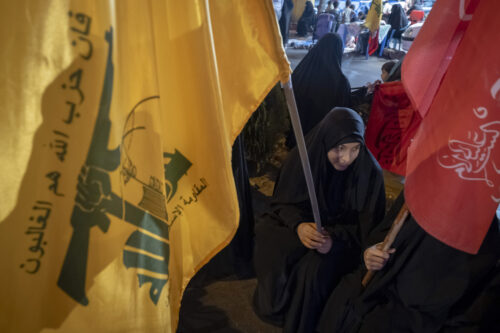
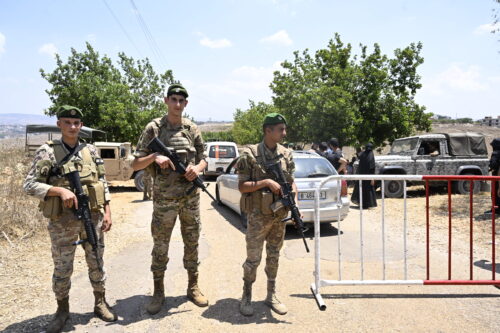
Hizballah: The murderers of elected Lebanese politicians, the killers of peacekeepers, the thugs of the streets they dominated because all other militias had disarmed, the agents of destruction of their own communities on behalf of foreign paymasters reigning 1,000 miles away from Beirut, the brainwashers of children into an ideology of “resistance” that only invited invasion. That’s the Hizballah that today is begging the Lebanese state to return to them the 1,000 pounds of explosives so rudely taken from them by Lebanese soldiers doing their job at a checkpoint in the Bekaa Valley.
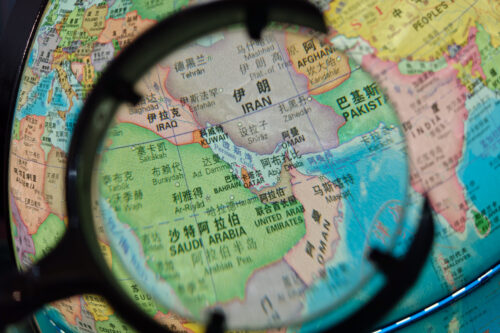
Many of the immediate consequences of the Israeli-American war with Iran are already clear. The further emergence of drones and missiles as dominant weapons of war; the danger to the global economy from the threats to vital chokepoints such as the Strait of Hormuz and the Bab el-Mandeb; and the inadequacy of US weapons procurement, among other issues, have garnered widespread and entirely merited attention.
Since 1967, Israeli settlements in the West Bank have been a contested feature of the Israeli-Palestinian conflict. The ultimate disposition of the settlements and ongoing activity related to their growth have repeatedly defied agreement in negotiations over a resolution to the conflict.
The Houthis are a political-military faction and Zaydi religious movement founded in northwestern Yemen in the 1980s. A key member of Iran’s Axis of Resistance with links to other militant organizations in the Arabian Peninsula and the Horn of Africa, the group has continued to pose a threat to Western interests on a global scale.
The India-Middle East-Europe Economic Corridor (IMEC) is a proposed multinational infrastructure initiative aimed at upgrading connectivity between the three regions through integrated trade, energy, and digital networks. Announced at the G20 summit in New Delhi in September 2023, IMEC is envisioned partially as a counterweight to China’s international infrastructure project, the Belt and Road Initiative.
After a decade of post-Arab Spring isolation, Turkey’s leaders have recognized that their ambition to position the country as an agenda-setter on the world stage requires active engagement in all directions. President Recep Tayyip Erdoğan’s consolidation of executive authority has centralized foreign policy decision-making and tied it to his domestic political priorities, transforming the country’s revisionist approach to one shaped primarily by personal and pragmatic interests.
MEI Senior Fellow Brian Katulis engages friends, colleagues, and policy experts in casual conversations on the most important happenings in the Middle East.
Gulf Political Economy: The Cost of Accommodating Iran
There may be no near-term resolution to the conflict between the United States, Israel, and Iran. The cease-fire and memorandum of understanding (MoU) signed on June 18 have broken down, there is little diplomatic engagement, and new flare-ups in early September indicate a further round of escalation. Gulf states may have no choice but to protect their assets and populations while trying to deter Iran by finding mechanisms of both containment and accommodation.
Gulf Energy Markets: The Region’s Edge Will Survive — At a Price
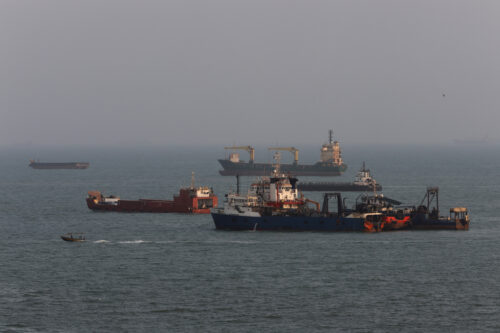
Across the Gulf, views differ widely on how the Iran war can and should end, and what the region will look like once it does. Yet on the crisis over the closure of the Strait of Hormuz, the view is near-unanimous that a repeat is not only possible but likely. That expectation, more than any single incident over the past year, is becoming a major driver of decision-making in industry and policy circles alike.
Gulf AI: The War as a Catalyst for Deepening Regional-US Strategic Tech Cooperation
When Iranian drones struck two Amazon Web Services data centers in the UAE on March 1, 2026, and damaged a third in Bahrain the same morning, many thought this could spell the end of the Gulf’s AI ambitions. Whatever the intent, the attacks highlighted the new reality that data centers have now become targets in inter-state wars.
Gulf: The War Has Shaken Relations With Washington
When President Donald Trump ordered US forces into war against Iran, the administration’s ambitions reached well beyond Tehran’s nuclear program. Trump openly encouraged Iranians to topple their government. Israeli leaders spoke of reshaping the Middle East. The war’s architects got their wish — only not in the way they intended.
Egypt: How the Iran War Has Affected Egypt’s Calculations
Egypt, which is not party to the war on Iran, has become a target as well as an intermediary in the conflict. As a result, the war has affected Egypt’s future calculations, particularly in three major areas: its economy, its security, and its regional alliances.
The conventional framing of China’s role in the Middle East in policy discourse centers on a familiar question: what challenge does Beijing pose to US primacy? The answer is often framed as a largely linear story in which expanding economic influence gradually translates into geopolitical leverage.Yet this view captures only part of the reality.
Europe did not choose the war with Iran, and most European governments still resist describing themselves as participants in it. But six months of military basing, missile-defense drawdowns, energy shocks, sanctions pressure and planning for possible migration crisis have made that distance harder to sustain.
The Houthis: Iran’s Bargaining Chip With Washington
As Washington scrambled to contain the consequences of the Houthis’ dramatic advance along Yemen’s Red Sea coast last week, US Vice President JD Vance confirmed US media reports that the Trump administration was “engaged in direct conversations with the Houthis.”
Algeria and Morocco have long been at odds, but recent diplomatic moves may signal a widening geopolitical split in North Africa. Hosts Alistair Taylor and Matthew Czekaj are joined by MEI Senior Fellow Intissar Fakir to unpack Algeria’s decision to sever diplomatic ties with the United Arab Emirates and Morocco’s warming relations with both the UAE and Israel. They also explore linkages between these diplomatic shifts and the Western Sahara conflict, Moroccan domestic concerns, particularly in light of this week’s elections, as well as broader regional stability.
Unlocking the Levant: Why the United States and Syria Must Pursue a Bilateral Trade and Investment Agreement
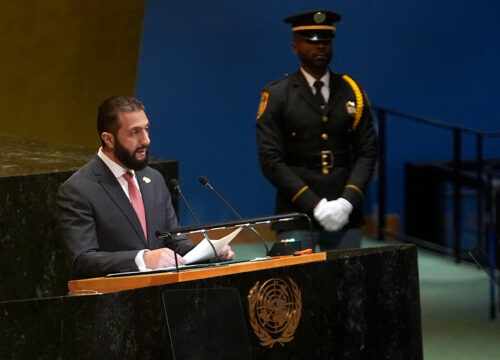
Apart from the brief honeymoon period between 1961 and 1963 under President John F. Kennedy and President Nazim al-Qudsi, US-Syria relations have never held such optimistic potential as they do today. Today, following the fall of Bashar al-Assad regime and the rise of a new government under President Ahmad al-Sharaa at the end of 2024, a new geopolitical window has opened.
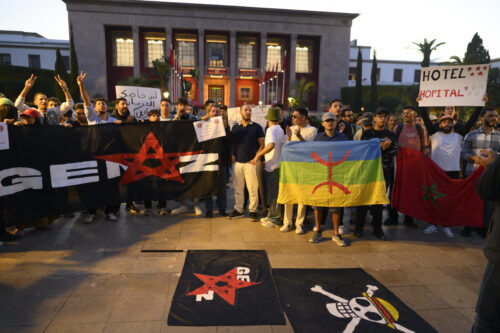
The Legacy of Morocco’s Gen Z Protests: Development as the New Political Language
Moroccans head to the polls on September 23 in a parliamentary election that is meant to formally close the chapter opened during last year’s Gen Z 212 protests. The demonstrations, which erupted almost exactly a year ago, drew attention to the mismatch that exists between Morocco’s economic and geopolitical ambitions, and the stark reality of its lagging domestic development.
The consequences of the war with Iran are now showing up far beyond the Middle East. U.S. Patriot missile stocks in Europe are reportedly “beyond critical,” with the U.S. having burned through roughly 65% of its Patriot interceptor inventory during the conflict, while the Pentagon is extending Middle East deployments into 2027 and maintaining roughly 50,000 troops in the region, alongside 19 warships and other assets.
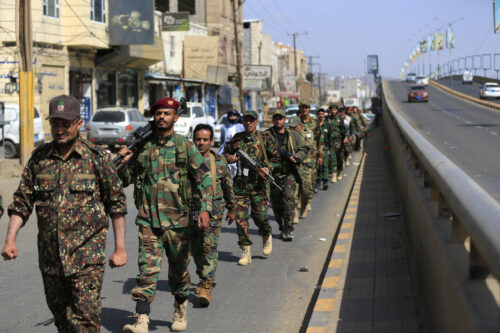
Over the past several weeks, the Houthis have seized the port city of Mokha, Yemen’s western coastline, and several islands in the Bab el-Mandeb Strait, and they are now massing around Marib and Taiz in the first major frontline shift since 2022. MEI Associate Fellow Nadwa Al-Dawsari joins host Matthew Czekaj to unpack the latest developments. Together, they discuss what has allowed the Houthis to advance against Yemeni government forces, the role the militant group plays in Iran’s regional strategy, and what it will take to contain the threat.
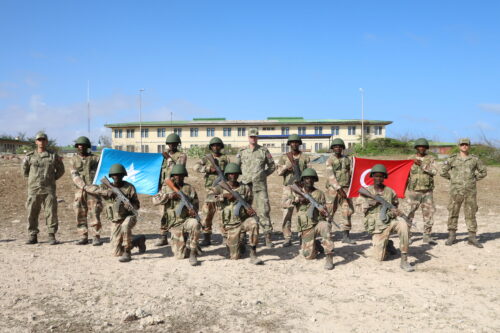
Turkey has become a major player in Africa, with a particularly strong footprint in the Horn. While economic and energy interests’ matter, one sector now stands at the center of Ankara’s regional activism: defense.
Consolidating Sovereignty, Security and Peace: Time to Step up the Game
Although it has been a frustrating summer, Lebanon remains on the right track. My observation after a ten-day visit to Beirut and Jerusalem this month is that leaders in both capitals remain strongly committed to a shared objective.
The oldest peer-reviewed publication dedicated to the study of the modern Middle East, MEI’s flagship journal covers politics, society, and culture in the region.