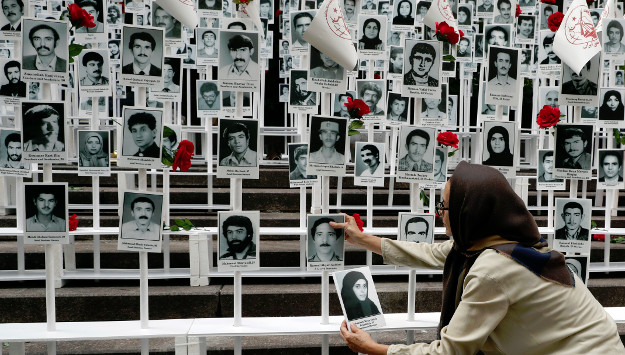
I.R.G.C. Commander Says Tehran Attacks Plotted in Riyadh, Vows Revenge
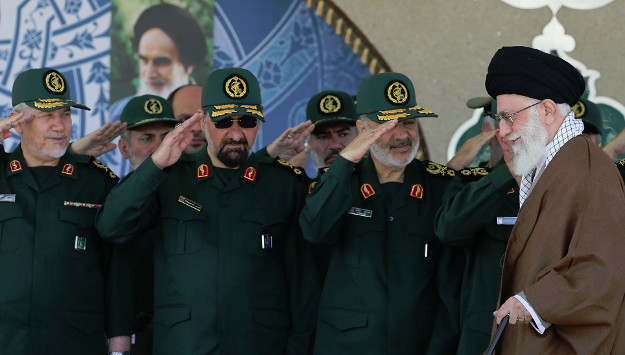
The deputy commander of the Islamic Revolution Guards Corps (I.R.G.C.) alleged today that the United States and Saudi Arabia plotted the terrorist
This individual is a guest contributor. MEI is not able to assist with contact requests.
Ahmad Khalid Majidyar is a Middle East & South Asia analyst with a focus on Iran, Afghanistan and Pakistan. He was previously a senior fellow and the director of IranObserved Project at the Middle East Institute.
From 2008 to 2015, Majidyar worked as a senior research associate at the American Enterprise Institute (AEI), where he co-authored two monographs on Iran: Iranian Influence in the Levant, Egypt, Iraq and Afghanistan (AEI 2012), and The Shi’ites of the Middle East: An Iranian fifth column? (AEI 2014). He also published a number of research papers on Iran, Afghanistan and Pakistan.
As an instructor with the Naval Postgraduate School’s Leadership Development and Education for Sustained Peace program (2008-2016), Majidyar provided graduate-level seminars to more than 3,000 U.S. and NATO military leaders on Afghanistan and the broader region. In addition, he has provided briefings on Iran and Afghanistan at the Defense Intelligence Agency, the Joint IED Defeat Organization, the National Defense University, the State Department, and Congress; and he has spoken as a guest analyst at think tanks, universities, and world affairs councils.
Majidyar’s articles on Iran, Afghanistan and Pakistan have been published in Foreign Policy, The New York Times, Fareed Zakaria’s GPS, Fox News, U.S. News & World Report, Daily Telegraph, and Forbes, among others. He has also discussed Middle Eastern topics on the BBC, CNN, Al-Jazeera English, Sky News, CBC Canada, Bloomberg News and Voice of America’s Dari, Farsi, Urdu and English services.
Previously, Majidyar worked as a media analyst with the BBC Monitoring in Afghanistan and as a humanitarian aid worker with the UNHCR in Pakistan.
The deputy commander of the Islamic Revolution Guards Corps (I.R.G.C.) alleged today that the United States and Saudi Arabia plotted the terrorist
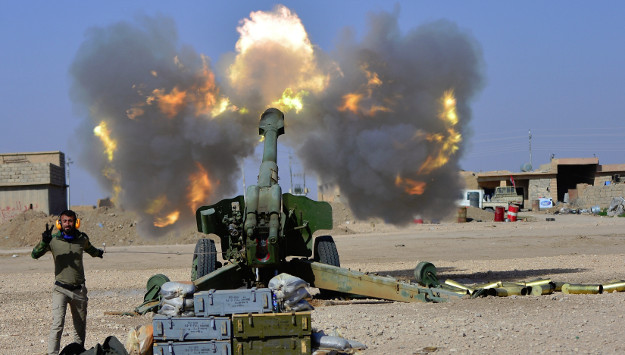
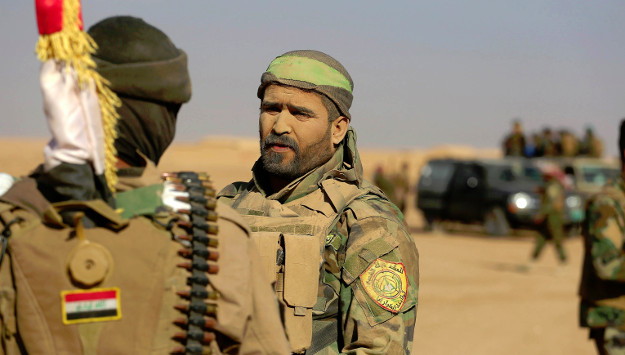
The Iraqi Popular Mobilization Forces (P.M.F.) announced that they have seized a strategic checkpoint along the Iraqi-Syrian border from the Islamic State, the Iranian media reported. According to Fars News Agency, which is affiliated with the Islamic Revolution Guards Corps (I.R.G.C.), the checkpoint served as a main border crossing for the Islamic State’s supply lines between Iraq and Syria.
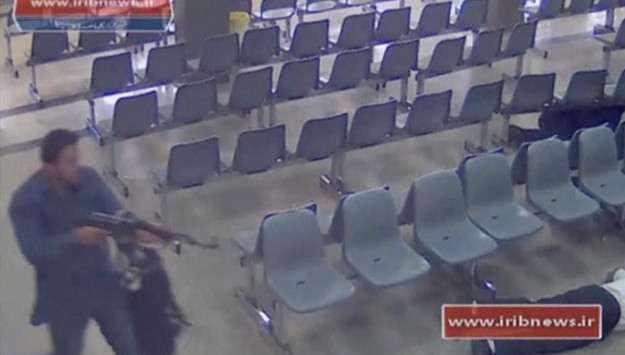
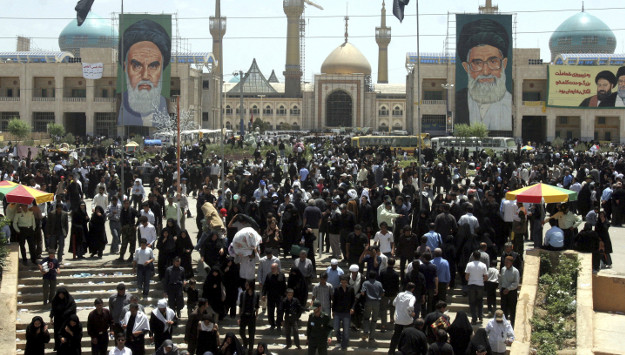
Gunmen and suicide bombers today killed at least 12 people and wounded 42 others in simultaneous attacks on the Iranian parliament and the mausoleum of the Islamic Republic’s founder in the capital city of Tehran – the first major attack claimed by the Islamic State inside Iran to date. While all details of the attacks are not yet clear, Iranian hardliners and the powerful Revolutionary are already exploiting the tragedy to justify their increasing securitization of the Iranian society and costly military involvement in regional conflicts at the expense of domestic priorities.
The U.S.-led coalition announced today that it “destroyed additional pro-Syrian regime forces that advanced inside the well-established de-confliction zone in southern Syria.” The U.S.
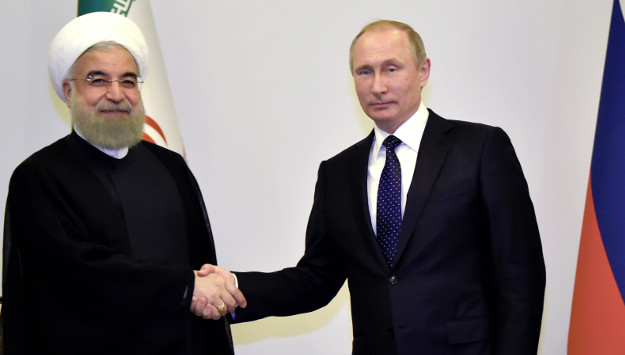
A senior Iranian official has said that cooperation between Iran and Russia in Syria elevated relations between the two countries to a strategic level and changed the balance of power in Syria in favor of the government of Bashar al-Assad and its foreign allies.
A senior Iranian official said that the era of American “hegemony” has ended and called on the U.S. military forces to leave the Middle East region.
Iraqi Kurdish Region President Masud Barzani has warned that the Hashd al-Shaabi – the paramilitary Iraqi forces also known as the Popular Mobilization Forces (P.M.F.) – is complicating the security and political situation in Mosul and broader Nineveh Province.
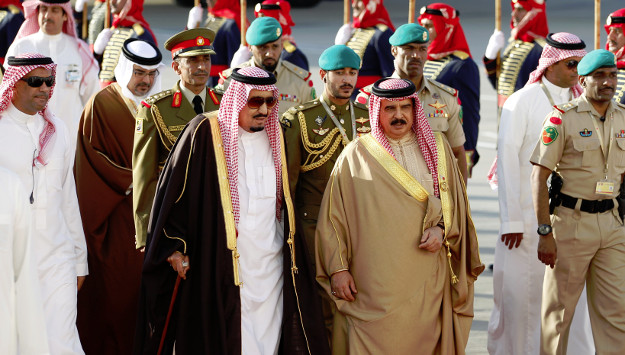
Iranian leaders and media outlets today reacted to a decision by Saudi Arabia and several other Arab nations to sever diplomatic and commercial ties with Qatar by blaming Washington and Riyadh for regional tension and discord. Alaeddin Boroujerdi, the chairman of Iranian Parliament’s Committee on National Security and Foreign Policy, said the rising tension is a direct result of President Donald Trump’s visit to the Middle East.
The Iraqi Popular Mobilization Forces (P.M.F.) – also known as the Hashd al-Shaabi – on Sunday seized the center of al-Baaj, one of the last bastions of the Islamic State in northwestern Iraq close to the Syrian border, the Iraqi and Iranian media reported. Iraqi air force assisted the P.M.F.
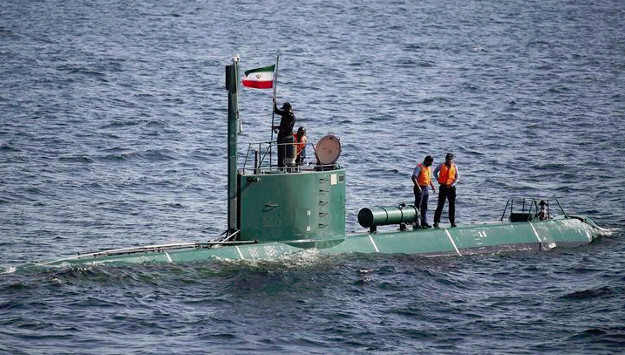
A senior Iranian military official has said that the country’s 47th flotilla of warships will be deployed to the Indian Ocean this month to protect the country’s cargo ships and oil tankers, according to Fars News Agency, which is affiliated with the Islamic Revolution Guards (I.R.G.C.), “The 46th flotilla, which was dispatched to the high seas some time ago, is now halfway through its mission and will return home in the coming days,” Rear Admiral Peyman Jafari Tehrani, the deputy commander of the Iranian Navy, said.
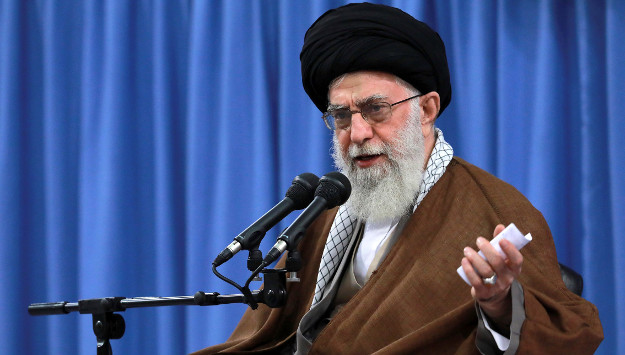
Iran’s Supreme Leader Ali Khamenei on Sunday blasted the Trump administration for trying to create a regional security alliance to counter Iran, and claimed that the new initiative will not succeed.
After making significant territorial gains in western Mosul and reaching the Syrian border, Iran-backed Iraqi militia forces today announced that they plan to “recapture” the strategic al-Tanf border crossing from the U.S.-backed Syrian opposition groups, the Iranian media reports.
Read the full article on The Cipher Brief.
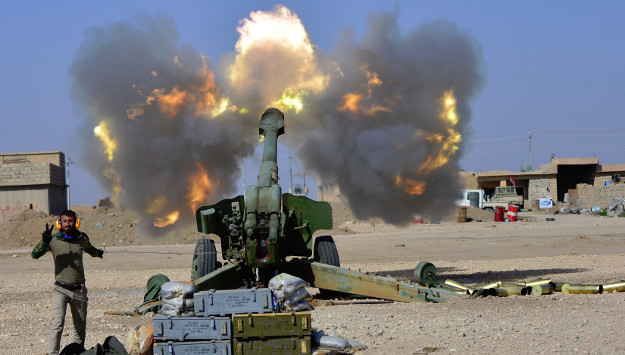
The Iraqi Popular Mobilization Forces today seized more territory from the Islamic State in western Mosul near the Syrian border, the Iranian media reports. After heavy clashes with Islamic State militants south of the al-Ba’aj region, the paramilitary forces reportedly captured the village of al-Khibra and the nearby al-Sakaar housing complex.
The persecution of the Baha’i community in Yemen has markedly increased and resembles the state-sanctioned mistreatment of the minority group inside Iran, according to the latest reports by the United Nations and human rights organizations. “The recent escalation in the persistent pattern of persecution of the Bahá’í community in Sana’a mirrors the persecution suffered by the Bahá’ís living in Iran,” the U.N.