This individual is a guest contributor. MEI is not able to assist with contact requests.
Attiya Ahmad is Georgetown University’s 2009-10 Center for International and Regional Studies Post-Doctoral Fellow. She recently completed her PhD in Cultural Anthropology at Duke University. Dr. Ahmad’s work brings together scholarship on Islamic studies, globalization, diaspora and migration studies, economic anthropology, and political economy.
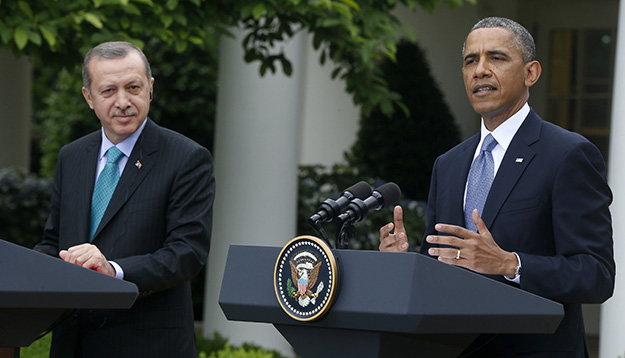
Washington-Ankara Tensions Will Shape Obama’s Legacy in Turkey
This paper is part of an MEI scholar series, titled “Obama’s Legacy in the Middle East: Passing the Baton in 2017.” Click here to view the full project, or navigate using the table of contents to the right.
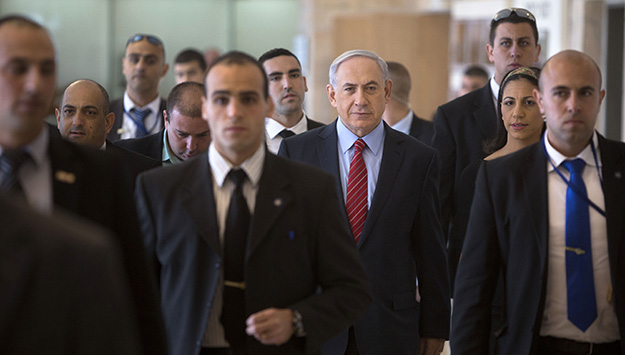
There’s an expression in Israel along the lines of “people are scrupulously honest with pollsters, then they get into the voting booth and lie like hell.” It is important to bear this chestnut in mind as one scans survey returns regarding prospects for the major parties in the upcoming elections.
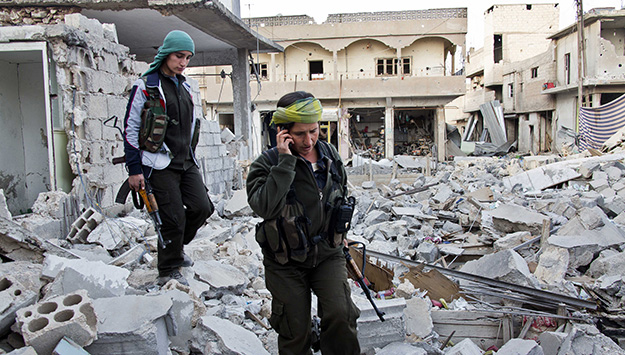
In the ongoing fighting in and around Kobani in northern Syria, it appears likely that the defending Kurdish forces will ultimately prevail and be able to expel the Islamic State (ISIS). However, in order to enable refugees to return, substantial aid and reconstruction efforts will be needed, and more benign Turkish border policies are essential in the meantime.
Religious interaction between the Arabian Peninsula and Indonesia has a long history. Traders and missionaries from the Peninsula were the primary sources of Islam to the archipelago. Saudi Arabia’s Islamic credentials in Indonesia have been strengthened by the fact that Mecca and Medina are part of the Kingdom.
This paper is part of an MEI scholar series, titled “Obama’s Legacy in the Middle East: Passing the Baton in 2017.” Click here to view the full project, or navigate using the table of contents to the right.
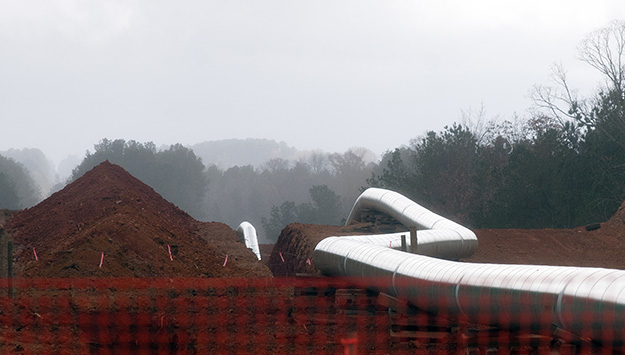
Obama and Declining U.S. Dependence on Imported Oil and Gas
This paper is part of an MEI scholar series, titled “Obama’s Legacy in the Middle East: Passing the Baton in 2017.” Click here to view the full project, or navigate using the table of contents to the right.
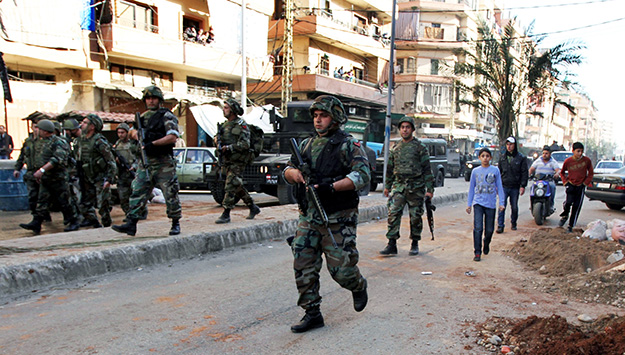
The Syrian Conflict and the Ascendancy of the Lebanese Armed Forces
In the past, the Lebanese Armed Forces’ (LAF) inability to confront or deter Israel was reflected as political weakness for the Lebanese government vis-à-vis Hezbollah. Israel’s withdrawal from south Lebanon in 2000 heralded a growing political role for Hezbollah. This role was further enhanced by the 2006 war with Israel, with Hezbollah claiming victory and consolidating its influence within the LAF and the government.
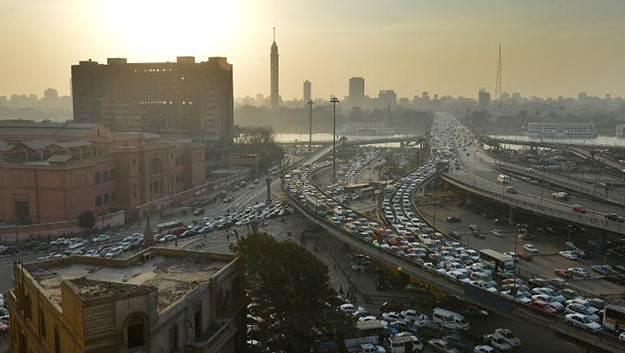
Cairo’s Ring Road, a peripheral highway linking the city’s core to surrounding districts, is an eight-lane free-for-all, with cars, buses, and overloaded trucks weaving randomly at high speeds. “I for one consider it to be an off-road, not a highway,” says Mahmoud Mostafa Kamal, editor of the online Arabic-language automotive magazine, el-Tawkeel (The Dealership).
Tunisia will hold its first presidential elections on Sunday, November 23. Main candidates include former Interim Prime Minister Beji Caid Essebsi of the Nidaa Tounes Party, Moncef Marzouki of the Congress for the Republic (CPR), and Mustapha Kamel Nabli, a former governor of the Central Bank of Tunisia. The Islamist Ennahda party did not present a candidate, wrongly assuming that it would regardless become the strongest voice in politics.
Islamic Politics in Indonesia: Domestic Challenges, Cross-National Inspirations
At the height of harsh authoritarian rule of the Suharto era, Islamic political activism was often the focus of the most intense of state repression. Because the Indonesian Communist Party had been destroyed in the 1960s, only Islamic organizations possessed the potential to mobilize substantial grassroots support. Thus, they were considered a particular threat to the centralized and rigid authoritarianism of Suharto’s New Order regime.