This individual is a guest contributor. MEI is not able to assist with contact requests.
Attiya Ahmad is Georgetown University’s 2009-10 Center for International and Regional Studies Post-Doctoral Fellow. She recently completed her PhD in Cultural Anthropology at Duke University. Dr. Ahmad’s work brings together scholarship on Islamic studies, globalization, diaspora and migration studies, economic anthropology, and political economy.
Jawad Nabulsi was looking straight at the policeman the moment he was shot in the face. The black-clad officer raised the barrel of his gun, pointed it directly at Nabulsi’s eyes, and pulled the trigger.
It was 11pm on January 28, 2011. The “Friday of Rage,” as protesters called it, would later be labeled the bloodiest day in the revolution that toppled autocrat Hosni Mubarak.
Coverage of Egypt over the past three years has focused on the dramatic political events, yet it was the dire economic situation that created the pressure for the multiple uprisings. And if economic decline is not reversed over the next few years, Egypt might fall over an economic precipice that risks rendering the country eventually ungovernable. Security and political reform are urgently necessary in their own right, and will have a positive effect on the economy if achieved, but bold structural economic reform is also necessary to reverse Egypt’s downward spiral.
South Korea’s Immature Professionalism in the Security Sector
It is widely accepted that South Korea has successfully consolidated democracy. For example, U.S. President Barack Obama cited South Korea as an exemplary case of economic growth and democracy in his famous speech at Cairo University on June 4, 2009. Two years later, when Egypt underwent a civil uprising that brought to an end the country’s decades-old Mubarak regime, he lauded South Korea’s democracy once again, suggesting that “Egypt could transform itself into a democracy on the model of Indonesia, Chile, or South Korea.” By 2013, however, alleged election fraud in South Korea had damaged the international reputation of its mature democracy. The Democratic Party—the country’s main opposition party—publicly called the 2012 presidential election unfair because the National Intelligence Service (NIS) had manipulated public opinion prior to the election, leaving disparaging comments about opposition party candidate Moon Jae-in on popular websites.
Libya on the Brink: Insecurity, Localism, and the State Not Back In
This essay is part of the Middle East-Asia Project (MAP) series on “’Civilianizing’ the State in the Middle East and Asia Pacific Regions.” The series explores the past and ongoing processes of Security Sector Reform (SSR) in Asia-Pacific countries and examines the steps already taken and still needed in the MENA region. See More
The Clash of Former Allies: The AKP versus the Gulen Movement
A major political row between Turkish Prime Minister Recep Tayyip Erdogan’s Justice and Development Party (AKP) and preacher Fethullah Gulen’s Islamic movement has been simmering in Turkey. The clash between the two former allies will have important implications at a time when Turkey appears increasingly vulnerable, with a war raging in Syria and the government facing fierce challenges from within. The rift will have an effect on a gamut of issues, from the “Kurdish opening” to upcoming local and presidential elections.
All Retributive Justice, No Restorative Justice in the Post-Arab Spring Middle East
In the wake of the revolutionary fervor that has swept the Middle East and North Africa since the beginning of 2011, retributive justice has taken precedence over restorative justice approaches as countries seek to address human rights violations.
The Egyptian revolutionary motto, “bread, freedom, social justice,” which echoed over 18 days until Hosni Mubarak’s ouster on February 11, 2011, illustrated how restricted access to food had become one of the people’s main grievances. In the aftermath of the revolution, infused by a renewed sense of ownership of their country, many citizens launched environmental initiatives with a focus on sustainable agriculture.
The Popular Committees of Abyan, Yemen: A Necessary Evil or an Opportunity for Security Reform?
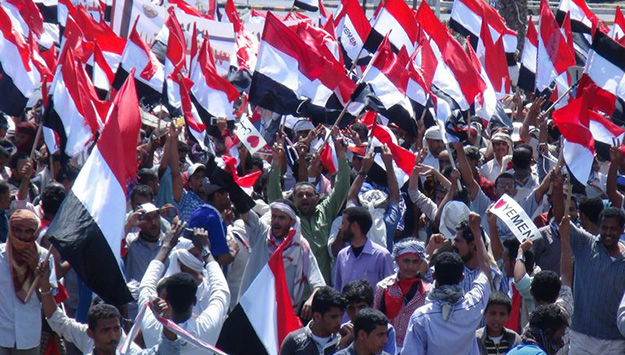
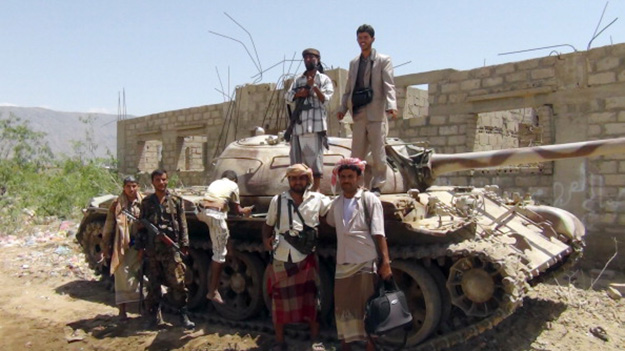
In early 2011, Yemeni youths took to the street to demand the downfall of the regime and much-needed democratic reforms. This eventually led to the removal of former president Ali Abdullah Saleh from power later the same year. The political turmoil associated with the uprising has resulted in an alarming deterioration of the security situation throughout the country, most notably the seizure of two major cities in the southern governorate of Abyan by Ansar al-Shariah (AAS), an offshoot of al-Qa`ida. Backed by the Yemeni government, the Popular Committees (PCs), local armed resistance groups, pushed AAS out of major cities in Abyan.
Transition to Democracy at the Expense of Justice: The 2-28 Incident and White Terror in Taiwan
This paper discusses attempts at reconciliation that followed Taiwan’s transition to democracy after four decades (1947–1987) of political repression in which new settlers from the Chinese mainland, known as waishengren (provincial outsiders), suppressed a native population, known as benshengren (provincial natives), that had formerly experienced 50 years (1895–1945) of Japanese colonial rule. As a case study, I draw on field research undertaken between 2004 and 2006 in the village of Luku. I ask to what extent Taiwan has redressed the defining massacre that occurred on February 28, 1947, known as the 2-28 Incident, and the repression that followed, known as the White Terror (1949–1986). To what extent can Taiwan be sure that state terror will not recur? Further, what lessons are there for the “Arab Spring?”
Sequencing Transitional Justice Mechanisms: Lessons from the Solomon Islands
Between 1998 and 2003 the Melanesian archipelago state of the Solomon Islands was marked by a violent civil conflict precipitated by a combination of ethnic tensions, economic insecurities, and perceived injustices. Known colloquially as “The Tensions,” the low-intensity conflict left around 200 people dead and more than 11,000 displaced from their homes. In addition, more than 5,700 human rights violations were committed during the conflict, of which at least 1,413 involved torture. Although its transition has not been from authoritarian rule to democracy, the Solomon Islands’ attempts to address the human rights violations that took place during this conflict hold a number of important lessons for the transitional states of the Middle East.
Since the “Arab Spring,” international actors have considered Tunisia an exemplar of democratic transition in the Arab world. But this optimism is increasingly being replaced by fear and frustration, especially within Tunisia itself. Transitional justice—dealing with the crimes committed by previous regimes—is one of the subjects of debate.

 Caught by Surprise: Letter Found in Rare Book Collection