This individual is a guest contributor. MEI is not able to assist with contact requests.
Attiya Ahmad is Georgetown University’s 2009-10 Center for International and Regional Studies Post-Doctoral Fellow. She recently completed her PhD in Cultural Anthropology at Duke University. Dr. Ahmad’s work brings together scholarship on Islamic studies, globalization, diaspora and migration studies, economic anthropology, and political economy.
Along with countries such as Syria and Iraq, Pakistan has become a theater of doctrinal differences between Shia and Sunni Muslims, signifying that rifts between local groups have become linked to the wider violent sectarianism in the Middle East.
The Asia-Pacific in the "Golden Age of Gas": Implications for Middle East LNG Exporters
Qatar, as the world’s largest single LNG exporter, will be at the forefront of competition with key players in both the European and Asian markets. As an infra-marginal producer with all major capital investments already in place and in the process of being amortized, Qatar occupies a privileged though by no means entrenched competitive position.
Japan’s Unfinished Democracy: Lessons for Democratic Transformation in the Middle East
Stability in the Middle East is essential for Japanese prosperity. Japanese investment and aid has already made significant contributions to the region’s socio-economic stability. The next step is for Japan to contribute its lessons learned as a successful case of democratic transformation.
Interview with Dr. Yiyi Chen on Hebrew/Jewish Studies in China and Sino-Israel Relations
Some might find it surprising to learn that China was never hostile or belligerent towards Israel. China never rejected or even questioned the State of Israel’s right to exist. Premier Zhou En Lai criticized Palestinian terrorism and categorically rejected the idea of ‘throwing the Israelis into the sea.’
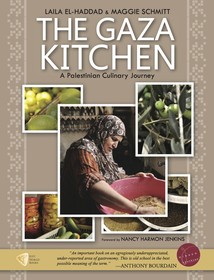
The Middle East Institute, The Foundation for Middle East Peace and Just World Books Present:A cookbook and more than a cookbook, The Gaza Kitchen: A Palestinian Culinary Journey brings together traditional recipes from the Gaza Strip based on extensive interviews with home cooks, and uses profiles of these cooks as well as beautiful documentary photography to explore the history, economy and daily life of the territory.
The Middle East Institute, The Foundation for Middle East Peace and Just World Books Present:A cookbook and more than a cookbook, The Gaza Kitchen: A Palestinian Culinary Journey brings together traditional recipes from the Gaza Strip based on extensive interviews with home cooks, and uses profiles of these cooks as well as beautiful documentary photography to explore the history, economy and daily life of the territory.
The Middle East Institute, The Foundation for Middle East Peace and Just World Books Present:A cookbook and more than a cookbook, The Gaza Kitchen: A Palestinian Culinary Journey brings together traditional recipes from the Gaza Strip based on extensive interviews with home cooks, and uses profiles of these cooks as well as beautiful documentary photography to explore the history, economy and daily life of the territory.
The Middle East Institute, The Foundation for Middle East Peace and Just World Books Present:A cookbook and more than a cookbook, The Gaza Kitchen: A Palestinian Culinary Journey brings together traditional recipes from the Gaza Strip based on extensive interviews with home cooks, and uses profiles of these cooks as well as beautiful documentary photography to explore the history, economy and daily life of the territory.
The Middle East Institute, The Foundation for Middle East Peace and Just World Books Present:A cookbook and more than a cookbook, The Gaza Kitchen: A Palestinian Culinary Journey brings together traditional recipes from the Gaza Strip based on extensive interviews with home cooks, and uses profiles of these cooks as well as beautiful documentary photography to explore the history, economy and daily life of the territory.