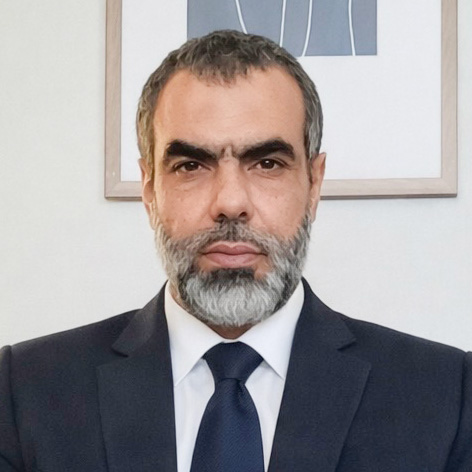
Attiya Ahmad is Georgetown University’s 2009-10 Center for International and Regional Studies Post-Doctoral Fellow. She recently completed her PhD in Cultural Anthropology at Duke University. Dr. Ahmad’s work brings together scholarship on Islamic studies, globalization, diaspora and migration studies, economic anthropology, and political economy.
The Latest from Attiya Ahmad

The Struggle for a Democratic Future in Afghanistan
Audio recording from The Struggle for a Democratic Future in Afghanistan
Saudi Arabia’s Religious Counter-Terrorist Discourse
Originally posted: October 2009
Egypt's Unfinished Revolution: One Year Later
The Middle East Institute is pleased to host Egyptian journalist Ashraf
Khalil for a discussion of his new book, Liberation Square: Inside the
Egyptian Revolution and the Rebirth of a Nation, and the political
landscape in Egypt on the first anniversary of the revolution. This
book is the first account of the Tahrir Square uprisings from someone
who was on the ground and witnessed the protests firsthand. Ashraf
Khalil will analyze the status quo in Egypt today and reasons for both
Egypt's Unfinished Revolution: One Year Later
Podcast for “Egypt’s Unfinished Revolution: One Year Later”
Ashraf Khali
10 Feb, 2012
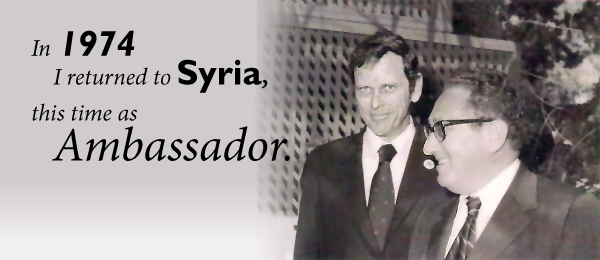
Up to the Minute: The Latest Political Developments in Syria
This Opinion was first delivered as a speech at Princeton University's Woodrow Wilson Institute on February 7, 2012
Syria: Bashar Doesn’t Know 2012 is not 1982
Bashar al-Assad and his top regime cronies appear to be operating under a deeply flawed assumption: the relatively broad-based opposition it now faces is similar to the narrower Muslim Brotherhood challenge it defeated back in 1982 by killing more than 10,000 Syrians in Hama. Much the same way it did 30 years ago, the regime keeps pounding away at the resistance. But unlike the Hama massacre, a few severe blows will not put an end to this latest uprising. Instead, Assad’s brutish tactics will only escalate the bloodshed and resistance.
Kurdish Consensus at Home Can Serve Ankara Abroad
This Opinion first appeared in The National on February 10, 2012
Despite his popularity at home and abroad, it’s not all roses for Turkish Prime Minister Recep Tayyip Erdogan. Far from having zero problems with neighbors, Turkey these days is virtually surrounded by neighbors with problems – Greece’s imploding economy, Syria’s civil war, Iraq’s tenuous stability and Iran’s troublesome nuclear program.
The Israeli Peace Initiative
The Israeli Peace Initiative (IPI) calls upon the Israeli government to
present a framework for the conclusion of the Israeli-Arab conflict as
a comprehensive response to the 2002 Arab Peace Initiative.
Why the Syrian Rebels Should Put Down Their Guns
This Opinion first appeared in TheAtlantic.com on February 8, 2012
The Israeli Peace Initiative: A Regional Perspective
The Israeli Peace Initiative (IPI) calls upon the Israeli government to present a framework for the conclusion of the Israeli-Arab conflict as a comprehensive response to the 2002 Arab Peace Initiative. Israeli Peace Initiative signatories include former Israeli Defense Forces chiefs of staff Amnon Lipkin-Shahak and Amram Mitzna; former Shin Bet directors Jacob Perry and Ami Ayalon; Ha'aretz correspondent Akiva Eldar; Members of the Knesset (MKs) Dalia Rabin and Colette Avital; and many other distinguished Israelis. Mr.
Vetoes Leave Syria Headed for a Bloody Stalemate
This Opinion was first published on CNN.com on February 6, 2012
The double veto cast by Russia and China at the United Nations Security Council on Saturday represents a clarifying moment in the Syrian uprisings.
At the 2012 Munich Security Conference, U.S. Secretary of State Hillary Clinton noted, "We don't know what the endgame will be until we start the game." Well, fasten your seatbelt — the game over Syria has started.
Israel's Palestinians: The Conflict Within
Ilan Peleg and Dov Waxman, authors of the book Israel's Palestinians:The Conflict Within (Cambridge, 2011), discuss their findings. One in five citizens of Israel are Palestinian. Often overlooked by outside observers, the challenges facing the Palestinian minority in Israel are an inseparable part of the Israeli-Palestinian conflict. Resolving this conflict – a central concern of U.S. foreign policy and current international diplomacy – requires more than the establishment of a Palestinian state. The demands of Palestinian citizens of Israel must also be addressed.