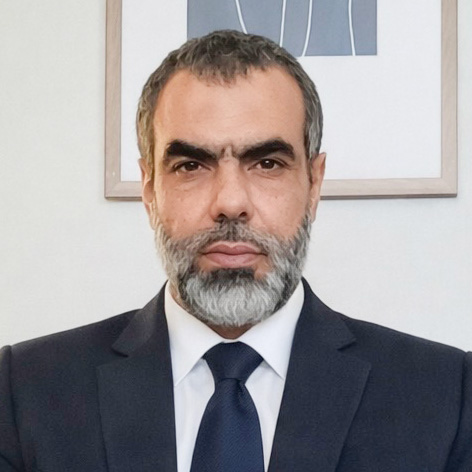
This individual is a guest contributor. MEI is not able to assist with contact requests.
Attiya Ahmad is Georgetown University’s 2009-10 Center for International and Regional Studies Post-Doctoral Fellow. She recently completed her PhD in Cultural Anthropology at Duke University. Dr. Ahmad’s work brings together scholarship on Islamic studies, globalization, diaspora and migration studies, economic anthropology, and political economy.
Saudi Arabia on the Edge: The Uncertain Future of an American Ally
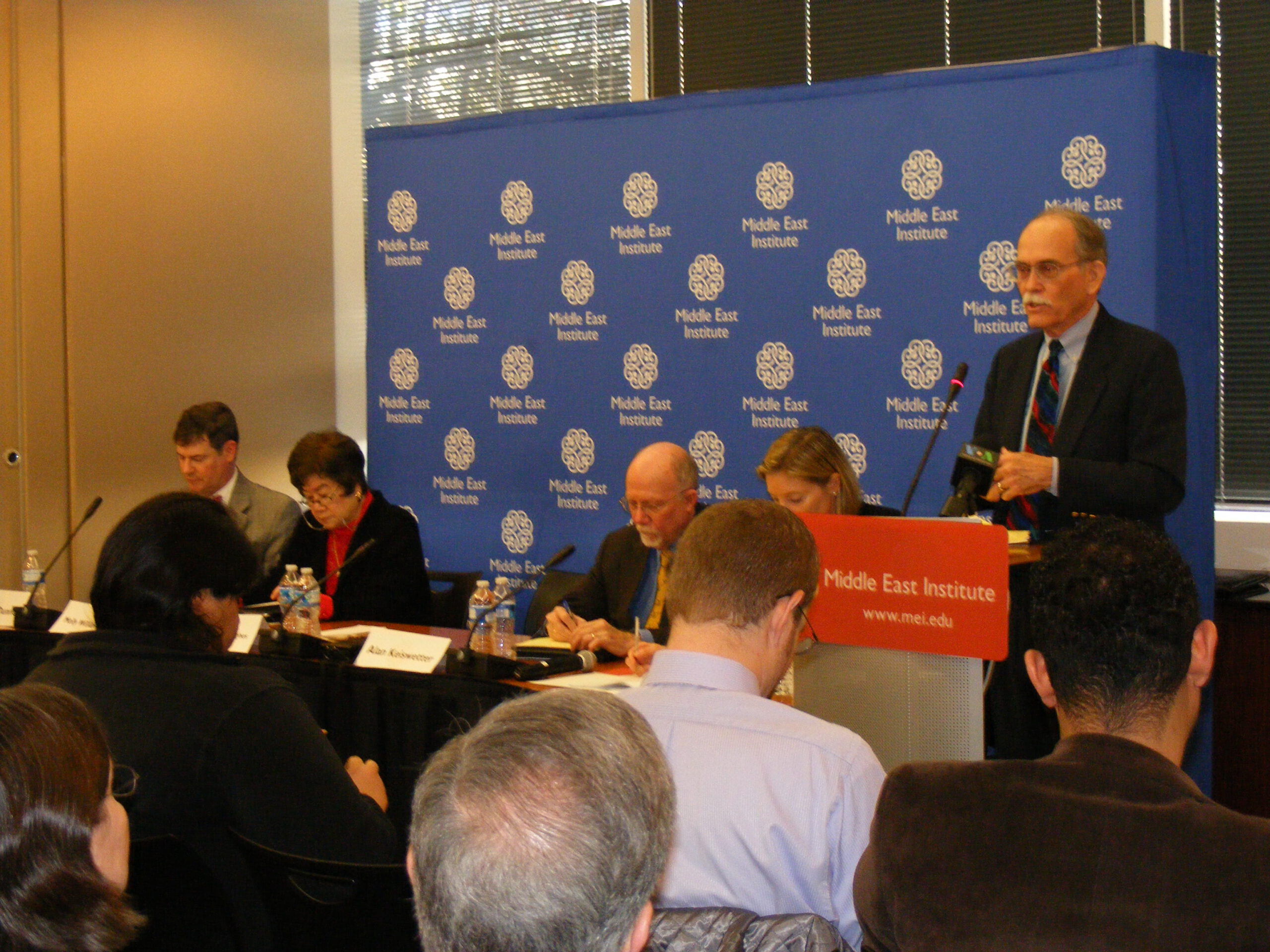
The Middle East Institute is proud to host MEI scholar Thomas W. Lippman for a discussion of his new book, Saudi Arabia on the Edge: The Uncertain Future of an American Ally. Of all the countries that are vital to the strategic and economic interests of the United States, Saudi Arabia is the least understood by the American people.
*This Opinion first appeared in the Huffington Post on December 13, 2011
The first free and by all accounts fair elections in Egypt mark a major turning point in the country's long history. In what is likely to be a tenuous and trying transition to democracy, Egypt's Islamists won a resounding victory, gaining two-thirds of the vote in the first round of Egypt's parliamentary elections. While many in the West fear that the Islamist victory in this first election will radicalize Egypt, in reality, the situation is far more complex and nuanced.
More than three decades after the Revolution of 1979, the Islamic Republic of Iran Army [Artesh-e Jomhouri-ye Eslami-ye Iran] and the Islamic Revolutionary Guard Corps [Sepah-e Pasdaran-e Enqelab-e Eslami] (IRGC), remain entangled in a state of fierce rivalry.
Much attention has been given to the IRGC’s asymmetric defense capabilities, its role in Iraq’s post-2003 insurgency, and its alleged hold over the Strait of Hormuz, but there is little scrutiny in open source literature on the significance of the Iranian Army (Artesh) to Iran’s national security.
Since its inception in 1979, the Islamic Republic of Iran (IRI) has duplicated almost all state institutions. It retained the institutions that existed under the old regime while creating new Islamic agencies to perform the same tasks. The Iranian armed forces did not escape this process. Under the monarchy, the armed forces were called the Artesh Shahanshahi or Imperial Army. Although called the “Army,” or Artesh, the force consisted of the three main services (army, navy, and air force) plus the Imperial Guard Divisions (Gard-e Javidan) and the Army Aviation Command (Hawa Nirouz).
In an official gathering in December 2010, Major General Attollah Salehi, Commander-in-Chief of the Iranian Army said that during his visits to Army barracks, he would see the pictures of the leaders of the “sedition” (The Islamic Republic’s present hard-line leadership refers to opposition leaders and 2009 presidential candidates Mir Hossein Moussavi and Mehdi Karrubi as leaders of sedition) hanging on the walls.
Along with Egypt and Turkey, Iran is one of the most populous countries in the Middle East. Aware of its strategic significance and millennium-long civilization, Iranian leaders have always aspired to assume a leadership role on regional and international issues and pursued an assertive policy to reach their country’s potential. This ambitious strategy requires, among other things, strong military forces.