This individual is a guest contributor. MEI is not able to assist with contact requests.
Professor Daniel Serwer (Ph.D, Princeton) is a senior fellow at the Foreign Policy Institute of the Johns Hopkins School of Advanced International Studies, where he taught conflict management for a decade. He serves on the board of the Syria Justice and Accountability Center, as well as on the J Street Advisory Council. His current interests focus on the civilian instruments needed to protect U.S. national security as well as transition and state-building in the Middle East, North Africa, and the Balkans. His book, Righting the Balance: How You Can Help Protect America, was published in November 2013 by Potomac Books.
Formerly vice president for centers of peacebuilding innovation at the United States Institute of Peace, he led teams there working on rule of law, religion, economics, media, technology, security sector governance, and gender. He was also vice president for peace and stability operations at USIP, where he led its peacebuilding work in Iraq, Afghanistan, Sudan, and the Balkans and served as Executive Director of the Hamilton/Baker Iraq Study Group. Serwer has worked on preventing inter-ethnic and sectarian conflict in Iraq and has facilitated dialogue between Serbs and Albanias in the Balkans.
As a minister-counselor at the U.S. Department of State, Serwer directed the European office of intelligence and research and served as U.S. special envoy and coordinator for the Bosnian Federation, mediating between Croats and Muslims and negotiating the first agreement reached at the Dayton peace talks. From 1990 to 1993, he was deputy chief of mission and chargé d’affaires at the U.S. Embassy in Rome, leading a major diplomatic mission through the end of the Cold War and the first Gulf War.
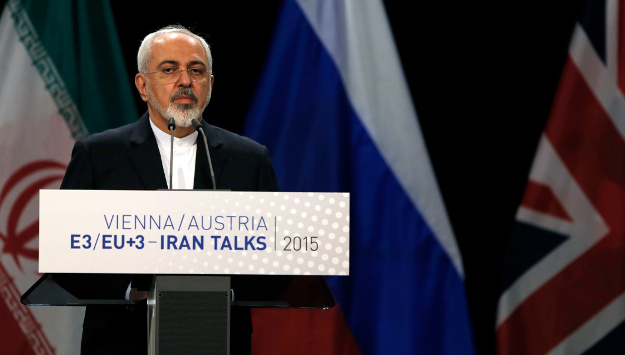
The Iran nuclear deal has only one big surprise: it is consistent with the April 2 “parameters” that preceded it and contains no surprises. No one caved. Nothing got walked back.
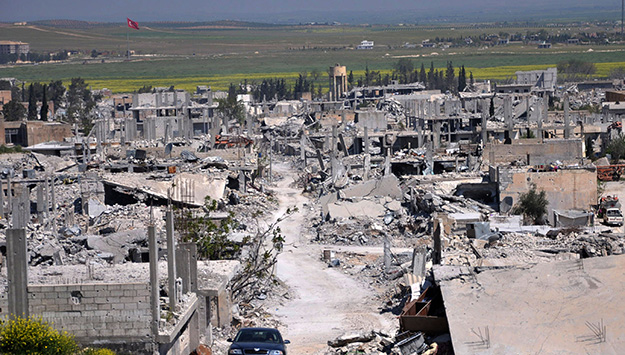
After more than four years of war, former U.S. Ambassador to Syria Robert Ford sees a fragmented country emerging, with six or more fluid and shifting zones of control:
**An Alawi/Hezbollah-controlled area along the Lebanese border and the Mediterranean coast, backed by Iran and Russia;
I ran into some Anbaris in Washington this week. All of them have lost friends or relatives in the fight against Islamist extremism in one form or another. They had interesting things to say.
Expert American opinion on the outcome of last month’s nuclear negotiations with Iran is sharply divided. Those who want Iran to give up all enrichment technology are relieved that a “bad” deal was averted.
Last week, President Obama said that he has no strategy yet to confront the Islamic State (IS) in Syria. He was attempting to counter speculation about American bombing of IS targets there. It had been rumored that the President wanted to decide on a war plan by the end of the week.[1]
President Obama’s decision to send 300 troops to Iraq to help Prime Minister Nuri al-Maliki’s government organize and gain the intelligence needed to fight off a Sunni rebellion spearheaded by the Islamic State in Iraq and Syria (ISIS) is getting decidedly mixed reviews.
Erbil, Baghdad, and Implications of the Oil Dispute
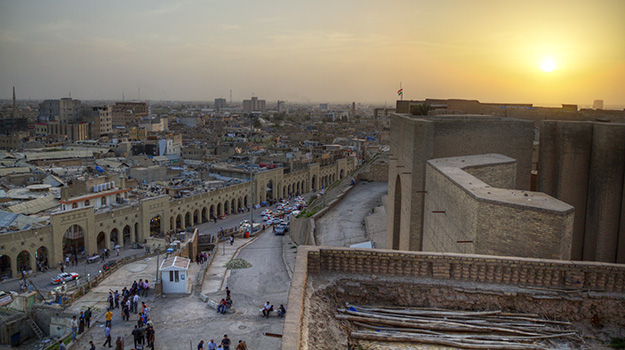
Erbil—the capital of Iraqi Kurdistan—was once a chaotic and dusty backwater. Today, it is well on its way to becoming an attractive and orderly commercial and government center. A decade ago there were virtually no trees, as they had all been cut down for firewood to heat Kurdish hearths during the 1990s wars among Kurds and between Kurds and Saddam Hussein’s army. A magnificent wooded park now graces the mile or so from the high-rise hotel district to the Kurdistan Regional Government’s parliament and offices.
This article was originally published on Salon.com on May 10, 2013
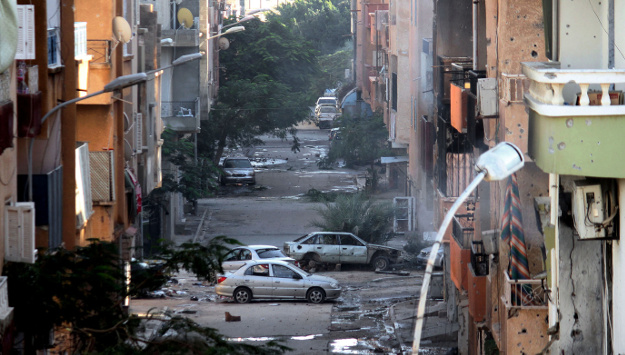
Watching Syria is like looking through a kaleidoscope. The picture seems to change dramatically in response to the slightest jolt, but the components remain the same. The past week has seen lots of jolts, but no real change in the elements that make up the sad picture.
This piece was originally published by Reuters on January 3, 2013 under the title Will This Be the Year That Israel Goes to War with Iran?
Assertions and opinions in this publication are solely those of the above-mentioned author(s) and do not necessarily reflect the views of the Middle East Institute, which expressly does not take positions on Middle East policy.
Israel did not bomb Iran last year. Why should it happen this year?
This article was first published by Reuters on December 12, 2012
Assertions and opinions in this publication are solely those of the above-mentioned author(s) and do not necessarily reflect the views of the Middle East Institute, which expressly does not take positions on Middle East policy
Senator John McCain was uncharacteristically subdued in a key note address yesterday to the Middle East Institute/Institute of Turkish Studies conference on Turkey. He prodded President Obama to be more outspoken in denouncing the Assad regime and advocated a “safe zone” inside Syria along the Turkish border, but only in response to a question. He discounted the likelihood of NATO action, which the Europeans oppose, and suggested that the U.S. and Turkey should form the core of a coalition of the willing to support the Syrian opposition with arms and training.
This Commentary was first published as an op-ed in the Washington Post on August 22, 2011
A relatively successful transition from the Gaddafi regime to a united, stable, more open and democratic Libya would be seen in the region, and more widely, as a credit to the NATO-led intervention. It would enable Libya to resume its oil and gas exports, demonstrate international community capacity to manage such transitions and encourage positive outcomes to other Arab Spring protests.