The Latest from Fatima Sadiqi
The Promise of Arab Youth: Gone Today, Here Tomorrow
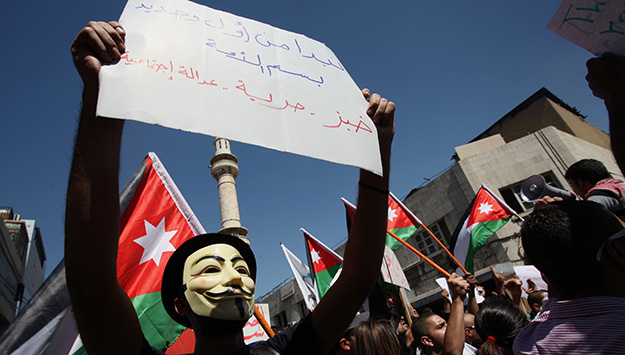
After the latest attacks in Tunisia, Kuwait, Paris, and Sinai, attention is focused once again on the threat posed by the radicalization of youth. Indeed, Arab youth do represent a threat—to the established order. They came out in their millions in 2011 to demand freedom, dignity, and jobs, and these demands will not go away. They have been pushed back out of the public space by older institutions reviving fights between state authoritarianism and dreams of a caliphate, and indeed some youth, out of frustration, will radicalize and turn to violence.
The Peace Window Is Closing For AfPak
This article was first published on Foreign Policy‘s South Asia Channel.

Egypt’s Mahragan: Music of the Masses
For Egypt’s low-income majority, weddings are the prime source of group entertainment, celebrated like block parties in cramped streets decorated with arabesque tapestries and drenched in colored lights and sound. You won’t hear romantic crooning at these gatherings; in Cairo’s densely-inhabited popular quarters, wedding parties are more akin to raves. The music is raw synthetic beat embroidered with syncopated tabla (Egyptian drum) samples and queasy electronic loops.

Collection Spotlight: Water in the Middle East
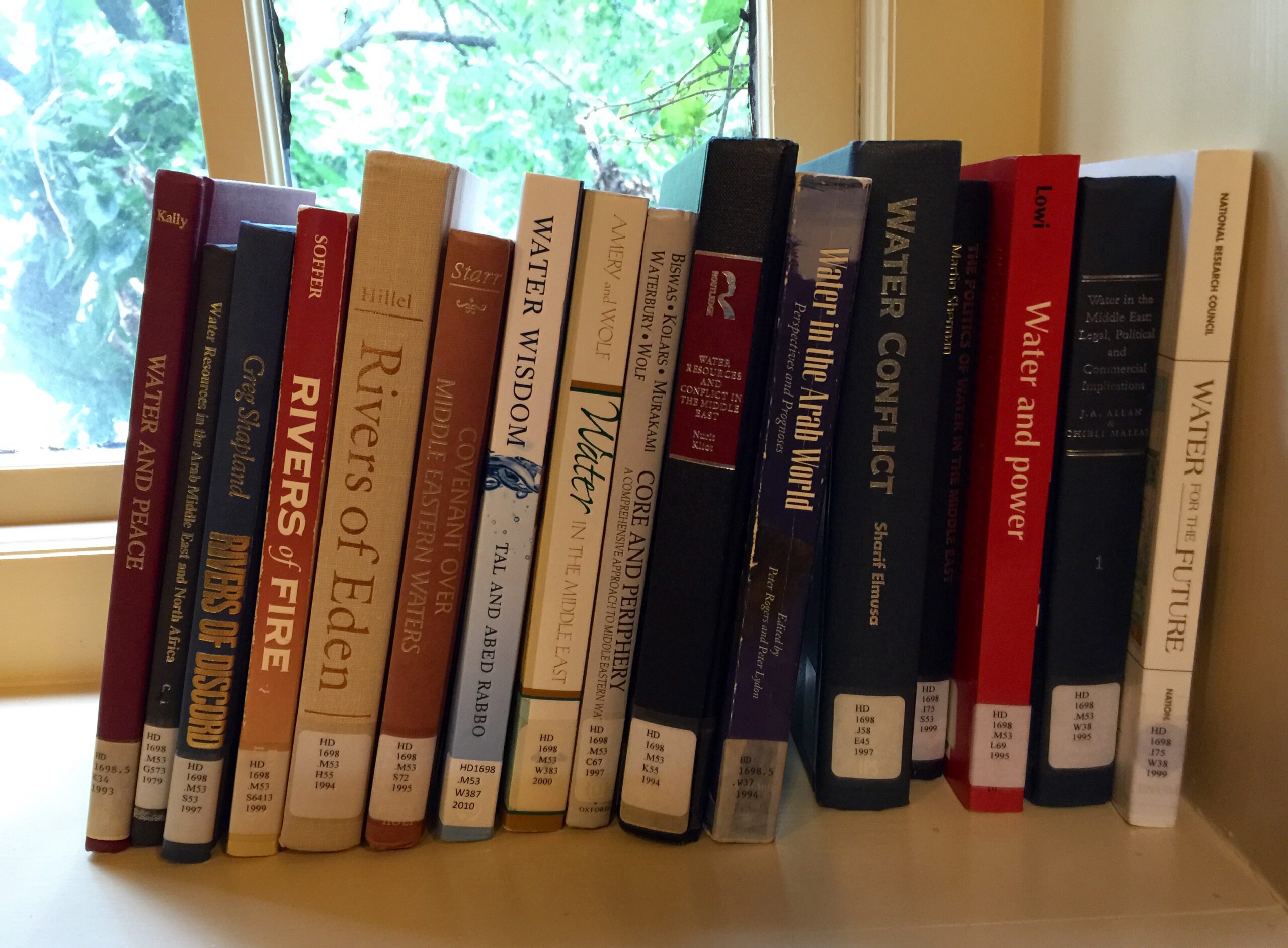
For many, an interest in the natural resources of the Middle East begins and ends with oil. However, in a region where systems of agriculture and manufacturing are threatened by increasing desertification and pervasive aridity, the amount, distribution, and control of water is drawing increased international attention.

Tweeting Terrorist Attacks in the U.S. and Europe
Social globalization has brought groups with different values and worldviews into contact with each other—in a physical and institutional sense to be sure, but also in the sense that the international exchange of ideas, information, and images has increased. This exchange occurs in both directions; American readers can reflect on the fervor in U.S.

Keynote Address: Countering Violent Extremism
Thank you. It’s a pleasure to be here to open this important event.
As I started to think about what I wanted to say today, a series of events came to mind: Fort Hood, Texas, 2009; Times Square, New York City, 2010; Boston, 2013; Paris last January; Madrid 2004; and London 2005. I also thought of Oklahoma City in 1995, Oslo and Utoya Island in 2011, and the Sikh Temple in Oak Creek, Wisconsin in 2012. Each involved citizens or residents of the country concerned.
Countering Violence Extremism: Local and Global Approaches — Welcome Remarks
Esteemed Colleagues, Ladies, and Gentlemen,
On behalf of the EU Head of Delegation and Ambassador David O’Sullivan, I would like to thank The Middle East Institute and the Fondation pour la Recherche Stratégique for organizing this conference and for their efforts in leading this dialogue on countering violent extremism.
Saudi Arabia's Quagmire
Read the full article on LobeLog.
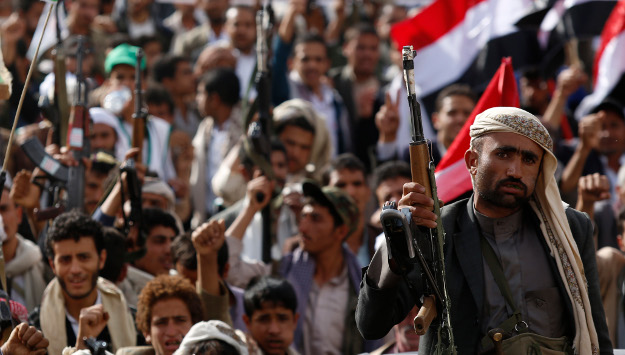
Three months after Saudi Arabia rounded up a few allies and began an intensive bombing campaign against the rebels known as Houthis across the border in Yemen, a conventional wisdom has developed. “It has not worked,” as The New York Times put it in a front-page article, and it probably can’t work because the strategic goals are too murky, the factions are too entrenched, the rivalries are too intense, and the conflict is too complicated to be resolved by a simplistic solution.

Asia’s Role in the Mideast Solar Surge
Renewable energy accounts for an ever-growing share of worldwide electricity generation capacity. Solar power, in particular, is on the rise globally. Indeed, within a decade solar power could become the most inexpensive source of electricity in many regions, including in the Middle East and North Africa (MENA). This essay examines the growth trajectory of solar energy in the MENA region and its relationship to developments in Asian, notably Chinese and Japanese, solar markets.
Hope amid Despair: Syrian Civil Society
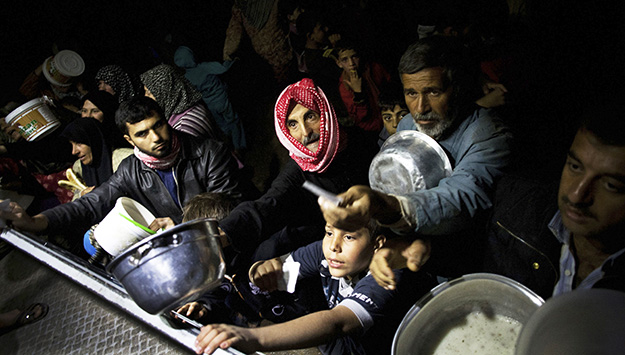
Despite the barrel bombs and chlorine gas, despite the threat from extremists—both religious and political—and despite the punishing dearth of resources, Syrian civil society continues to provide and protect. Though relatively little is written about it, Syrian civil society is remarkably active.
The Shi‘a Question in Saudi Arabia
Saudi Arabia is a Sunni-majority state and home to a significant Shi‘i minority, most of whom live in the Eastern Province. The Shi‘a there are mainly of the Twelver sect, which is also the major Shi‘i sect in Iran, Iraq, Kuwait, and Bahrain. The Eastern Province Twelvers are not the only Shi‘a in Saudi Arabia—there are sizable communities of Twelvers in Medina and Isma‘ilis in Najran—but it is they who sit at the center of the Shi‘i political movement in the kingdom.
How to Defend U.S. Interests in Syria
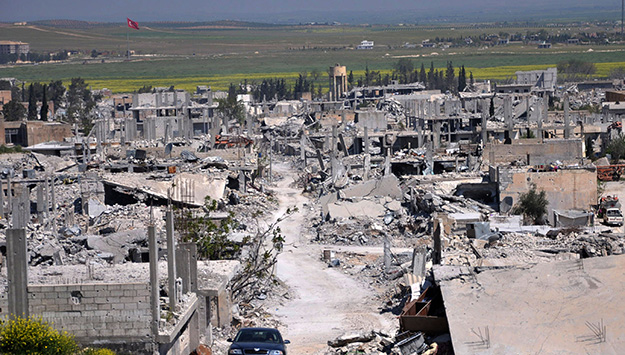
After more than four years of war, former U.S. Ambassador to Syria Robert Ford sees a fragmented country emerging, with six or more fluid and shifting zones of control:
**An Alawi/Hezbollah-controlled area along the Lebanese border and the Mediterranean coast, backed by Iran and Russia;



