The Latest from Fatima Sadiqi

Democracy Cannot Exist without Social Cohesion: The Myanmar Challenge
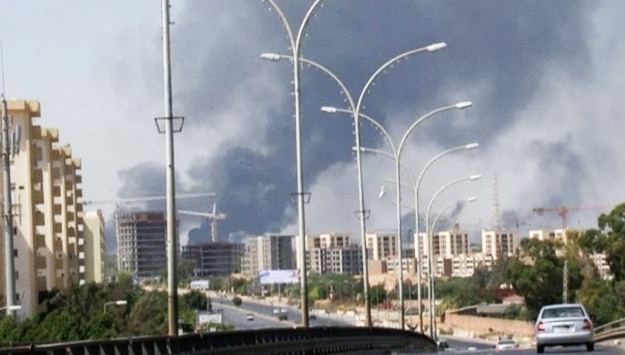
By emphasizing uniformity through laws to protect one class of race and religion, Myanmar legislators are advancing a device for oppression. If enacted, the Law on Protection of Race and Religion would not only breach international conventions; it would also preset the conditions for further sectarian violence.

Salafism and the Persecution of Shi‘ites in Malaysia
In the last few decades, religious scholars have branded many age-old Malay and Sufi religious practices as wrongful innovations. One of the great casualties of this rising intolerance has been Shi‘ism, whose followers have received some of the most intense criticism. It is widely accepted that these developments have much to do with the rise of Salafism.

A Conversation with Taysir Batniji, Acclaimed Gaza-born Artist
El-Sisi’s Predicament with the Gaza Crisis
The current crisis in Gaza represents the first real foreign policy test for Egyptian president Abdel Fattah el-Sisi. Hamas’s rejection of the Egyptian initiative to end hostilities calls into question Egypt’s ability to maintain its decades-long special status as mediator, a role it assumed by virtue of its relations with all parties – Israel and the United States on one hand, and the PLO and Hamas on the other.

Creating Jobs, Building Opportunities: Egypt's Way Forward
Gaza Crisis Shows Turkey’s Declining Regional Influence
The Israeli incursion into Gaza and the ensuing diplomatic efforts to end the violence have revealed Turkey’s waning influence in the region.
The Turkish government has been promoting itself as a potential mediator between Israel and Hamas. The latter’s rejection of an Egyptian ceasefire in mid-July bolstered Turkey’s hopes of playing a key role, as did its inclusion in this past weekend’s Paris summit hosted by U.S. Secretary of State John Kerry.
Malaysia and its Shi‘a “Problem”
The primacy of ethnic Malays (and by association their adherence to Sunni Islam) has meant that Shi‘i Islam is considered a “deviant” sect in the country. Although official spokespeople regularly claim that the state has no concerns about Shi’a practicing their faith as long as they refrain from proselytizing, adherents face both social and legal restrictions.
The Future of Tunisia's Nidaa Tounes Party
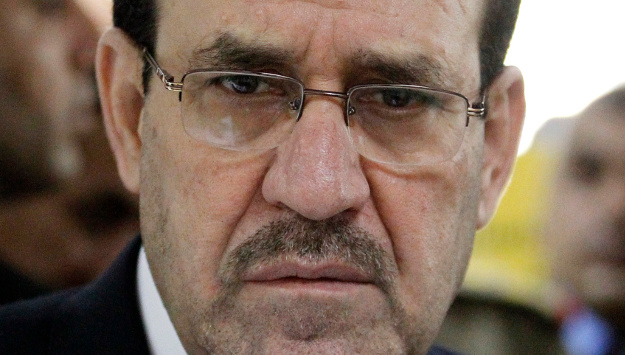
When the Nidaa Tounes (“Call for Tunisia”) party was formally licensed in July 2012, it positioned itself as a “modern” alternative to the Islamist Ennahda party. Led by former interim prime minister Béji Caid Essebsi, Nidaa Tounes drew a wide range of people, including supporters of Tunisia’s Destourian (“Constitution”) movement, trade unionists, leftists, and independents, as well as former members of Zine el-Abidine Ben Ali’s Constitutional Democratic Rally (RCD) party.
Egypt’s Least Bad Option for Addressing Energy Troubles
A proposed deal to export Israeli natural gas through Egypt has the potential to enable Israel’s entry into its first major export markets, help Egypt escape a deepening energy crisis, and welcome the first European players into Israel’s natural gas industry. However, the deal is complicated by political realities and a history of deeply rooted grievances between the two countries, made worse by the recent violence between Israel and Hamas in Gaza.

Screening and Discussion of Award-Winning Documentary "Salaam Dunk"
Shi‘a-Inspired Violence in Malaysia: A Possibility?
Ever since the triumph of Iranian Shi’a revolutionaries against the shah in 1979, the Malaysian government has been wary of the dangers of the revolution being exported across its borders. The author argues that rather than oppressing and vilifying indigenous Shi‘a citizens, the state should engage them intellectually, socially, and perhaps even religiously, in the spirit of Prime Minister Najib Razak.

Why the U.S. Has Limited Options In Iraq
When US commanders in Iraq in 2006 were trying to figure out the best way to approach the burgeoning insurgency, two points of view emerged from the debate.