Al-Qa’ida is not simply the terrorist organization responsible for the 9/11 attacks; it is a violent manifestation of a social movement that rejects the current international order.
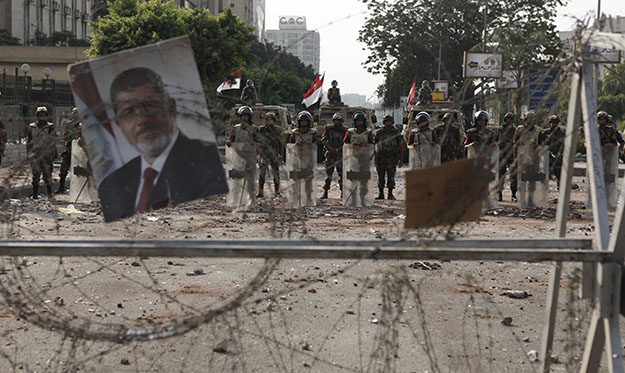
The United States government announced last week that it would not, after all, make a determination as to whether the ouster of Egypt’s Mohamed Morsi constituted a “coup.”[1] This decision has both important strategic and financial implications for the United States. By not designating Morsi’s expulsion as a military coup, U.S. law allows the United States to continue its $1.5 billion in annual aid to Egypt.
Iranians in Malaysia: Artist Asghar Yaghoubi and His "Journey Within"
Artist Asghar Yaghoubi, who was born in Shiraz, Iran, moved to Malaysia in 2008. An accomplished painter and sculptor, he also teaches art at the Cube Gallery, of which he is the founder and director. The gallery is the first and only art gallery in Southeast Asia owned by an Iranian.
Earlier this month, Interim President Adli Mansour appointed Judge Mohamed Amin el-Mahdi as Egypt’s first-ever Minister of Transitional Justice and National Reconciliation. It’s an encouraging move for a country that has, for decades, endured an oppressive environment of fear due to successive regimes’ use of power and the security apparatus to suppress and torture dissidents. After Hosni Mubarak’s ouster in 2011, many Egyptians hoped that their long list of abused rights could find justice, but until now very little has been accomplished.
The Future of Democracy in Egypt: Notes from the Ground
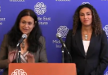
The Middle East Institute is proud to host Sahar F. Aziz, associate professor of Law at Texas Wesleyan University, and Mirette F. Mabrouk, deputy director for Regional Programs at the Atlantic Council’s Rafik Hariri Center for the Middle East, for a discussion about the impact and implications of the ouster of President Mohamed Morsi. Mirette Mabrouk will provide a macro-perspective of the current situation and discuss some of the key turning points that precipitated the recent crisis.
The Future of Democracy in Egypt: Notes from the Ground
The Middle East Institute is proud to host Sahar F. Aziz, associate professor of Law at Texas Wesleyan University, and Mirette F. Mabrouk, deputy director for Regional Programs at the Atlantic Council’s Rafik Hariri Center for the Middle East, for a discussion about the impact and implications of the ouster of President Mohamed Morsi. Mirette Mabrouk will provide a macro-perspective of the current situation and discuss some of the key turning points that precipitated the recent crisis.
The Future of Democracy in Egypt: Notes from the Ground
The Middle East Institute is proud to host Sahar F. Aziz, associate professor of Law at Texas Wesleyan University, and Mirette F. Mabrouk, deputy director for Regional Programs at the Atlantic Council’s Rafik Hariri Center for the Middle East, for a discussion about the impact and implications of the ouster of President Mohamed Morsi. Mirette Mabrouk will provide a macro-perspective of the current situation and discuss some of the key turning points that precipitated the recent crisis.
The Future of Democracy in Egypt: Notes from the Ground
The Middle East Institute is proud to host Sahar F. Aziz, associate professor of Law at Texas Wesleyan University, and Mirette F. Mabrouk, deputy director for Regional Programs at the Atlantic Council’s Rafik Hariri Center for the Middle East, for a discussion about the impact and implications of the ouster of President Mohamed Morsi. Mirette Mabrouk will provide a macro-perspective of the current situation and discuss some of the key turning points that precipitated the recent crisis.
The Future of Democracy in Egypt: Notes from the Ground
The Middle East Institute is proud to host Sahar F. Aziz, associate professor of Law at Texas Wesleyan University, and Mirette F. Mabrouk, deputy director for Regional Programs at the Atlantic Council’s Rafik Hariri Center for the Middle East, for a discussion about the impact and implications of the ouster of President Mohamed Morsi. Mirette Mabrouk will provide a macro-perspective of the current situation and discuss some of the key turning points that precipitated the recent crisis.
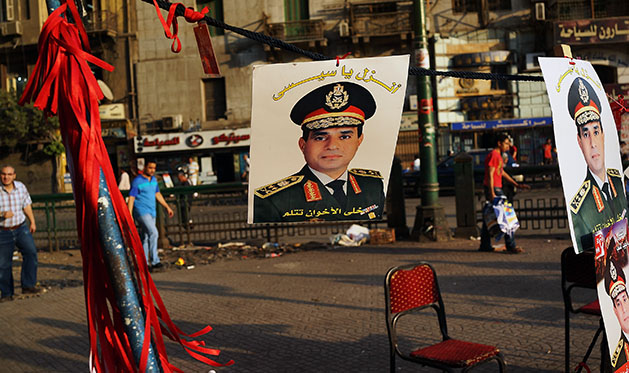
Yesterday, General Abdul Fattah el-Sisi, Egypt’s Minister of Defense and head of the military, called for Egyptians to take to the streets in protest on Friday to “confront terrorism.” Such a call amounts to a public relations one-upmanship vis-à-vis continued Islamist protests since Morsi’s ouster. Clearly, the Egyptian military is in no need of popular protests to confront credible national security threats or armed militias that threaten the security of citizens.
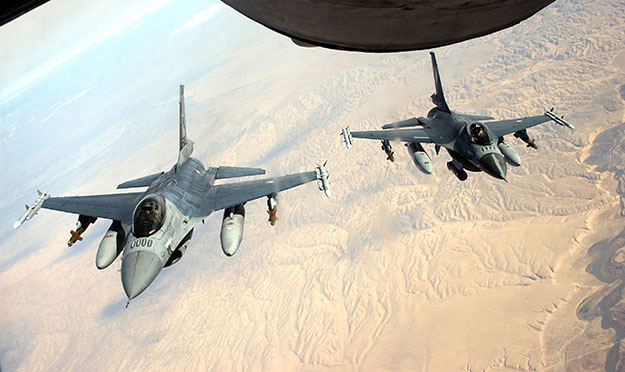
Yesterday, the United States announced that it would delay the delivery of four F-16 fighter jets to Egypt.[1] While such a move might appear to signal a block in U.S. military aid to the country, most Egyptians believe that the United States will, as it always does, provide Egypt with military funding.
Iranians in Malaysia: Batik Artist Pegah Jahangiri
Artist Pegah Jahangiri hails from Tehran, but is currently a doctoral student in visual arts at the University of Malaya, Malaysia. She recently spoke to MEI about her work with batik, strikingly dyed cloth found all over the world, but particularly popular and refined in Southeast Asia.