The rise of violent transnational movements in the Middle East
Summary
This individual is a guest contributor. MEI is not able to assist with contact requests.
Summary
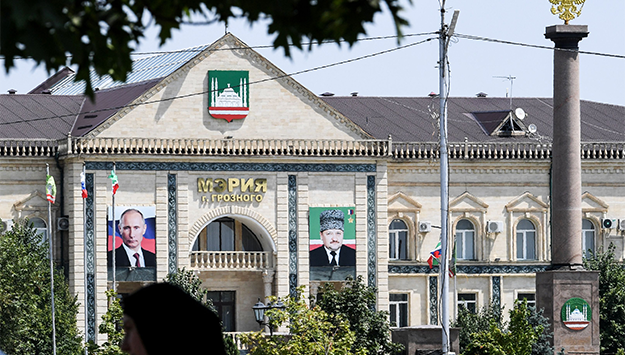
Russia’s military intervention and political maneuvering in Syria has garnered a large amount of media coverage. However, Moscow is also conducting a concerted outreach campaign to Syrian citizens and society through a unique resource: its Sunni Muslim North Caucasian regions. In particular, Head of the Chechen Republic Ramzan Kadyrov and Grand Mufti of Chechnya Salah-haji Mezhiev have emerged as a key conduit of Russian soft power with regard to Syrian civilian and Islamic figures.
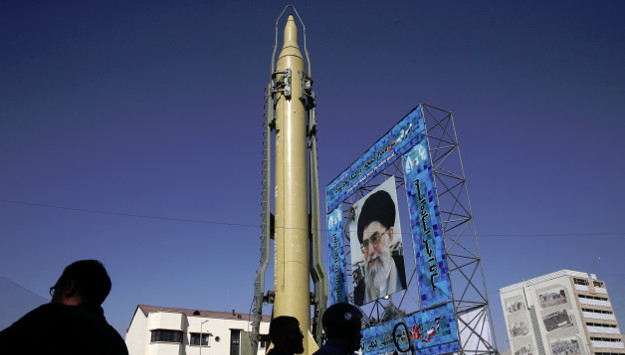
Iran will not negotiate with America and European countries over its ballistic missile program, Iranian President Hassan Rouhani said at a press conference in Tehran today. “We will not negotiate about our defense and missiles,” he emphasized, adding that Tehran will continue to boost its defense power by producing more planes, missiles and submarines. Rouhani also ruled out renegotiation of the 2015 nuclear agreement with the West. “Nothing will be added or subtracted from the JCPOA.
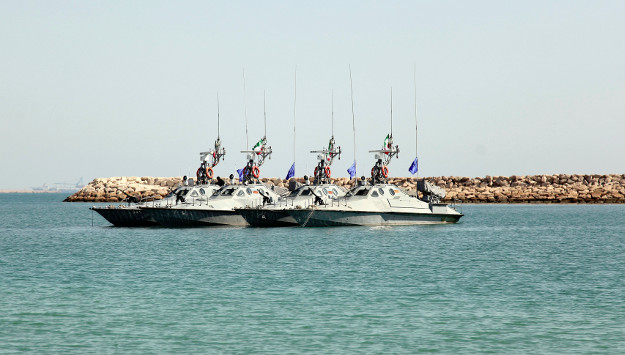
Iran’s Defense Ministry today unveiled a new propulsion system for military speedboats, Tasnim News Agency, which is affiliated with the Revolutionary Guards, reported. “The maritime propulsion system, which allows military speedboats to reach higher velocities, leads to lower fuel consumption, and increases maneuverability in shallow waters, is also equipped with automatic running systems,” Brigadier General Qassem Taqizadeh, the deputy minister, pointed out. The system has a mobile shaft for transmission of power as high as 1,800 horsepower.
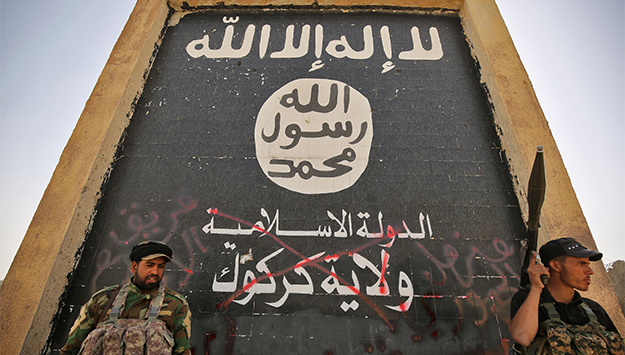
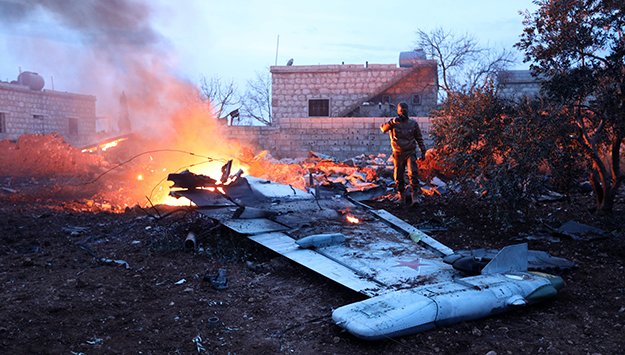
In this week’s Monday Briefing, MEI experts Charles Lister, Bilal Y. Saab, Marvin G. Weinbaum, and Gonul Tol provide analysis on recent and upcoming events including the unrelenting violence in Syria, President Trump’s “Buy American” plan, the Taliban’s anti-U.S. propaganda, and Erdogan’s meeting with the Vatican.
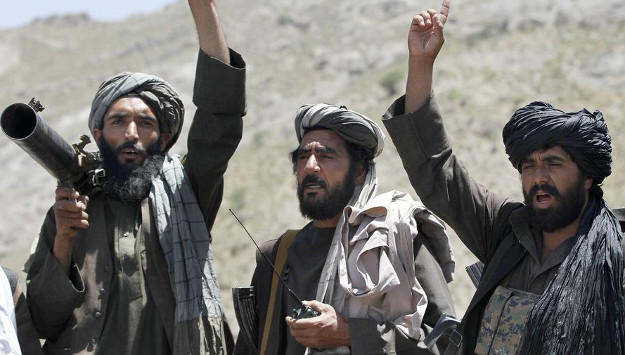
The head of Afghanistan National Directorate of Security (NDS) has said that Iran and Russia are in contact with the Taliban and are supporting the militant group in Afghanistan. In an interview with the BBC Persian, Mohammad Masoom Stanekzai pointed out that Tehran and Moscow provide assistance to the Taliban under the pretext of fighting the Islamic State, which has gained a foothold in South Asia in recent years.
The Houthi rebels, Iran’s allies in Yemen, today launched another missile attack into Saudi Arabia, targeting an air defense operations center in the kingdom’s border province of Najran, Iranian and Lebanese media outlets reported.
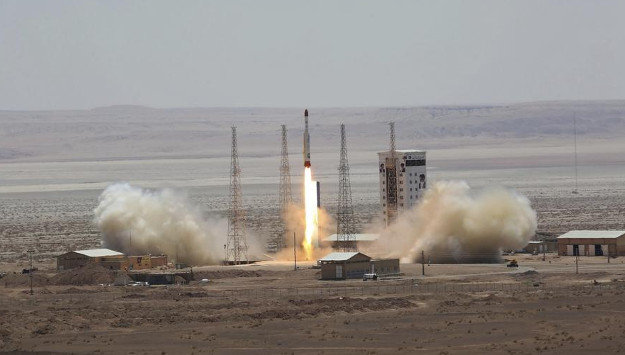
Iran’s minister of communication and information technology has said that the country is making the final preparations for the launch of four satellites into space, Mehr News Agency reported.
Seven years after the outbreak of the Arab Spring in North Africa, demonstrators are taking to the streets again. In Tunisia, protesters demand change to new austerity laws, which compound already stagnant economic conditions and youth unemployment. Protests have also occurred in the small town of Jerada in Morocco following the deaths of two young miners. Both of these movements reflect ongoing socio-economic inequalities and were met with governmental crackdown.
Iraj Masjedi, Tehran’s ambassador to Baghdad, met with Ammar al-Hakim, the leader of Iraq’s National Alliance, to discuss the latest security and political developments in Iraq.
Nowhere in the world are women more unequal than in the Middle East and North Africa, but there have been signs of progress in the region and several key reforms took place in 2017, such as Saudi Arabia’s decision to lift the ban on women driving. Manal Omar, founder of Across Red Lines, and Hala Aldosari, a fellow at the Radcliffe Institute for Advanced Study at Harvard University, join guest host Kate Seelye to discuss these reforms and whether they signal real change in attitudes toward women’s rights in the region.
Read the full article on The American Conservative
Donald Trump’s promise of “a deal of the century” to end the conflict between Israel and the Arabs is getting legs. After a year of discussions led by Trump’s son-in-law Jared Kushner, the main elements of the president’s design are coming into view. But it’s not exactly what the Palestinians want to see.