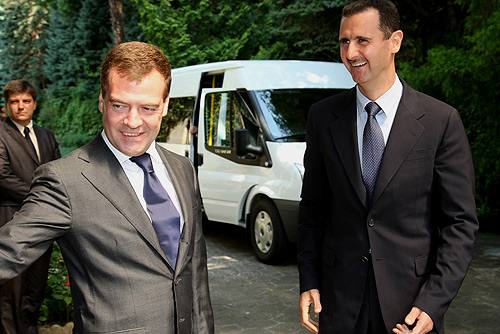
The Russian government, like its counterparts in the West, the Middle East, and elsewhere, was caught off guard by the outburst of Arab uprisings beginning in January 2011 that swept away long-ruling authoritarian regimes in Tunisia, Egypt, Libya, and (it appears) Yemen, and have threatened to topple those in Bahrain and Syria. The response of the Russian government to these events has, like that of Western governments, often been confused and inconsistent. Just as Western governments have done, Moscow has sought to protect its interests in the region.
Israeli-Palestinian Peace: A Special Regime Option for the Old City of Jerusalem
Jerusalem will probably be the toughest issue in any future Israeli-Palestinian peace negotiations. The other three core issues – borders/settlements, security, and Palestinian refugees – will also be very difficult, but Jerusalem is at a different level. Jews, Muslims, and Christians worldwide have strong attachment to the city and its many holy sites. For Israelis and Palestinians, Jerusalem is the focal point of national, cultural, and religious identities and aspirations. Their conflicting claims are based on long history and narratives that do not accommodate the other.
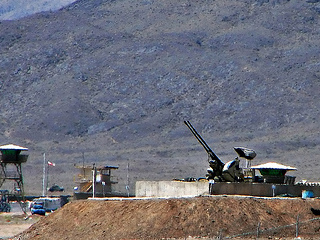
Let us assume that nobody will bomb Iran’s nuclear facilities, at least for quite a while. There is no Iranian nuclear test in the offing. Until now, the inspections of the International Atomic Energy Agency (IAEA) have uncovered no diversion of declared stocks of uranium for use in a nuclear explosive device. Of course, clandestine activities could always take place in some remote stretch of the vast Iranian territory, unknown to the inspectors of the Vienna Agency.
A View From the Gulf: A Discussion of Gulf Politics and Security
The Middle East Institute is proud to host Gulf Research Center experts Abdulaziz Sager, Mustafa Alani, and Christian Koch for an examination of recent developments in the Gulf in the wake of the Arab Spring. The speakers will address the crises in Yemen and Bahrain, US-Gulf relations and the question of reform in the region.
Iran and the West at a Crossroad: Will Recent Elections Make or Break a Deal on Iran's Nuclear Program?
U.S. Secretary of State Hillary Clinton has described upcoming talks with Iran over its nuclear program as "the last chance to resolve the crisis." Yet as the final hour approaches for an opportunity to avert a military attack, there are few apparent signs Iran will make compromises. Recent parliamentary elections have only strengthened the power of Supreme Leader Ali Khamenei and the hardliners in his inner circle who aspire to make the Islamic republic a regional superpower.
Introduction to Public Health in the Middle East: Building a Healthy Future
Originally posted September, 2011
The flow of ideas, people, and commerce across national boundaries has been occurring with breathtaking rapidity in the broader Middle East, as elsewhere. These increasingly dense exchanges have generated new threats and vulnerabilities that have tended to impact women, children, and the poorest members of society disproportionately. They also have given people more resources and opportunities with which to shape their lives and their futures.
Peace-Building through Health in the Israeli-Palestinian Conflict: The Six-Year Experience of Healing Across the Divides
Originally posted September 2011
Approximately six months ago, I asked an astute long-time American observer of the Israeli-Palestinian conflict whether we had come to the end of the road for a two-state solution. He replied that we had come to the end of that road in 1967. Putting it differently, Zhou Enlai, the premier of the People’s Republic of China under Mao Zedong, when asked what he thought of the French Revolution, reportedly replied that it was too early to tell.