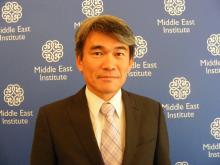
John Calabrese is a senior fellow at the Middle East Institute (MEI) and book review editor for The Middle East Journal. His work focuses on the international relations of the Middle East, with a particular emphasis on cross-regional ties between the Middle East and Asia. He also teaches US foreign policy at American University.
He holds a PhD in International Relations and a Diploma (with Distinction) in Comparative and International Politics from the London School of Economics, and a BA in English and Government from Georgetown University.
Fate of the Dragon in the Year of the Red Fire Monkey: China and the Middle East 2016
February 2016 marks the beginning of a new phase in the Chinese lunar calendar, drawing to a close a year marked by heightened risks and fortuitous gains in China’s efforts to secure its interests in the Middle East and North Africa (MENA) region. This essay addresses three questions: How well has China adapted to the conflict and instability that have swept the region? And as we enter the Year of the Red Fire Monkey, what are the concerns that are likely to preoccupy Chinese leaders? What, if any, policy adjustments by Beijing, can realistically be expected in light of the current circumstances and uncertain prospects for the region and for China itself?
Renewable energy accounts for an ever-growing share of worldwide electricity generation capacity. Solar power, in particular, is on the rise globally. Indeed, within a decade solar power could become the most inexpensive source of electricity in many regions, including in the Middle East and North Africa (MENA). This essay examines the growth trajectory of solar energy in the MENA region and its relationship to developments in Asian, notably Chinese and Japanese, solar markets.
Positioning Malaysia within the Global Energy Landscape
Malaysia ― Southeast Asia’s second largest oil and gas producer and the world’s second largest exporter of liquefied natural gas (LNG) ― is located along the seaborne energy trade channel that binds together the Indian and Pacific oceans. Yet rapidly increasing energy use has led to a sharp rise in Malaysia’s dependence on oil imports and a decline in the surplus of natural gas for export. Under these circumstances, the government of Prime Minister Najib Razak has embarked on an ambitious effort to transform Malaysia into a major maritime energy hub and revitalize the oil and gas (O&G) sector. This essay discusses the major steps that Malaysia has taken in pursuit of these goals and the ways in which Malaysia-Gulf Arab energy relations have changed as a consequence.
India and the Middle East and North Africa (MENA) Region: A Bibliography
This bibliography is not intended to be exhaustive. The 300 entries contained herein were compiled mainly by employing two search tools, namely, Academic Search Premier and Google Scholar. Where complete tables of contents were available, book chapters include page citations.
The Middle East Institute is proud to present a paper based on a series of discussions with Middle East analysts sponsored by the Hollings Center for International Dialogue held in Istanbul and Washington about the regional implications of the Syria Crisis.
Most Asian countries are success stories today. To varying degrees, they have emerged from the colonial experience and/or from destructive wars as far stronger and much more inclusive economically, socially, and politically. I suspect that many Arabs gravitate to Asia partly because they represent both the achievements and the possibilities of modernization.
On March 11, 2011 Japan was struck by a massive earthquake and tsunami that devastated the northeastern part of the country. The quake and tsunami also damaged three reactors at the Fukushima Daiichi Nuclear Power Plant, triggering a nuclear crisis that led to the shutdown of nearly a third of the country’s energy production.
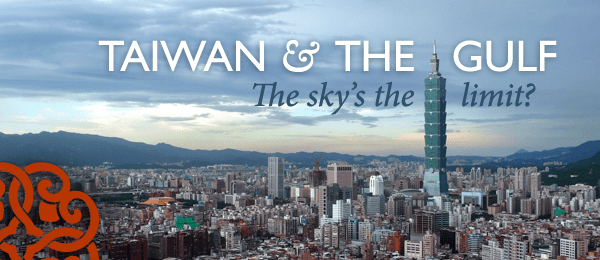
Dubai’s Burj Khalifa and Taiwan’s Taipei 101 tower, the world’s two tallest skyscrapers, differ in height by a stunning 1,076 feet, are separated by nearly 4,000 miles of ocean, and are situated in countries and regions which, linguistically and culturally, have little in common ― except business.